• Autonomous drone explores uncharted deep sea waters for critical minerals at 6,000 metres

    A new autonomous underwater vehicle (AUV) has completed its first field test in ultra-deep waters near the Mariana Trench in the western Pacific, collecting data on previously unexplored polymetallic nodules. Deep sea environments remain largely unexplored. The extreme depths, cold temperatures, high pressure and distance from shore all present major challenges to exploration. US-based start-up Orpheus Ocean, a spin‑off from the Woods Hole Oceanographic Institution, has developed a small AUV able to withstand these hostile conditions, exploring depths and gathering data autonomously at up to 11,000 metres below sea level. In a project led by the Ocean Exploration Cooperative Institute (OECI), based at the University of Rhode Island’s Graduate School of Oceanography, Orpheus Ocean’s UAV…


  • Millions of UK phones to emit loud alert in nationwide test of emergency system

    The UK’s Emergency Alerts system will undergo a nationwide test in September as part of efforts to strengthen the country’s preparedness for a range of disasters. The system enables urgent messages to be broadcast to a defined area when there is an imminent risk to life, such as wildfires or severe flooding. Other countries such as the US and Canada already have such a system in place. During the test, mobile phones will vibrate and make a loud siren sound for roughly 10 seconds, even if they are set to silent. A message will also appear on phone screens, making it clear the alert is only a test. There are approximately 87 million mobile phones in the UK. The test, which will take place around 3pm BST on 7 September, is needed to ensure the system is functioning as planned, the Cabinet…

  • Drought and climate change could put one-third of global chip supply at risk by 2035

    One-third (32%) of global semiconductor production could be at risk within a decade unless industry adapts to climate change, according to a PricewaterhouseCoopers (PwC) report. Copper’s superior ability to conduct electricity makes it a critical material in a wide range of industries, including telecommunications, energy and electric vehicle production. It also plays a critical role in the semiconductor industry, which is tipped to hit $1tn by 2030, primarily as a conductor of electricity within chips. With the semiconductor industry ramping up production at unprecedented speeds, the need for copper is equally growing at an unprecedented rate. The challenge is that supply is not keeping up with demand. The current copper mine project pipeline points to a 30% supply deficit by 2035…

  • Beetles equipped with tiny backpacks could aid search and rescue missions – new study

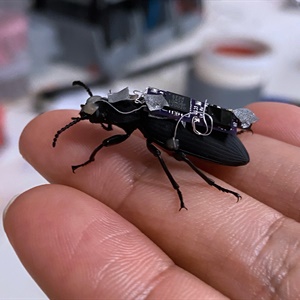
    Beetles equipped with microchip backpacks could one day help locate survivors after a disaster, according to researchers at the University of Queensland in Australia. Insect-scale robots are small enough to navigate through rubble and collapsed structures to find survivors. However, they find it challenging to transition from navigating horizontal surfaces to scuttling up walls and climbing over obstacles. To overcome this challenge, researchers in Queensland fitted small robot platforms onto the backs of darkling beetles (Zophobas morio). The natural movements of these cyborg insects, or insect-machine hybrid robots, are prompted in specific directions through electrodes that stimulate their antennae or hardened forewings known as elytrons. Dr Thang Vo-Doan, lecturer at the school…

  • Wimbledon’s new AI line-calling system under fire over missed calls

    The AI-enhanced electronic line-calling (ELC) system at Wimbledon, Hawk-Eye Live, replaced line umpires this year but has been making errors on court. Yesterday (6 July) on Wimbledon’s Centre Court, Russia’s Anastasia Pavlyuchenkova played the UK’s Sonay Kartal in the fourth round of the women’s singles. In the first set of the match, Kartal hit a ball long but ELC failed to register it. Television replays showed that Kartal’s shot was clearly out, yet the chair umpire ruled that because the technology had not tracked it, the point needed to be replayed. Kartal went on to win the point but had the ball been called out, Pavlyuchenkova would have won the point and taken the game. Three further calls were missed by the system on the same side of the court during the game. In a statement…

  • Electric vehicles near 25% of new sales, outpacing government mandate

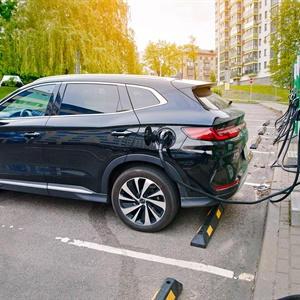
    Electric vehicles (EVs) accounted for a record 24.9% of the new car market in June, despite relaxed quotas on sales being implemented by the government earlier this year. In April, Prime Minister Keir Starmer announced that while the ban on the sale of new petrol and diesel cars by 2030 would be maintained, manufacturers would be able to sell hybrid cars, such as the Toyota Prius and Nissan e-Power, until 2035. They would also not be obliged to sell as many EVs in the earlier part of the transition. The New AutoMotive think tank said it expects car makers will be able to “comfortably exceed” existing mandates this year, putting into question why the government decided to change the targets. The headline target for car makers is that 28% of total sales should come from EVs in 2025. But…

  • Dark web usage tops 3 million daily as illegal trade surges

    The dark web is surging in popularity, with the number of daily users reaching over 3 million by March 2025, a study has found. Panda Security conducted an analysis showing that around 60% of dark web domains host illegal content, with over 30% of traffic coming from the US (17.6%) and Germany (13.5%) alone. The UK makes up a relatively small proportion of traffic at just under 3%. The dark web is a concealed segment of the internet that is inaccessible through standard search engines and browsers. To access it, users need to download a modified version of Firefox known as the Tor Browser and can access websites through specialised .onion links. It uses encryption and rerouting techniques to make it much more difficult to trace the location of users on the network. While it hosts some…

    E+T Magazine
  • Autonomous robots to fast track large-scale solar roll-out in Australia

    A fleet of five autonomous pick-and-place robots will be used to speed up solar panel installation at two large-scale solar farms in Australia. Last year the Australian Renewable Energy Agency (ARENA) introduced its AUD$100m Solar ScaleUp Challenge. The aim was to attract global companies and researchers to propose solutions for how to reduce the cost of large-scale solar farm deployment in Australia. US-based Luminous Robotics is the first firm to receive AUD$4.9m funding as part of this challenge. Founded in 2023 to help solve the challenge of building renewable energy infrastructure at speed, Luminous soon launched its first robot called LUMI. This autonomous pick-and-place robot was designed to construct, operate and decommission solar farms of all sizes. Following an initial test…

  • Editor's comment: All things great and small

    But are all small things great? We have taken a lateral thinking approach to the subject of ‘small’ for our theme this issue. The revolution of the tiny CubeSat satellites, the constant battle for performance and miniaturisation in electronics, small countries’ tech success against the odds, the mind-blowing – or even mind-controlling – medical implants... there is much to celebrate in the small world. However, not all small things are so great. For some time we have been aware of the problem of human garbage becoming an environmental issue. Waterways and roadsides are the most visible demonstration that some humans have complete disregard for the world we inhabit, while pictures of sea turtles, sharks and dolphins caught in discarded fishing nets show animals suffering and dying. The main…

  • Inside the new generation of medical implants

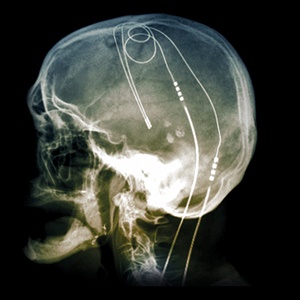
    Artificial augmentations and replacement parts enable our friends, family and strangers to regain lost capabilities or obtain new ones. It is estimated that around 5% of people in industrialised countries have had a medical device implanted. Due to advances in microelectronics, biotechnology and materials, some implantable medical devices such as pacemakers have become smaller. This has a number of benefits, including neater incisions during surgery and a longer replacement timetable thanks to high-power batteries. Despite shrinking in size, the impact of implants continues to grow. Implants for diagnosis Implantable diagnostic devices have an enormous number of applications, from reducing the risk of complications in surgery to pinpointing the presence of cancerous tissue. Implantable…

  • From teabags to lungs: Scientists trace microplastics throughout the human body

    As humans continue to ingest microplastics from the environment, many researchers are investigating if this may have a negative effect on our health. Making a cup of tea may sound perfectly benign, but researchers have used it to shine a light on the potential effects of tiny plastic particles on human health. These particles, known as micro- and nano-plastics (MNPs), have been found everywhere in the environment – from the seabed to Antarctica, from fresh water to snow, ice and soil. They are present in the food chain and are directly ingested by humans – potentially at levels that could affect our health. While no causal link has yet been found between MNPs and disease, researchers say they have identified enough ‘red flags’ to be concerned. Now back to that cup of tea. Researchers…

  • Compensating for tiny complications in electronics development

    Smaller. Faster. Cheaper. That’s how electronics technology develops - right? Or has it reached a stage when it is not that simple. A decade ago, the organic light-emitting diode (OLED) seemed to be the ultimate display technology. Unlike the liquid-crystal display (LCD), which has to filter photons from a backlight through a layer of polarised colour filters, the OLED delivers more vivid images. In principle, it should consign the LCD to the same fate that greeted the earlier, bulky cathode-ray tube monitor: bit parts in retro-futurist TV shows such as Severance. The OLED has not fared as well as expected. Its carbon-based materials degrade in the atmosphere if the display’s seal is broken. And picture quality suffers from the same kind of long-term burn-out that afflicted older TVs when…

  • More than 1,000 arrests made by Met Police since 2024 despite privacy concerns

    London’s Metropolitan Police (the Met) has arrested more than 1,000 wanted criminals since the start of 2024 through the deployment of live facial recognition (LFR) technologies. The police force said it had apprehended “paedophiles, rapists and violent robbers” who may have escaped justice without the use of LFR. The cameras capture live footage of people passing by and compare their faces against a bespoke watchlist of wanted offenders; if a match is detected, the system generates an alert. An officer then reviews the match and decides if they wish to speak with the person. The Met is one of the UK’s largest adopters of LFR tech, along with South Wales Police. Lindsey Chiswick, who leads the use of LFR nationally, said it would be “madness” not to deploy it at a time when local funds…

  • Beeswax put to the test as sustainable fuel for rocket engines

    Engineering students at Kingston University have turned to beeswax to power their rocket engine design. For centuries, humans have used beeswax for a variety of purposes, including candles, cosmetics, medicine and lubricants. Students at Kingston University’s rocket lab have now discovered another use for it – as fuel for a rocket engine. They chose beeswax because it has similar properties to paraffin, both being waxy substances made up of long-chain hydrocarbons. However, while paraffin is typically derived from petroleum, beeswax is a natural, renewable resource. Aerospace engineering and space technology student Michaella Gapelbe Santander said: “In the industry fuels such as paraffin or [high-density polyethylene] are used as energy sources, but we decided to take a more interesting…

  • Shifting UK diesel car exhaust pipes to the right cuts their pavement pollution by a third

    Air pollutants on UK pavements generated by diesel cars could be slashed by a third if car exhausts were positioned on the right, according to new research. University of York researchers recently conducted a study into air pollution exposure among pavement users in urban environments. They analysed which factors – such as the amount of exhaust from vehicles, what’s contained in that exhaust, and how it moves through the air – influence near-road traffic-related air pollution (TRAP). Using advanced ‘plume regression techniques’, they modelled concentrations of pollutants, especially nitrogen oxides (NOx), under different conditions. The researchers made an interesting discovery relating to the exhaust pipe position: diesel cars with left-sided exhaust pipes released 40% higher pollution…

  • £75.6m tender opens for UK’s first mission to remove space debris

    The UK Space Agency (UKSA) has started a £75.6m tender process to launch the first UK mission to tackle space debris. The aim of the proposed active debris removal (ADR) mission is to use British ingenuity to design a spacecraft capable of capturing and de-orbiting two defunct UK-licensed satellites from low-Earth orbit (LEO). Once these satellites have been safely guided into the Earth’s atmosphere, they will burn up. This is a step towards removing space debris, which includes old satellites, spent rocket stages and fragments from collisions in orbit. The UKSA estimates that 140 million pieces of space debris smaller than 1cm, and over 54,000 tracked objects larger than 10cm, are in LEO. This orbiting junk can collide with vital space infrastructure, including satellite networks that…

  • EU accused of inserting ‘loopholes’ into its 2040 climate change plan

    Changes to EU rules around carbon offsets amount to a watering down of commitments, climate campaigners have said. The EU has set a 2040 goal for member states to cut greenhouse gas (GHG) emissions by 90% based on 1990 levels. The 90% target represents the lower end of the 90-95% range that the EU’s climate advisers said was possible by 2040. It also allows carbon offsets, or credits, from outside the bloc to be used to meet up to 3% of the target. Carbon credits are derived from projects designed to remove GHGs from the atmosphere through efforts such as reforestation, renewable energy or methane capture. But the efficacy of many offset projects has been brought into question in the past. In its policy document, the EU states that any credits utilised would need to be of “high quality…

  • AI scraper bots blocked by default from millions of websites in Cloudflare crackdown

    Internet infrastructure firm Cloudflare will now default to blocking AI scraper bots from accessing original content on client websites without permission or compensation. AI has changed the internet. Before, when a user typed a query into a search engine, they were presented with a series of links. Clicking on one would direct them to a website, and this exchange generated traffic and ad revenue for content creators. Nowadays, AI chatbots such as ChatGPT are being used instead of traditional search. These chatbots are trained on data scraped by AI bots that vacuum up information from the internet. AI scraper bots or crawlers often take this data without permission, with content creators seeing almost no traffic and therefore almost no value. Cloudfare, which powers more than 20% of…

  • Heathrow blackout traced to long-standing, unaddressed substation fault

    A fire at a Heathrow airport substation, owned by the National Grid, was caused by a problem first detected seven years ago but never fixed, according to a final report by the National Energy System Operator (NESO). On 20 March, a fire at the North Hyde 275kV substation, which feeds most of Heathrow, resulted in the airport’s closure. Aviation chaos ensued, with more than 1,300 flights cancelled and hundreds of thousands of passengers affected. More than 70,000 other businesses, homes and services were also affected, including Hillingdon Hospital. Energy watchdog Ofgem commissioned NESO to conduct an investigation, assessing the reasons the fire started in the first place as well as a broader assessment about the UK’s energy resilience and actions that could be taken to prevent similar…

  • Ofgem approves £24bn grid upgrade that could raise bills by £104

    Ofgem has approved an initial £24bn investment in Britain’s energy networks that could see consumer bills rise to cover the cost. The regulator said the funds will be used to make the grid more robust amid an influx of new renewable energy facilities and greater energy demand from data centres and the electrification of industrial processes. Over £15bn will be invested in Britain’s gas transmission networks to ensure ongoing safe and secure supplies to households, while an £8.9bn investment is being committed to Britain’s high-voltage electricity network. A further £1.3bn will go towards expanding the grid. The queue for connecting new projects to the grid is massively oversubscribed and being held up by stalled or speculative projects – some of which are not even at the construction…

  • Beta version of gov.uk app now available for public download

    The gov.uk app can now be downloaded in public beta format, with further development to follow later in the year. The gov.uk website is visited 88 million times every month by people looking for information and completing tasks. With the new gov.uk app, some of these tasks relating to public services can now be completed via a smartphone. Technology secretary Peter Kyle said: “By putting public services in your pocket, we will do away with clunky paper forms and hours spent on hold so you can immediately get the information you need and continue on with the rest of your day.” In January 2025, the government announced that it was to launch the gov.uk app by the summer. While this deadline has been reached with the release of a beta format, the app is incomplete with “new tools and…

  • Major Bluetooth headphone brands hit by unpatched security flaw

    Three vulnerabilities have been identified in Bluetooth headphones made by the likes of Sony, Jabra and Marshall that could allow attackers to eavesdrop on conversations or retrieve call history and stored contacts. The headphones all use chipsets manufactured by Airoha – a firm that has become a large supplier in the Bluetooth audio space, especially for True Wireless Stereo earbuds. Security researchers ERNW found that “powerful custom protocols” could be executed on the devices through attacks that give read and write access to either the RAM or the flash storage. Crucially, they can be executed by attackers who are not paired with the devices – they merely need to be within Bluetooth range. ENRW said it did not want to “disclose too many details” including the specifics of the vulnerabilities…

    E+T Magazine
  • Royal train to be retired by 2027 in cost-cutting drive

    The British royal train will be decommissioned by 2027, Buckingham Palace has announced, as part of a raft of cost-cutting measures. The royal train was first commissioned under Queen Victoria. The Sovereign Grant is paid annually to the monarch from the Treasury to fund the monarch’s official duties, including transport costs. James Chalmers, keeper of the privy purse, said scrapping the train would help to keep transport costs in check after a rise of about £500,000 in the last year. “The royal train, of course, has been part of national life for many decades, loved and cared for by all those involved,” he said. “But in moving forward, we must not be bound by the past. Just as so many parts of the royal household’s work have been modernised and adapted to reflect the world of today…

  • First drone traffic system to prevent midair collisions approved by FAA

    The first uncrewed aircraft traffic management system designed specifically to prevent mid-air collisions between drones has received Federal Aviation Administration (FAA) approval and is now operational. With drones and air taxis likely to become a prominent feature of our future skies, drone traffic management will be a growing issue. To avoid drone-on-drone collisions, US research university Virginia Tech has formed the Virginia Tech Mid-Atlantic Aviation Partnership (MAAP), supported by Nasa and the FAA. MAAP has created a drone traffic management system that enables governments and industry to share data about their flight operations. The aim is that this information will help deconflict drone flights quickly and safely. John Coggin, MAAP’s associate director, said: “This is a…