• CAA greenlights infrastructure drone inspections beyond visual line of sight

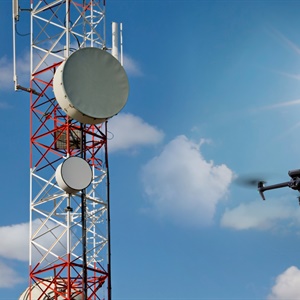
    The UK Civil Aviation Authority (CAA) has approved the first beyond visual line of sight (BVLOS) drone flights over the UK’s Critical National Infrastructure. While independent firm Drone Major is the first firm to be given the permission to carry out inspections, the CAA is planning to enable routine drone inspections by 2027. They believe the technology could greatly reduce the cost of inspections in comparison to human-led operations, which often involve hazardous scenarios requiring stringent safety rules. The first flight took place above railway lines as a way to find potential faults on the track. But Drone Majors said that more complex BVLOS operations across other infrastructure could soon follow, with potential applications in sectors such as energy, utilities, defence, border…

  • NESO to start reordering UK electricity grid connections queue from late July

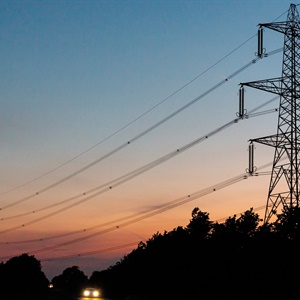
    The National Energy System Operator (NESO) has published a July timeline for developers to submit evidence of their transmission projects, ahead of the upcoming reordering of the grid connections queue. In April 2025, energy regulator Ofgem approved the NESO’s proposed reforms to transform the grid connection process. The queue for connecting new projects to the grid is massively oversubscribed and held up by stalled or speculative zombie and phantom projects; some green energy projects are taking up to a decade to be connected. In line with the government’s plan to decarbonise the grid by 2030, NESO’s proposed reforms will see the end of the first-come, first-served system, and the prioritisation of “ready” and “needed” clean energy projects. Kayte O’Neil, CEO of NESO, said: “Earlier…

  • Call to cap rising car bonnet heights amid pedestrian safety fears

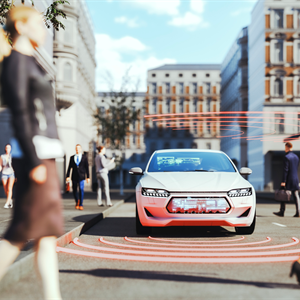
    The EU has been urged to place limits on the ever-increasing height of car bonnets in order to improve road safety for pedestrians, especially children. Recent analysis from the Transport & Environment (T&E) advocacy group found that, on average, car makers have been increasing the bonnet height in newly sold cars by roughly half a centimetre a year – reaching 83.8cm in 2024 compared with 76.9cm in 2010. But it warned that the increase is leading to a greater number of accidents that can also incur a higher fatality risk for pedestrians. This is because higher bonnets both impair road vision for drivers while worsening the severity of collisions. The analysis shows that high-bonneted SUVs and pick-up trucks typically strike adult pedestrians above the centre of gravity when involved in…

  • Midjourney faces copyright infringement lawsuit from Disney and Universal

    Disney and Universal have filed a joint lawsuit against Midjourney, alleging that the firm has committed copyright infringement with its AI image generation platform. Midjourney first entered open beta in 2022 and has received a series of updates since then, allowing for more accurate and advanced images. Users are able to create images through text prompts including the likes of Shrek, Darth Vader, Buzz Lightyear and a host of other copyrighted characters. In a filing at the District Court for the Central District of California, Disney and Universal state: “By helping itself to Plaintiffs’ copyrighted works, and then distributing images (and soon videos) that blatantly incorporate and copy Disney’s and Universal’s famous characters—without investing a penny in their creation – Midjourney…

  • Spending Review 2025: All the engineering and technology announcements

    Chancellor Rachel Reeves has unveiled the UK government’s Spending Review, setting out how public funds will be allocated over the next four years. Yesterday (11 June), Reeves stood up before parliament to reveal how more than £2tn of public spending will be divided up, with the hope these investments will increase GDP growth and bring about “national renewal”. She began by saying that while Labour is “renewing Britain”, she knows that “too many people in too many parts of our country are yet to feel it. This government’s task, my task as Chancellor and the purpose of this spending review is to change that.” Reeves acknowledged that the world has changed since the Autumn Budget and Spring Statement – notably through US tariffs and geopolitical conflicts. “The challenges we face have only…

  • Eurostar to offer direct services from UK to Frankfurt and Geneva from early 2030s

    Eurostar said it would bring about a “new golden age of international sustainable travel” as it vowed to run direct trains from the UK to Germany and Switzerland. The cross-Channel rail operator currently runs services in five countries: the UK, Belgium, France, the Netherlands and Germany. Its most popular route is London to Paris, used by more than 280,000 passengers in 2024. Across all routes, Eurostar saw passenger numbers increase by 5% from 2023 to 2024, reaching 19.5 million. As part of its growth plans to carry 30 million passengers annually, it will expand its network with new direct routes from London to Frankfurt, London to Geneva, and Amsterdam and Brussels to Geneva. To serve these new routes, the operator will invest €2bn into a fleet of 50 trains, which will come into operation…

  • Telescopes in Chile capture first-ever ground-based view of the Cosmic Dawn - study

    For the first time, Earth-based telescopes have cut through ‘cosmic noise’ to reveal how the first stars in the universe affect light emitted from the Big Bang. The Big Bang occurred about 13.8 billion years ago. It is known as the expansion of the entire observable universe – including space, time, matter and energy – from a hot, dense state. Roughly 100 million to 400 million years after the Big Bang, the first stars and galaxies formed; this is known as the Cosmic Dawn. The Cosmic Microwave Background (CMB) is the faint afterglow of radiation from the Big Bang. It is difficult for astronomers to distinguish from other ‘cosmic noise’ coming from space, including radio emissions from the Milky Way, stars and the Sun, as well as interference from the Earth’s atmosphere. Cosmic microwaves…

  • Industry insight: Can data centres keep up with the tech they’re powering?

    This article has been provided by Peter O’Brien, co-founder of Ventry Technologies. From the outside, data centres often look like little more than anonymous sheds on industrial estates. But step inside, and you’ll find the beating heart of our digital world. These vast, humming facilities are where the real work of AI, machine learning, IoT and 5G happens. And as these technologies advance, they’re creating not just more data, but a new type of demand for how that data is handled. We’re not just in an age of digital transformation. We’re in an age of digital acceleration. And that shift is placing extraordinary pressure on the data infrastructure that underpins it all. Smart tech, sharp spikes The technologies driving our current wave of innovation; AI, IoT, 5G, cloud computing and…

  • Helsing tests AI air combat system as Gripen jet flies autonomously

    Helsing has completed the first of three test flights of a Gripen E fighter jet that is equipped with an AI pilot allowing for autonomous air combat. The flight, which took place last month above the Baltic Sea, saw the jet relinquish control to an AI pilot system known as Centaur while in the air. A safety pilot was on board to take back control if needed. The test focused on Centaur’s beyond-visual-range (BVR) air combat capabilities, which were tested against a second, human-controlled aircraft. German defence contractor Helsing said it achieved the maiden flight less than six months after conception due to Gripen E’s modern architecture, which allowed for rapid integration of the AI pilot system. Gripen E planes, made by Swedish aerospace firm Saab, were first introduced in 2016.…

  • 'World's largest’ fully electric passenger ferry planned for Helsinki-Tallinn route

    Finnish shipping company Viking Line has revealed details of its Helios electric passenger-car ferry concept. The vessel will ferry passengers and their vehicles between Helsinki and Tallinn, the capitals of Finland and Estonia, which are located across the Gulf of Finland from each other. This is a very popular route, especially during the summer months. Last year, Viking Line saw 732,000 passengers travel this 80km route just in the summer. According to the Port of Helsinki, passenger traffic on the Helsinki-Tallinn route totalled 5.5 million in 2024, and this is set to increase to 11.6 million by 2040. Travelling at a speed of 23 knots, Helios will be able to transport approximately 2,000 passengers and 650 cars in just over two hours. The 195-metre-long and 30-metre-wide vessel…

  • Driverless taxis and buses to hit UK roads in spring 2026

    Pilots of self-driving taxi and bus services will be launched in spring 2026, the government has announced, as it looks to attract UK investment in the burgeoning technology. Over the last few years, both MPs and the automotive sector have warned that the UK risks squandering its lead in self-driving technology if the legislation to make its operation possible on public roads is not quickly passed. But transport secretary Heidi Alexander has now confirmed that the government will fast-track driverless car pilots and introduce self-driving commercial pilots on England’s roads. Firms will initially be able to pilot small-scale ‘taxi- and bus-like’ services without a safety driver for the first time – which could be available to members of the public to book via an app – before a potential…

  • CO₂ pollution captured and converted into cement precursor in study

    A carbon capture method that converts carbon dioxide into metal oxalates – a precursor for cement production – has been developed by a team of researchers. Concrete is the most widely used manufactured material on earth. It has quite literally created the foundations of our built environment, but it comes with a massive environmental cost. The production of cement, the key ingredient of concrete, generates around 2.5 billion tonnes of CO2 every year – about 8% of the global total. Cement's lack of sustainability is well known. When producing clinker – a precursor to cement – the calcining process converts calcium carbonate to calcium oxide, releasing carbon dioxide. In addition, the reaction itself takes place at close to 1,400°C, which involves burning large quantities of fossil fuel…

  • UK backs nuclear revival with £14.2bn for Sizewell C and £2.5bn for Rolls-Royce SMRs

    The government has finally confirmed a £14.2bn investment in the upcoming Sizewell C nuclear plant, as well as a further £2.5bn for small modular nuclear reactors (SMR). The expansion of Britain’s nuclear energy capabilities are considered to be a key part of the long-term decarbonisation of the UK’s energy grid. But despite the UK’s strong nuclear legacy – opening the world’s first commercial nuclear power station in the 1950s – no new facilities have opened in the UK since 1995, with all of the existing fleet except Sizewell B likely to be phased out by the early 2030s.  Initial construction works on Sizewell began last year, although the government had still not confirmed the full extent of its funding package until today. Energy secretary Ed Miliband said the decision will kickstart…

  • Sam Altman’s eyeball-scanning verification device to launch in UK

    US tech entrepreneur Sam Altman’s biometric device The Orb – which distinguishes between real people and AI bots, helping to verify who is human online – is to be launched in the UK. Altman has been instrumental in making AI accessible to people through OpenAI, a company he co-founded in 2015. OpenAI’s ChatGPT tool, which launched in November 2022, boasts over 400 million weekly active users. Having unleashed AI to the masses, Altman is now developing technologies to resolve challenges his company’s pursuit of powerful AI has caused, such as the proliferation of deepfakes. This is being addressed through Tools For Humanity, a company he co-founded in 2019. One of the technologies Tools For Humanity has developed is called the Orb, a biometric device that scans people’s irises to prove…

  • From the labs: Nanotech breakthroughs, radiation-powered batteries, plant-based filters

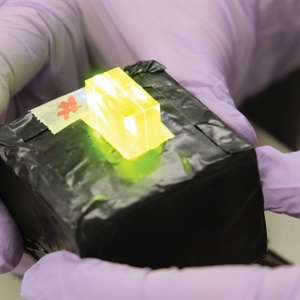
    Tracking the early stage developments: this issue we look at nanofiltration membranes, nanocatalysts and batteries made from nuclear waste. Lab: Vienna University of Technology (TU Wien), AustriaWhat: Using recovered nickel from spent batteries to create a nanocatalyst that produces methaneStage: TRL-1 Battery waste poses a serious environmental threat. Nickel-metal hydride (Ni-MH) and lithium-ion batteries, for instance, consist of different components that if not disposed of properly can lead to chemical leaks, fires and pollution. While recycling and recovery processes for these batteries are technologically challenging, a team of researchers at TU Wien have developed a method that not only recovers nickel from spent Ni-MH batteries, but then uses that nickel to produce a nanocatalyst…

  • Military-grade underwater robot aims to protect Britain’s offshore infrastructure

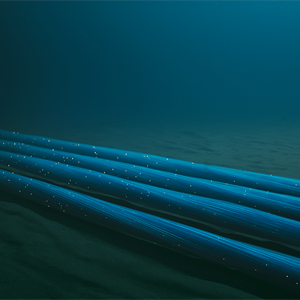
    An underwater robot designed to prevent adversaries from sabotaging undersea cables and pipelines has been developed by the Defence Science and Technology Laboratory (Dstl). The UK has around 60 undersea cables, which are crucial for global internet communication, carrying 99% of its data. More cables connect Britain’s energy grid with other European countries to allow trading of excess electricity across borders. Some estimates suggest that if the UK is to hit its target of 50GW of offshore wind capacity by 2030, there needs to be substantial investment in the installation and maintenance of thousands of kilometres of subsea cables. Dstl has incorporated a number of systems into a commercially available remotely operated vehicle (ROV) that allows it to detect unexploded ordnance and…

  • North short-changed £140bn in transport funding over 12 years, says IPPR

    The North of England would have received an additional £140bn in transport funding if it had received the same amount of money that London received from 2010-2022, a think tank has said. According to the Institute for Public Policy Research (IPPR), the money would have been enough “to build seven Elizabeth Lines” and demonstrates the disparity in spending by Conservative-led governments over the period. Its independent analysis of Treasury figures found that while Londoners received around £1,183 per person in taxpayer funds to build out the capital’s transport infrastructure, areas in the North only received £355–£603 per person during the same period. In response to the figures, IPPR is calling for a ‘Great Northern Rail’ plan to improve the rail network across the North, following…

  • Science and tech R&D to receive £86bn boost in upcoming spending review

    Chancellor Rachel Reeves has announced a £22.5bn-a-year commitment in research and development (R&D) aimed at supporting advancements in areas such as AI, sustainable energy technologies and life sciences. The R&D funding package forms part of this week’s spending review, which sets out how public funds are to be allocated over the next four years. The first of the spending review announcements was made last week when Reeves revealed £15.6bn will be invested in local transport in city regions in Northern England, Midlands and the South West. She has said this new £86bn R&D package will be used to “turbo-charge” the UK’s fastest-growing sectors, from tech and life sciences to advanced manufacturing and defence. It forms part of the government’s plan to “invest in Britain’s renewal” through…

  • Ocean currents hold vast energy potential, particularly off Africa, study finds

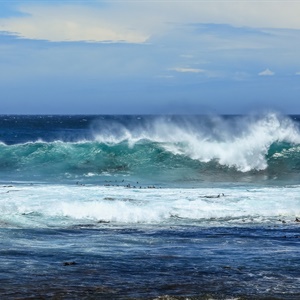
    Eastern and south-eastern coasts of Africa have currents that put them among the world’s top potential locations for ocean energy production, according to a study by Florida Atlantic University. Global energy demand continues to rise. According to data from the International Energy Agency, last year global energy demand rose by 2.2% – considerably faster than the average annual demand increase of 1.3% between 2013 and 2023. Researchers at Florida Atlantic University have published a study looking at the potential of using ocean currents to meet our growing energy demand. “Marine energy is much more predictable and reliable than many other forms of renewable energy because unlike sun and wind, which regularly do not produce electricity, ocean currents never stop moving around the planet…

  • Commercial moon landing attempt by ispace ends in likely crash

    A commercial spacecraft from Japanese firm ispace appears to have crashed on the surface of the Moon as it attempted to land. The Resilience lunar lander began its descent last night just after 8pm UK time. But mission control lost all contact with the craft around two minutes before it was scheduled for a soft touchdown. The Hakuto-R Mission 2 that sent the lander into orbit launched on January 15 on a SpaceX Falcon 9 rocket. It was intended to be a technology demonstration that could prove the viability of reliable transportation and data services on the Moon. The proposed landing site for the mission was the far northern Mare Frigoris – a location chosen because it allows for continuous line-of-sight radio communication from Earth. But this morning, ispace issued another update saying…

  • Amazon commits to clamping down on fake reviews in the UK

    Amazon has said it will swiftly deal with businesses attempting to “pull the wool” over consumers’ eyes on its UK online marketplace. Fake reviews on Amazon is a persistent problem that has been ongoing for many years. In 2020, a study by University of California, Los Angeles estimated that 30-40% of online reviews in certain categories on Amazon – particularly electronics, health and beauty and home goods – may be suspicious or fake. This proliferation of disinformation is a growing issue given the significant influence it has on consumer choices. The UK’s competition regulator, the Competition and Markets Authority (CMA), estimates that around 90% of UK consumers use star ratings and online reviews, and as much as £23bn of UK consumer spending is potentially influenced by online reviews…

  • Teardown: Apple iPhone 16e

    Apple has finally launched an updated model of its entry-level smartphone in the shape of the iPhone 16e. Like the previous SE models before it, the cheaper iPhone 16e borrows from earlier designs – namely taking the dimensions and display from the 2022 iPhone 14 rather than the more modern ‘Dynamic Island’ approach seen on more recent handsets. The device has been stripped back in various ways compared with the latest generation iPhone 16 to meet the less expensive £599 price point. This includes dropping support for MagSafe charging, eliminating the ultra-wide camera and omitting some niche features such as Camera Control. With the inclusion of the latest generation A18 chip, which is paired with 8GB RAM, it’s clear that Apple is prioritising support for its nascent AI features over…

    E+T Magazine
  • ISS astronauts to be kitted out with biometric wearables to help track fitness and sleep

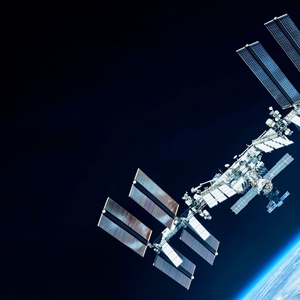
    Astronauts aboard the International Space Station (ISS) will be equipped with a wearable device that will collect biometric data such as total sleep time and heart rate variability during sleep. The project from the ISS National Laboratory, Booz Allen, Axiom Space and Oura aims to utilise edge computing to analyse biometric data in near real time, enabling crew members to make informed decisions about whether they are prepared for critical tasks. The astronauts will be fitted with Oura rings – commercially available devices that are capable of capturing metrics such as body temperature, menstrual cycle and blood oxygen. “This technology will provide crew members with detailed insights into their sleep quality and biometrics, which will help them to understand how this directly impacts their…

  • Recycled EV batteries power new 10MWh battery storage system at Rome airport

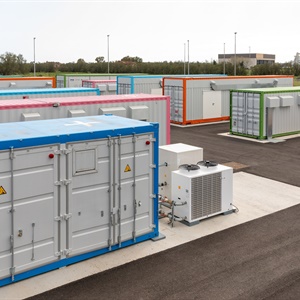
    Recycled electric vehicle (EV) batteries from automakers Nissan and Stellantis have found a second life powering a large-scale battery energy storage system (BESS) at Italy’s largest international transport hub. The Nissan LEAF has been on the road for almost 15 years. With its lithium-ion battery typically lasting between 8 to 12 years – or between 160,000 to 240,000km – many of these batteries have now reached end of life. Lithium-ion battery recycling is an issue. While traditional lead-acid batteries are widely recycled, the same is not true for the lithium-ion versions. They not only contain hazardous materials, but also have a tendency to explode if disassembled incorrectly. As such, these batteries are finding a second life in various BESS projects. One example of this is the…