• UK faces 5bn-litre daily water shortfall by 2050 without urgent infrastructure investment

    The UK faces a daily shortfall of 5 billion litres of fresh water by 2050 due to poor quality infrastructure, the National Audit Office (NAO) has said. In a report, the public spending watchdog found that the government and regulators have failed to drive sufficient investment in the water sector, which now needs to build 30 new projects at a cost of £52bn to meet future water demand. In England and Wales, 16 companies manage water supply – with 11 also handling wastewater services – that fall under regulatory oversight to protect public and environmental interests. But while the UK has one of the highest standards of drinking water in the world, performance has not improved for almost a decade in key measures, including mains bursts, supply interruptions and pollution incidents, the…

  • British satellite to map Earth’s forests in 3D and reveal carbon secrets from space

    A British satellite that will map the world’s forests in 3D to keep track of climate change will be launched into space next week. Tree coverage plays an important role in tracking climate change, with deforestation activities releasing stored carbon dioxide into the atmosphere while fresh forest growth captures atmospheric CO2. Data from the Mauna Loa Observatory in Hawaii recently showed that atmospheric CO2 levels surged faster than expected in 2024 because of deforestation activities and a series of unprecedented wildfires. The satellite, called Biomass, will create a 3D map of tropical forests after 17 months, then new (non-3D) maps every nine months for the rest of its five-year mission. It is hoped the data will provide unique insights normally hidden from human sight because of…

  • Government must make ‘final commitment’ to Sizewell C nuclear plant, Unite says

    Unite has urged the government to “put their money where their mouth is” and make its final investment decision on the Sizewell C nuclear plant. The government has expressed strong support for nuclear power as one of the main forms of baseload energy in a low-carbon grid. But with the nation’s finances currently tight – and recent reports suggesting that the total cost of Sizewell C could be double the initial estimates – it has been reluctant to make the final decision. Although groundwork for the upcoming plant already started over a year ago in Suffolk, the full funding package has yet to be agreed. Unite said that, once built, Sizewell C would create up to 10,000 jobs and become a key part of the energy strategy for achieving net zero by 2050. Unite general secretary Sharon Graham…

  • Boeing scrambles to resell 50 jets as Chinese buyers pull out over tariffs

    Boeing is scrambling to find buyers for as many as 50 planes that have been sent back to the company by Chinese airlines following tariff hikes by the Trump administration. In response to US President Donald Trump’s recent 145% tariff rates, China imposed its own 125% rate on US imports – effectively making trade between the two countries prohibitively expensive. In an earnings call with investors, Kelly Ortberg, Boeing’s chief executive, said he hoped the tariffs would be resolved “over time”, but warned that as things stand “many of our customers in China have indicated they are not taking delivery”. The firm is preparing to look for alternative buyers for the jets as it already has a long order book to fill, but China is one of its largest buyers. “It’s an unfortunate situation,…

  • Industry insight: Sizewell C's MD on the engineering behind Britain's next nuclear plant

    This article is provided by Julia Pyke, joint managing director of Sizewell C. As fears over its safety have subsided over time, coupled with the need for cleaner energy, nuclear energy has taken on a pivotal role in providing base power generation in the UK. But how are we getting on in building capacity? Britain is entering a new age of clean electricity as the foundation of our energy system, said Ed Miliband, energy secretary, at the end of 2024. And crucial to powering that clean energy future, he said, is nuclear. This ‘new age’ has been a long time coming. Next year will be the 60th anniversary of the start of construction at Dungeness B power station in Kent – the first of the advanced gas-cooled reactor (AGR) nuclear power stations. This was the last time Britain embarked on…

  • Night-vision glasses could be made sleek and wearable with breakthrough film from MIT

    Glasses equipped with night-vision capabilities could be made a reality thanks to new ultra-thin ‘skins’ of electronic material developed by MIT engineers. As a demonstration, the team fabricated a 10nm-thin membrane of pyroelectric material that produces an electric current in response to changes in temperature. The film was shown to be highly sensitive to heat and radiation across the far-infrared spectrum and could enable lighter, more portable and highly accurate sensing devices. Night-vision goggles and scopes are at present heavy and bulky because far-infrared sensors require large cooling elements. They are based on photodetector materials, in which a change in temperature induces the material’s electrons to jump in energy and briefly cross an energy ‘band gap’, before settling back…

  • From the archives: Thames tunnel, tearaways and YouTube

    Tanya Weaver looks back at a father and son’s engineering marvel, 20th-century speed limits and the video that launched a platform. 200 years ago What a steel This year sees the 200th anniversary of work beginning on the Thames Tunnel in London – the world’s first tunnel built underneath a navigable river. Connecting Rotherhithe and Wapping, the 400-metre long tunnel was built by Marc Brunel, assisted by a large team of miners, bricklayers, draughtsmen – and his son, Isambard Kingdom Brunel. Attempted twice before, all previous tunnels had ended in disaster. However, Brunel had a cunning plan to ensure its success – a rectangular tunnelling shield he had recently invented. This protective structure that supports the soft earth while tunnelling ensures the tunnel can be safely excavated…

  • CATL unveils ultra-fast EV battery with 2.5km range boost per second of charge

    Chinese manufacturer CATL has unveiled a new electric vehicle (EV) battery that can charge in record time, adding an estimated 2.5km of range per second of charging. Its second-generation Shenxing Superfast Charging Battery can charge from 5% to 80% in just 15 minutes, which is 100% faster than the industry’s highest current charging level, the firm said. Nevertheless, to achieve those speeds, vehicles will need to be hooked up to 1MW fast chargers, which are currently a rarity. Tesla Superchargers, for example, only offer maximum charging rates of up to 250kW. CATL supplies batteries for a wide range of car brands including Tesla, BMW, Volkswagen and Ford, and is the world’s largest supplier with an estimated 38% of the global market. Gao Huan, the firm’s chief technology officer, said…

  • British Steel halts mass redundancies following government intervention

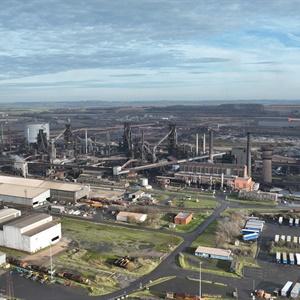
    British Steel has halted plans to make up to 2,700 Scunthorpe workers redundant after the UK government took control of the plant earlier this month. Previous owners Jingye Group had submitted a consultation in March to drastically slim down its workforce, following reports that it was losing around £700,000 a day, making production economically unfeasible. There were concerns that the firm had been running down its existing raw material supplies and had not ordered enough to keep the two blast furnaces operating. While restarting the blast furnaces would have been technically possible in the event of a shutdown, it would be extremely expensive and risk damaging key systems at the plant. But after taking control, the government was able to secure emergency supplies, including a ship containing…

  • BAE Systems Recruitment Event in association with E+T

    At BAE Systems, we provide some of the world's most advanced, technology-led defence, aerospace and security solutions. We employ a skilled workforce of around 100,000 people in more than 40 countries. Working with customers and local partners, we develop, engineer, manufacture, and support products and systems to deliver military capability, protect national security and people, and keep critical information and infrastructure secure. Here in the North West we have a long and proud heritage in the development, manufacture upgrade and support of world-leading combat and fast jet trainer aircraft. We also design, build, test, and commission the most advanced submarines ever operated by the Royal Navy, as well as their state-of-the-art combat systems and equipment. Our sites include Barrow…

    E+T Magazine
  • Eccentric engineer: How one man's LSD vision transformed DNA research

    How psychedelic substances helped Kary Mullis with the greatest discovery in modern genetic engineering – PCR. Kary Mullis was an unusual scientist. His interest in chemistry grew from a childhood love of making rockets, his first published paper was on astrophysics and his PhD on bacterial biology. He was also a firm believer in astrology, didn’t believe in climate change and disputed the link between HIV and Aids despite having done no research on the subject. But he did change the world. In 1983, Mullis was working for one of the US’s first biotech companies, Cetus Corporation, where he was employed to synthesise oligonucleotides, or primers – short, single-stranded nucleic acid used by all living organisms in the initiation of DNA synthesis. The corporation had a project to analyse…

  • Microplastics evade wastewater treatment, raising health and environmental concerns

    Harmful microplastics are slipping through wastewater treatment plants, posing potential risks to health and the environment, researchers have said. A team from the University of Texas at Arlington found that while most wastewater treatment facilities were able to “significantly reduce” microplastics loads, complete removal remains unattainable with current technologies. Large amounts of plastic can be found circulating in all of Earth’s oceans. Rather than biodegrade, they simply break down into tinier and tinier pieces, producing microplastics, which measure less than 5mm long depending on the definition. According to US environmental advocacy group Ocean Conservancy, 11 million metric tons of plastics enter our oceans every year. This is in addition to the estimated 200 million metric…

  • Nasa’s Curiosity rover uncovers evidence of Martian carbon cycle

    Nasa’s Curiosity rover has uncovered evidence that ancient Mars had a carbon cycle, which increases the likelihood that the planet once harboured life. Scientists have long presumed that Mars featured an active water cycle in the past, as the landscape shows clear signs that liquid water once flowed across its surface. This would have required a much warmer climate than the planet has today and a thicker atmosphere with higher carbon dioxide (CO2) concentrations. While previous analyses of Martian rock have detected the presence of carbonates, the quantities found were lower than expected from geochemical models. But according to a recently published paper, data from three of Curiosity’s drill sites showed the samples contained siderite, an iron carbonate material. The discovery of carbonate…

  • Mentor: Leading an engineering company

    Does an engineering company manager need to be an engineer? Definitely not, says Claire Davies. Engineering companies, particularly SMEs, often end up being run by the engineers who founded them. But are engineering skills really the most appropriate for leading engineering companies? We asked Claire Davies, managing director at Egis UK – originally a civil engineering company that she describes as a collective of architects, scientists, economists, consultants, engineers and operational experts. With a degree in chemistry and a PhD in geochemistry, Davies says that a background in engineering isn’t necessary to lead an engineering company. Q Claire, you don’t have an engineering background. Does a skill-set in leadership apply to any organisation? I want to provide the best environment…

    E+T Magazine
  • NHS approved to use robotic surgery systems to improve recovery times

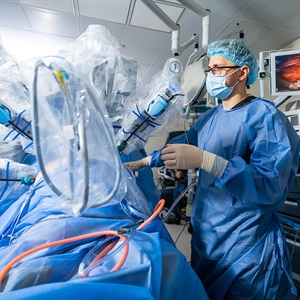
    The NHS has been approved to use 11 cutting-edge robotic surgery systems that could transform operations for thousands of NHS patients. The technology, which is capable of movements more precise than the human hand, has been given the green light by the National Institute for Health and Care Excellence (Nice), which provides evidence-based recommendations to the NHS. So far, five systems for soft tissue procedures have been approved – such as hernia repair, removal of tumours and gallbladder removal – and six for orthopaedic surgery, such as full and partial knee replacement procedures and hip replacements. The body’s independent committee made the decision after being presented with evidence that the use of robots in surgery enables faster recovery times, shorter hospital stays and a…

  • Industry insight: Autonomous vehicles are finally on the road to commercial reality

    This article is provided by Joseph Salem, partner at Arthur D. Little. The mass rollout of autonomous vehicles (AVs) has been mooted for years, but a range of challenges have raised serious doubts over whether this potentially transformative technology will ever move from the drawing board to the driving seat. However, numerous recent developments and new data suggest not just that it can, but that it may do so imminently, thanks to advances in technology, evolving regulatory support, and realignment in investment dynamics. This means the one critical advance needed to make AVs a reality — crossing the bridge to commercial viability — may be within sight. Continuous expansion of AV testing to build trust The AV industry faces psychological, as well financial, barriers to commercial…

  • Electrifying rail lines slashes toxic air pollution and cancer risk, study finds

    Rail commuters experience dramatically improved air quality on board trains and at stations following rail line electrification, a study has found. Researchers from the University of California, Berkeley, analysed the air quality aboard the San Francisco Bay Area’s Caltrain commuter rail line, which was recently electrified. They installed black carbon detectors at a number of stations and carried air-quality detectors aboard the trains. For four weeks, they tracked the rapid improvements in air quality as old diesel locomotives were replaced by new electric trains. In total, the team measured an 89% drop in carcinogenic black carbon exposure on the trains themselves and a significant reduction within and around the station monitored. Caltrain operates the busiest commuter rail system…

  • ‘Cosmic radio’ detector could uncover dark matter within 15 years, scientists say

    A ‘cosmic radio’ detector that could potentially discover dark matter in 15 years has been developed by a team of researchers. Dark matter is widely accepted to be a real phenomenon due to gravitational effects on galaxies and galaxy clusters that provide strong evidence for its presence. It is thought that it could account for around 85% of mass in the universe. However, it has never been directly detected before because it does not interact with electromagnetic radiation, meaning it neither absorbs, reflects nor emits light, making it invisible. Scientists at King’s College London, Harvard University, the University of California, Berkeley and others have shared the foundation of what they believe will be the most accurate dark matter detector to date. Axions are one of the leading…

  • Evil Engineer: Can I flatten my former friend’s house with an asteroid?

    This month, the Evil Engineer suggests the best way to weaponise an asteroid and get back at a faithless friend. Dear Evil Engineer, Five years ago, I founded a spyware start-up with a close friend of mine – since our undergraduate days we had shared a dream of empowering people all over the world to run their own mass surveillance programmes. We agreed that he would serve as CEO, with me as CTO. However, six months before the date of our IPO, he shut me out of the company and diluted my stake in it. I have seen the company I co-founded in our student flat secure multiple contracts worth hundreds of billions of dollars, and enjoyed none of it. It’s time for revenge. Can you advise me how to send an asteroid crashing down on his house? Yours, A sidelined villain Dear villain, …

  • Sewage spills surge across UK as water firms fail to meet pollution targets

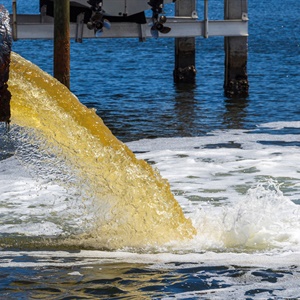
    The UK’s water industry oversaw a 30% increase in pollution spillages in 2024 – despite trying to reduce incidents by 40% over that period. Surfers Against Sewage said there were almost 600,000 confirmed sewage discharges last year, although it suggests the true figure could be closer to a million. The charity’s latest water quality report tracked sewage spills via discharge and sickness data and personal reports filed by citizens through its app. While the water sector was privatised in England and Wales in 1989, it has remained in public ownership in Northern Ireland and Scotland. Data acquired through freedom of information requests saw repeated failings across all countries in the UK, although water firms in England particularly have racked up significant debts despite frequent…

  • China to keep building coal-fired power plants through to 2027

    China’s state planner and energy regulator has said new coal-fired power plants are necessary during the transition away from fossil fuels to meet peak power demand and stabilise the grid. China is the world’s largest energy consumer and is heavily reliant on coal. In 2023, the country’s global operating coal capacity grew by 2% to 2,130GW. But coal power permits fell 83% in the first half of 2024, suggesting the world’s second-largest economy might be weaning itself off the fossil fuel. However, according to new government guidelines, the country plans to keep building coal-fired power plants through 2027, as reported by Reuters. The state planner and energy regulator said these plants were necessary in regions where they were needed to meet peak power demand or stabilise the grid…

  • Climate change to cost UK households an average of £3,000 in 2025, report claims

    Households in the UK are facing an average bill of £3,000 this year due to the impact of climate change, research by Global Witness has found. The NGO calculated that rising global temperatures will cause an estimated £1.1tn worth of damage to the UK’s economy over the next decade, amounting to roughly £38,000 over the period. In 2025 alone, it estimates households face a bundle of costs amounting to roughly £3,000. The UK’s climate damages bill includes the economic costs of flooding, crop losses, sea level rise, droughts, storms, disruption to overseas trade and harmful impacts on public health that result from global heating. A major direct increase in cost comes from higher food prices caused by inclement climates that lower crop yields. In 2023, the effects of extreme weather alone…

  • Google sets sights on geothermal energy with new deal in Asia

    Google has signed a “first-ever” corporate agreement for geothermal energy in Taiwan with Baseload Capital. Tech giant Google has pledged to reach net zero emissions by 2030 – but, by its own admission, this is an “extremely ambitious goal”. Last year, its annual environmental report revealed that the company has fallen short of its climate goals, with its emissions in 2023 having risen 13% on the previous year, reaching 14.3 million metric tons. A lot of this is due to energy-hungry data centres. In July 2024, Google reported that its reliance on data centres to power its new AI products caused its carbon emissions to soar by nearly 50% in five years. To reduce the environmental impact of its operations, Google has signed various deals globally to meet its electricity demands with…

  • British Steel blast furnaces to remain open as emergency supplies secured

    The government has secured enough raw materials to keep British Steel’s blast furnaces operating in the short term while a steady pipeline is being arranged. The Department for Business and Trade (DBT) confirmed that coking coal and iron ore from the US are being imported and transported to the Scunthorpe site after it was forced to scramble for supplies following the rapid transfer of ownership from Chinese owners Jingye last week. Founded in 2016 from the ashes of Tata Steel, British Steel has had a challenging decade because of reduced demand for the metal and tough competition from Chinese manufacturers. It is estimated that the plant was losing around £700,000 a day, making production economically unfeasible. However, there are concerns that without domestic steel production capacity…