Simultaenous Contact

Good afternoon all, 

I am seeking the collective views of the group regarding the issues we are currently encountering within the EV installation environment in relation to simultaneous contact.

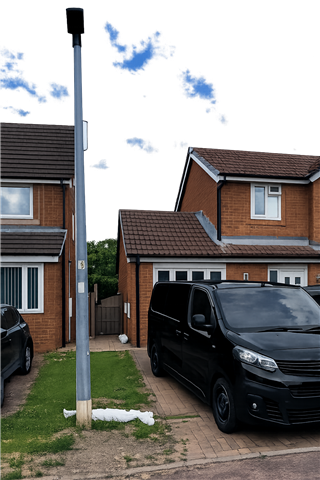
In simple terms, we are seeing a significant number of installations where customers have lamp posts located within their driveways. In many of these cases, it is not possible to achieve the recommended 2.5‑metre separation distance.

My position is that, where physical separation cannot be achieved, the application of layered protection at the EV charge point and associated switchgear would leave the customer in no worse position than prior to the installation. It is accepted that the proposal only outlines protection on the vehicle, but there are no other solutions for industry, are we with the protection detailed taking enough measures to carry out an install and in affect leave the install without a subsantial increase in risk?

My proposed approach to managing simultaneous contact risk would follow a structured hierarchy as set out below:

  • Can the maximum separation distance be achieved?
  • Can barriers or enclosures be installed to prevent simultaneous contact?
  • If neither of the above options are achievable, can layered protection provide an acceptable level of risk mitigation?

With layered protection, the proposed measures would include:

  • Installation of a compliant open‑PEN (O‑PEN) protective device
  • Provision of a double‑pole 30 mA Type A RCBO
  • Use of a charge point - M3 21 mA protection

Based on the above, the assumption is that, if all protective measures are correctly installed and verified, the installation would incorporate:

  • Automatic disconnection within the required times
  • Residual current protection
  • Open‑PEN fault detection

This combination of protections would significantly reduce the likelihood of a fault condition persisting for any meaningful duration.

On this basis, the key question for consideration is:

Where physical separation and barriers are not achievable, would it be considered acceptable to proceed with installation relying on this layered protection approach?

  • We will use only chargers with the 21 mA detection on them classification M3. In terms of this and the other protective layered measures do you think I have a case that I can install with no greater risk? With the switching mechanics of the earth within the charge point the car becommes an isolated metallic structure on rubber wheels with the risk from street furniture being the exact same for any person touching it, i.e the fault would go through them to earth, not via any connected earthing from the EV circuit. 

  • We will use only chargers with the 21 mA detection on them classification M3. In terms of this and the other protective layered measures do you think I have a case that I can install with no greater risk? With the switching mechanics of the earth within the charge point the car becommes an isolated metallic structure on rubber wheels with the risk from street furniture being the exact same for any person touching it, i.e the fault would go through them to earth, not via any connected earthing from the EV circuit. 

    Almost, but not quite. The 21mA trip won't open the contacts until after 21+mA flows - which in this scenario is only going to happen when someone touches the car and lamp-post at the same time - so they still have a shock current passing though them - just hopefully for not quite long enough to be fatal. Only then does the car become isolated.

    I do think your approach is the least worst in the circumstances through - in all probability both the lamp post and the installation will be on the same DNO's earthing system so an open-PEN approach makes a lot more sense than say TTing the EV.

    Another theoretical possibility is to have the EV separated "earth free" (via an isolation transformer with PE linked to N but neither Earthed)  - as per fig A722 of BS 7671 - but I've never heard of that ever being done in practice before.

    As for the letter of the regs, is the lighting column an exposed-conductive-part or an extraneous-conductive-part? I suspect these days (e.g. with internal wiring sheathed) it's probably the latter. Perhaps contrary to common sense, BS 7671's requirements for earthing system not to be within reach of each other only applies to exposed-conductive-parts, not extraneous-conductive-parts.

       - Andy.- 

  • Fantastic last point Andy. One that I can look into, I belive that lamp post, telecom cabs, etc would be deemed exposed conductive parts - however with the use of a lamp post fuse cut out and either split concentric or SWA there could be an argument for the latter. Reality is at the moment we are desperate for a solution.

  • This is the kind of issue we are seeing folks.