


How many times have you seen this? 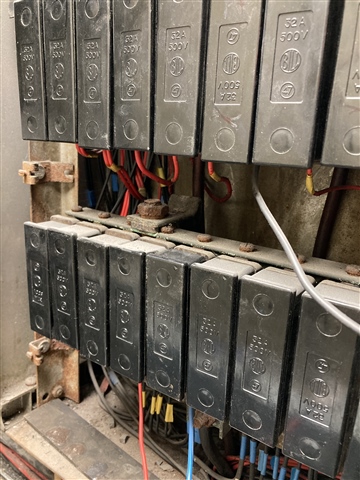
When encountering equipment like that illustrated I agree that a "voltstick" or similar should be used to give a "second opinion" in addition to a proper tester of an approved type.
Leather gardening gloves give some protection against arc flash, but NOT against electric shock.
When inserting a fuse carrier I agree that it is good practice to insert the bottom end first and then to turn away whilst pushing the other end home.
I also have seen a flat cap used for various purposes, including handling a live DNO conductor.
There was an exceptionally good safe isolation video on the IET YouTube channel, which appeared then disappeared again.
It prompted me to buy a Martindale contact single pole tester to add to my collection of voltage indicators and upgrade my Voltstick.
When everything has been safely isolated the main earth conductor needs checking with a current clamp meter before being disconnected, then both the terminal and conductor need checking for voltage.
The saving grace is that the adventitious insulation of the bars in this way may actually make it safer, if a spanner is dropped in the works it may act as some kind of primitive current limit. Mind you I'd prefer a design with some sort of cover, it is funny how your standard of what is reasonable to work in / on changes over the years
The very word Mike! ADVENTITIOUS! I have been racking my brain for that very word in relation to make-up air for a ventilation system.
We're about to take you to the IET registration website. Don't worry though, you'll be sent straight back to the community after completing the registration.
Continue to the IET registration site


