Separation of catenary wires

I am updating a garage submain for a customer. Its on a 35m overhead cable, supported by a broken catenary wire shared with the neighbour. My customer want's their own independent support wire. This means there will be two catenary wires running in parallel. I assume there is some risk of chafing in high winds if the wires are very close, how do I calculate a suitable separation distance. In terms of installation complexity the closer I can get them the easier it is for me.  

  • and the emergency provision is much thinner than it once was

    We barely use our house telephone line for calls, so I see no point in paying for VOIP after we go all fibre next year. The reason why we have kept it, along with one hard-wired handset, is for a dire emergency.

  • so I see no point in paying for VOIP after we go all fibre next year.

    We made the decision a few years back to ditch the landline, even in advance of going full fibre.

  • Slack is an understatement, many of the fibre optic cables are at risk of being cut through by hedge cutters.

  • We barely use our house telephone line for calls, so I see no point in paying for VOIP after we go all fibre next year.

    Some broadband providers (e.g. Vodafone) offer a VOIP line for free. Many don't.

    I only kept my "landline" as a backup and because some people have that number already.

  • Landlines are useful for calling your mobile when you can't find itRelaxed️

  • Mobile masts will go down with power outages. How long does Fibre last in extensive power outages.

    Can we buy anything from supermarkets  when power goes down?

    Amateur radio would be workable but overloaded.

    We would be much more vulnerable than we were in WWII

  • Not sure why you think it is 'would be' ? In terms of what used to be called civil robustness, we really are more vulnerable, partly because of the loss of skills, and a general  lack of independence from external services  - having a coal or wood shed for fuel meant lighting up the fire for the back boiler was a total pain each morning and physically demanding, but no electricity needed to raise hot water or cook.  No refrigeration meant more frequent shopping trips, but again no power dependence. Most folk did not have a phone at all of course, and during the war the use of ham radio equipment was restricted, but some were recruited to be voluntary interceptors.
    Equally the next war does not look like the last.
    M.

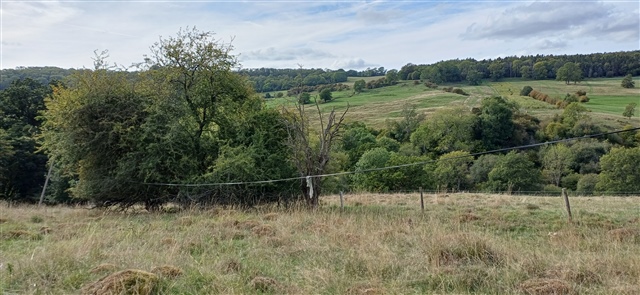
  • A fine example of a low hanging fibre optic network cable, around four feet off the ground (1.2 metres), less if you stand on an ant hill.

    At least someone has tied warning rags on it to alert runners and walkers.