


Hello everyone,
While studying the ISO 19650 information management framework, I’ve been reflecting on how its theoretical structure compares with what actually happens on real projects.
The standard defines a clear sequence of information management stages:
• Procurement – defining information requirements and selecting capable teams
• Planning – structuring information delivery using MIDP and TIDP
• Production – collaborative creation and coordination of information in a CDE
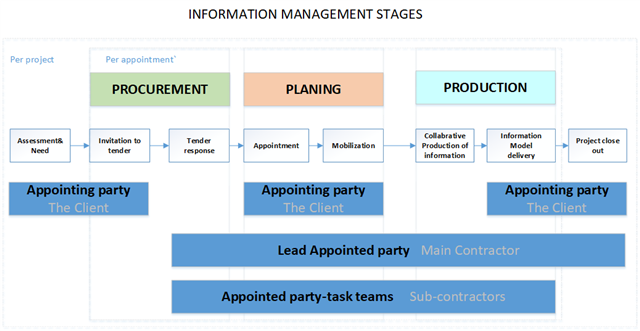
This structure works well in theory and has been applied successfully on large infrastructure programmes such as the Elizabeth Line.
However, when we look at everyday engineering projects, the situation can sometimes feel very different.
Many teams still face challenges such as:
• unclear information requirements during procurement
• inconsistent BIM execution plans
• difficulties coordinating multiple task teams
• limited adoption of structured CDE workflows
In practice, some engineers feel that ISO 19650 provides a strong governance framework, while others believe it can be difficult to implement fully in smaller or fast-moving projects.
I’m interested in hearing perspectives from engineers and BIM professionals who have worked with ISO 19650 workflows.
Some questions that may be interesting to discuss:
• Do most projects actually follow the procurement → planning → production structure defined by ISO 19650?
• Where do you see the biggest implementation challenges?
• Are MIDP and TIDP used consistently in practice?
• How effectively are Common Data Environments supporting real collaboration between disciplines?
• Do smaller projects benefit from the same level of information governance?
I’m currently researching information governance in digital construction, and it would be very valuable to hear insights from engineers working across different sectors.
Looking forward to your thoughts and experiences.