G99 Application

Hi all,

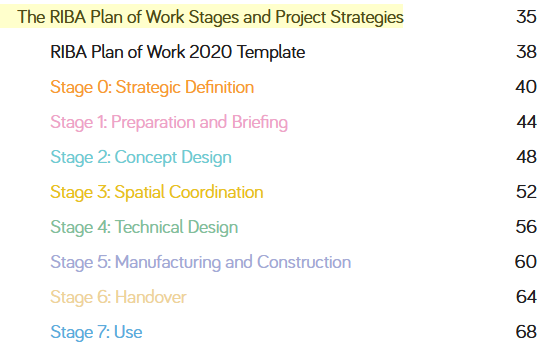
Bit of a hot topic this, but who is responsible for making a G99 application? Does it lay with the PD, as they have now submitted their Stage 4 designs, and specified the load and generator sizing. if so why?

Or does it lay with the installer, if so why? The PD is pushing it back onto the contractor.

Thanks

Heera

  • As far as the DNO are concerned the information is submitted on behalf of the customer. 

    (A person who is the owner or occupier of an installation or premises that are connected to the distribution network according to national grid.)

    https://connections.nationalgrid.co.uk/downloads/24747 )

    Now usually the customer does not do it all themselves but engages someone to sort it out, and that may be a design authority such as a consultancy or the installer, or indeed some third party paperwork specialist. So it boils down to what has been contractually agreed, and if nothing, its a question for the customer, are they doing it, or do they want to pay someone else some more to do it for them.

    More generally what level of DNO involvement and who is liaising is normally something to be all agreed before work actually starts !!

    -Because at least in principle, something may otherwise be built that is then refused a connection - not very  likely for a small installations built from  of standard type approved  parts (Solar panels on a few bungalows sort of thing), but larger jobs of many tens of kVA and upwards that may need network reconfiguration are another matter entirely.

    Mike.

  • Yeah I get what you mean. Its a tough one really, as nothing was agreed before hand. Generator has been sized for 300kVA, but it will only back up essentials supplies of being around 66kVA. 

    Personally I believe the PD should have carried out the G99.

  • If you are (just) the installers do you even have access to all the design information you would need to submit it ?
    As if not the designer needs to provide that to the installer anyway, and if they are doing that they may as well send a copy to the DNO as any query that was not a trivial answer would get reflected back to them...

    I presume the problem, as always, is really one of un-budgeted extra costs and effort... 

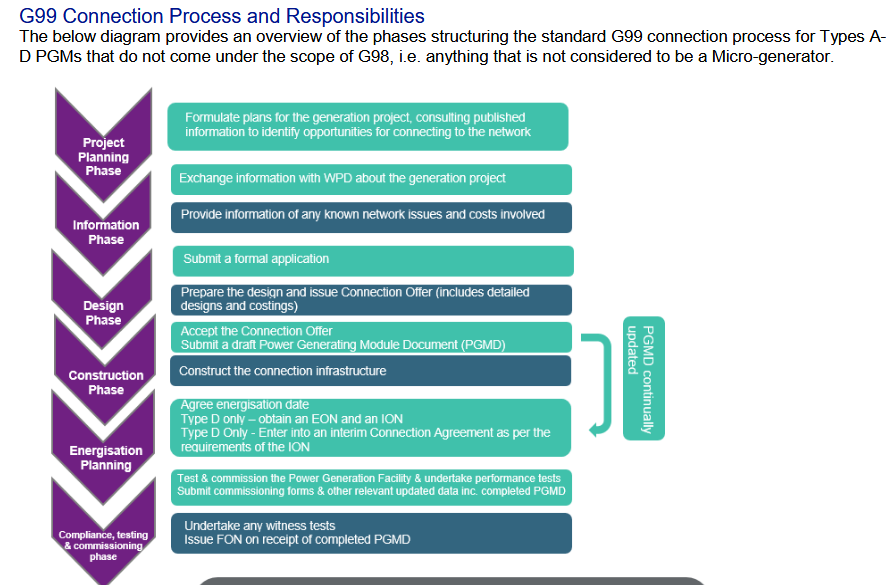
    How far is it down this process chart ?

    Dark green is DNO action, light green is customer or representatives..

    Mike.

  • I agree with Mike. This is ultimately the responsibility of the generator (being the legal entity that owns the grid connection) i.e. the customer, and it will always be their signature on the connection agreement.

    It's very common on retrofit C&I projects for the installer to take on the role of agent / installer on the customer's behalf, because for many projects they are the ones with the knowledge that it needs doing, how to do it and what information needs to go into it. Most installers will offer to manage it (not least because it gives them control of that part of the project, which does make their life somewhat easier, and often it scores brownie points during the sales process by providing a turnkey solution) and many customers assume that it's the installer's role as a result.

    But it's also not unheard of for G99 to have been dealt with by the developer, particularly for new builds where generation really ought to have been considered alongside any other loads when requesting the supply. After all, as Mike says, it can represent a considerable risk to the project until consent is secured. That developer might then split out particular roles, such as instructing contestable works by an ICP while a generator installer does the commissioning notifications, as they contract out the works.

    I suggest everyone checks their contracts. If it doesn't say anywhere then it's probably for the Client to take on, and perhaps pass down as a variation.

    However, if you're the installer, it's not normally hugely difficult to manage the process and as long as the risk of any reinforcement costs or delays (etc) don't fall on you probably less expensive than any delays due to an uninformed customer getting it wrong.