Your Favourite Electrical Engineering College Course Question

Hello, this is my first post. I’m interested in hearing about electrical engineering assignment questions you encountered during college or sixth form that were particularly engaging, really made you think and therefore memorable. Or if you could design one such question now, what would it be?

  • OK its not Friday, and I'm holding a mug of warm tea so I'll indulge you.

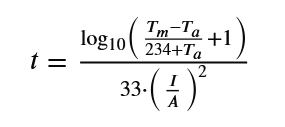
    Lets assume for argument that when we say the wire is  'at its fusing current' we use Onderdonk's formula  for reaching melting point after exactly one one second.

     this is the US version where A is in circular mils multiply mm² by 1973.5, or if you are in a hurry 2000,  to get circular mils.. 
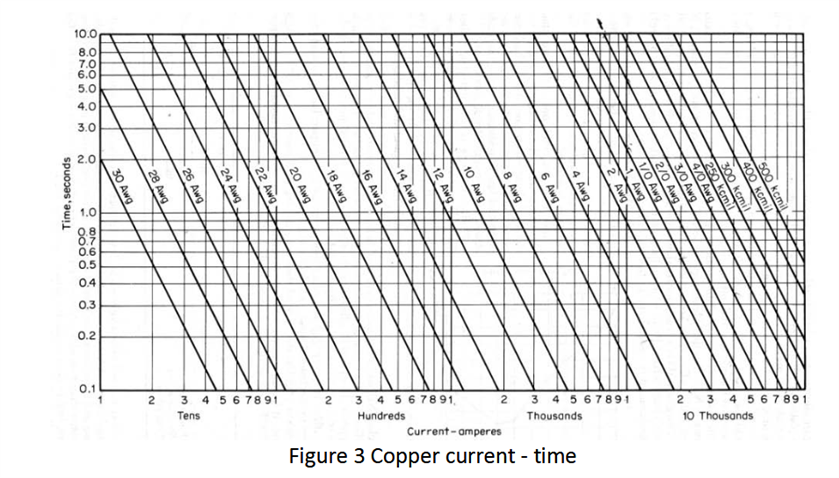
    Then look at the answer, mutter I don't believe it and  round it off and say call it 300 amps at one second for 1mm2 to make it easy.

    is that credible ?

    1mm2 is about 17AWG.  Yeah, could be.

    300A is only 1875000000000000000000 electrons going past per second. (1.875 E 21)

    each atom of copper provides 2 electrons, and in a 1m length of copper wire 1mm2 cross-section there are (1000cubic mm ,at 9 mili-gram per cubic mm  that is 9 grams,  and at 64 grams per mol,

    Lemma 1

    Avagadros no is 6.022×10²³g/Da where the Dalton is 

    1.660×10⁻²⁷ kg -== mass of one atomic unit.(almost one proton. )

    each copper atom is therefore 1.062E -25 kg. 
     so our 1m of 1mm (9 grams) wire has 8.46 E+22 atoms of copper, so 

    1.693E+23 Free electrons. 

    End Lemma 1

    given 1.693E+23 Free electrons.  and the flux  (1.875 E 21)  each is doing about 1cm/second. 

    so in the half cycle period of 10msec, its moved about 100um (times pi/2)  QED

    Note that the thermal velocity of the electrons - whcih is random, when this is a mean movement in the direction of current is much more. 
    equating mv^2  to kT 

    (at room temp T=300K )  Boltzmann constant  k = 1.380649×10⁻²³ J⋅K−1 eo energy per particle is 4.14e-21Joules

     electron mass 9.109 ×10⁻³¹ kg 

    so v squared is ~ 

    thermal velocity is ~ 6.741 E+4 m/second so about a million times faster. 


    The assumption that the  E field in any sensible wire only changes the electrons a very  gently push of the random walk  sort of way is valid. If electrons in a wire were remotely like those in a vacuum like a CRT, then there would be a square law I/V curve,  as there is for triodes.

    But in this case ohms law holds, and by more than a million to one, which is nice.

    Mike.

  • fob-answer

    (free on board answer) : Had to refresh my memory. Can't say I properly 'understood' at the time.

    In some ways one may think that renormalisation is needed so that the probability adds to 100%, so all electrons go somewhere. That would be 'normalising' against the wrong thing.

    Consider: think about a fair coin toss, that is caught mid air by a seagull. Whilst the probability of heads/tails is still 50% each, the actual probability of a head or tails in your hand (bandgap/forbidden zone) is a hard zero.

    We should, for the conduction electron case, instead of looking at at these energy levels (to see if the level has an electron pigeon holed into it), we should consider the electrons which are being 'lobbed' up from base levels, by the thermal distribution (with temperature T) which drives the distribution.

    If there is no levels ready to accept the electron, then it falls back into the electron sea, and the probability of finding the electron in the non-existent level is zero.

    It's like high jump records going in steps that are now metric, rather than imperial... (exact centimetre increments). 

    So it's a mistaken probability renormalisation problem and poor explanation of the statistics (very similar to lots of medical stats misunderstandings).

    On the sparks and arcs, IIRC, a very high voltage is needed to start the creation of the plasma in the gas, but as soon as that's established the voltage collapses (probably because we've changed state and eliminated the band gap, see above) so the electronic circuit need a saturating transformer that generates the initial extra spark voltage but conducts saturated big amps there after..