I was always taught to line it up, stick it in the bottom, look away and push it smartly in. I think attitudes may have changed now, however.
To add to that 'safe use of old fuses' advice, from more than one old sweat sparks, (more or less from the era of hot riveting by hand when such attire was common), a flat cap used as a mitten will catch the arc products in the unlikely event of closing onto a fault and liquid fuse wire spraying out of the holder ends. The difference between a singe mark on the cotton twill and what may become a 3rd degree burn to the ungloved hand is worth the few seconds of precaution.
It's not really that the older electricians were more careless per-se, or unaware of the risks, just that you may not recognise their idea of safe working and PPE.
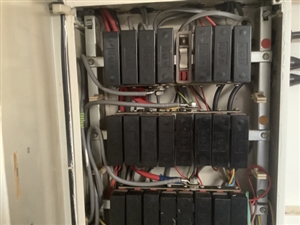
The risk may be higher now is that some one with more modern era education may not realise that the exposed bars are live and may lean on them - like unguarded machines of any kind it is nowadays unfamiliar. I can well remember being told to put one or both hands behind my back, 'like royalty' when looking into any strange/ unfamiliar machine, to reduce the risk of that childish 'I wonder what this bit is for ?' prod and loss of finger.
I was always taught to line it up, stick it in the bottom, look away and push it smartly in. I think attitudes may have changed now, however.
To add to that 'safe use of old fuses' advice, from more than one old sweat sparks, (more or less from the era of hot riveting by hand when such attire was common), a flat cap used as a mitten will catch the arc products in the unlikely event of closing onto a fault and liquid fuse wire spraying out of the holder ends. The difference between a singe mark on the cotton twill and what may become a 3rd degree burn to the ungloved hand is worth the few seconds of precaution.
It's not really that the older electricians were more careless per-se, or unaware of the risks, just that you may not recognise their idea of safe working and PPE.
The risk may be higher now is that some one with more modern era education may not realise that the exposed bars are live and may lean on them - like unguarded machines of any kind it is nowadays unfamiliar. I can well remember being told to put one or both hands behind my back, 'like royalty' when looking into any strange/ unfamiliar machine, to reduce the risk of that childish 'I wonder what this bit is for ?' prod and loss of finger.