This discussion has been locked.
You can no longer post new replies to this discussion. If you have a question you can start a new discussion

Launch of our new factfile on arc flash risk management

Former Community Member

We published a new factfile on Arc flash risk management.
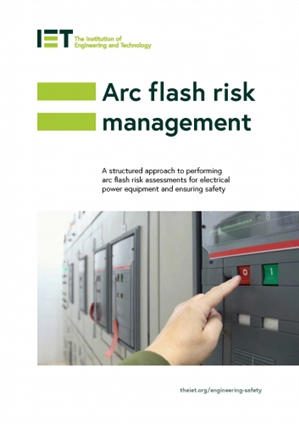
e44cfbb534ed373d69072e74a6988bf1-huge-arc-flash-risk-management-fact-file---front-cover_page_01.jpg

This factfile seeks to set out the key principles of arc flash risk management using a risk-based approach. It is aimed at persons with responsibility for the management of safety in the control and implementation of work on electrical power equipment. This factfile provides an assessment process and there is also a commentary on recognised standards and test methods for PPE in Appendix 2.

We are interested in your thoughts! Please read our factfile and ask any questions or share your thoughts below.


Parents
  • Interesting. 

    Below some first observations and possible refinements.

    An absolute  figure of the number when discussing workplace deaths would be worth adding, to allow the risk to be properly quantified in micromorts or similar. 

    Saying X% of  fatalities are electrical is quite interesting, but it makes a huge difference to the reader (and me personally) to know if that is 10 % of 10 deaths a year, or of 10,000 - in one case the risk to me may compare to crossing the road (DoT assume 1 micromort approx £1.60 for value of road improvements like adding a zebra crossing), or perhaps smoking a cigarette (also ~ 1uM), vs free climbing a building (1000uM) and juggling fireworks (no idea really, seems like it ought to be bad) on a daily basis. Only with such information can a balanced decision be reached. (sort of thing I mean)

    In terms of the risk of burns and how much PPE might be needed, some UK specific worked examples would be a good calibration, - how close for example does the unguarded flesh have to be to a worst-geometry  arc  downstream of a 13A fuse to suffer a given degree of calorific illumination, or better, to suffer a burn of known severity.  I suspect based on personal experience that ought to be in the range 10-20cm, but a calculated example would be good sanity check.

    And then a similar calculation for maximum let-through from a 100A house fuse and an 800A substation fuse - where I hope less of us have an experimental  practical feel, but the closest approach distance before PPE becomes strongly advised is then a more useful figure.

    References to 208V, and the use of none SI units - why calories and not joules  when we work in amps volts and seconds for the electrical stuff , does make me wonder if this is based on US-centric research, and then further to wonder how well it will  apply to likely UK fault levels.

    Mike.

Reply
  • Interesting. 

    Below some first observations and possible refinements.

    An absolute  figure of the number when discussing workplace deaths would be worth adding, to allow the risk to be properly quantified in micromorts or similar. 

    Saying X% of  fatalities are electrical is quite interesting, but it makes a huge difference to the reader (and me personally) to know if that is 10 % of 10 deaths a year, or of 10,000 - in one case the risk to me may compare to crossing the road (DoT assume 1 micromort approx £1.60 for value of road improvements like adding a zebra crossing), or perhaps smoking a cigarette (also ~ 1uM), vs free climbing a building (1000uM) and juggling fireworks (no idea really, seems like it ought to be bad) on a daily basis. Only with such information can a balanced decision be reached. (sort of thing I mean)

    In terms of the risk of burns and how much PPE might be needed, some UK specific worked examples would be a good calibration, - how close for example does the unguarded flesh have to be to a worst-geometry  arc  downstream of a 13A fuse to suffer a given degree of calorific illumination, or better, to suffer a burn of known severity.  I suspect based on personal experience that ought to be in the range 10-20cm, but a calculated example would be good sanity check.

    And then a similar calculation for maximum let-through from a 100A house fuse and an 800A substation fuse - where I hope less of us have an experimental  practical feel, but the closest approach distance before PPE becomes strongly advised is then a more useful figure.

    References to 208V, and the use of none SI units - why calories and not joules  when we work in amps volts and seconds for the electrical stuff , does make me wonder if this is based on US-centric research, and then further to wonder how well it will  apply to likely UK fault levels.

    Mike.

Children
No Data