This discussion has been locked.
You can no longer post new replies to this discussion. If you have a question you can start a new discussion

Launch of our new factfile on arc flash risk management

Former Community Member

We published a new factfile on Arc flash risk management.
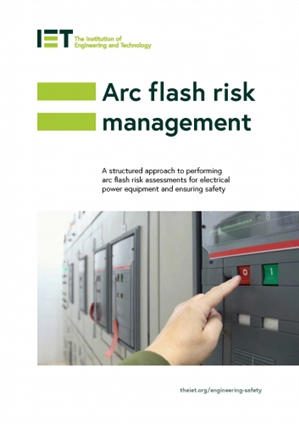
e44cfbb534ed373d69072e74a6988bf1-huge-arc-flash-risk-management-fact-file---front-cover_page_01.jpg

This factfile seeks to set out the key principles of arc flash risk management using a risk-based approach. It is aimed at persons with responsibility for the management of safety in the control and implementation of work on electrical power equipment. This factfile provides an assessment process and there is also a commentary on recognised standards and test methods for PPE in Appendix 2.

We are interested in your thoughts! Please read our factfile and ask any questions or share your thoughts below.


Parents
  • mapj1: 
     

     and the use of none SI units - why calories and not joules  when we work in amps volts and seconds for the electrical stuff , does make me wonder if this is based on US-centric research, and then further to wonder how well it will  apply to likely UK fault levels.

    I can answer that one … arc flash PPE … to British and European Harmonized standards … is rated for energy densities measured in in calories per square centimetre. Joules are not used because the conversion between Joules and calories is not linear with temperature.

    Arc flash energy density is dependent on the arcing current, not the fault current … although there is (perhaps obviously) a relationship between the two. 

    There is no IEC, CENELEC or British standard for assessing arc flash energy density. We usually protect against it at LV AC with either “work dead” practices, or the form factor of switchgear and selection of appropriate protective devices (or, where necessary the use of backup protection).

    With DC systems, it's a different matter, and particularly in the process of installation, repair, maintenance and testing or large battery systems, arc flash can be a consideration.

Reply
  • mapj1: 
     

     and the use of none SI units - why calories and not joules  when we work in amps volts and seconds for the electrical stuff , does make me wonder if this is based on US-centric research, and then further to wonder how well it will  apply to likely UK fault levels.

    I can answer that one … arc flash PPE … to British and European Harmonized standards … is rated for energy densities measured in in calories per square centimetre. Joules are not used because the conversion between Joules and calories is not linear with temperature.

    Arc flash energy density is dependent on the arcing current, not the fault current … although there is (perhaps obviously) a relationship between the two. 

    There is no IEC, CENELEC or British standard for assessing arc flash energy density. We usually protect against it at LV AC with either “work dead” practices, or the form factor of switchgear and selection of appropriate protective devices (or, where necessary the use of backup protection).

    With DC systems, it's a different matter, and particularly in the process of installation, repair, maintenance and testing or large battery systems, arc flash can be a consideration.

Children
No Data