This discussion has been locked.
You can no longer post new replies to this discussion. If you have a question you can start a new discussion

Launch of our new factfile on arc flash risk management

Former Community Member

We published a new factfile on Arc flash risk management.
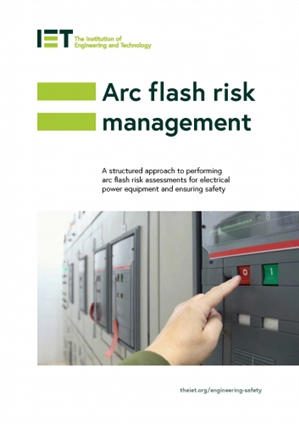
e44cfbb534ed373d69072e74a6988bf1-huge-arc-flash-risk-management-fact-file---front-cover_page_01.jpg

This factfile seeks to set out the key principles of arc flash risk management using a risk-based approach. It is aimed at persons with responsibility for the management of safety in the control and implementation of work on electrical power equipment. This factfile provides an assessment process and there is also a commentary on recognised standards and test methods for PPE in Appendix 2.

We are interested in your thoughts! Please read our factfile and ask any questions or share your thoughts below.


Parents
  • However even Ralph Lee's method from the 1982 paper (poor scan below) that is now considered dreadfully conservative for LV (inductive supply and resistive arc, and max at arc voltage 70% the supply voltage and I arc 70% of PSSC) is worth explaining and working through in something supposed to  be introductory, just to allow folk to understand how to put safe upper bounds on some of this stuff - and by the way he managed to use metric units, in the US, and  even back then.

    A more up to date view with a less cautious set of assumptions from a 230V country (ZA) is here

    Mike

    PS that older paper.

    The_other_Electrical_Hazard_Electric_Arc.pdf

Reply
  • However even Ralph Lee's method from the 1982 paper (poor scan below) that is now considered dreadfully conservative for LV (inductive supply and resistive arc, and max at arc voltage 70% the supply voltage and I arc 70% of PSSC) is worth explaining and working through in something supposed to  be introductory, just to allow folk to understand how to put safe upper bounds on some of this stuff - and by the way he managed to use metric units, in the US, and  even back then.

    A more up to date view with a less cautious set of assumptions from a 230V country (ZA) is here

    Mike

    PS that older paper.

    The_other_Electrical_Hazard_Electric_Arc.pdf

Children
No Data