This discussion has been locked.
You can no longer post new replies to this discussion. If you have a question you can start a new discussion

240v outdoor plugs/socket regs or guidance for industrial work areas

Can someone point me in the direction of regs or good guidance relating to outdoor use of a 16a commando type socket vs 13a standard outdoor domestic socket in an outdoor industrial setting. We have an electrician who is arguing that because of rcd protection the 16a blue sockets are overkill. My view is the 13a plugs/sockets are dangerous in the wet - where the socket has little ip rating once the cover is opened. I’m struggling to find good guidance that supports my arguments.

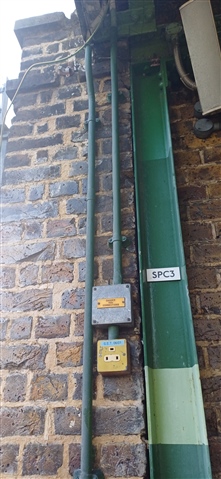
  • not 230v either by the look of the labeling on the box above could it be expecting the DP fused plug perhaps? 55-0-55?

    These chaps suggest railway use https://www.plugsocketmuseum.nl/British2.html

    which fits your photo.


    Mike.

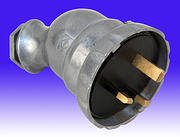
  • Look close and you will realise it really is an oddity.

    flameport.com/.../walsall_gauge_socket_plug_13A.cs4

  • One of two Walsall Sockets installed outdoors I have seen today, barely under cover. 

    These "oddities" are about if you keep your eyes open and I bet at least one forum member knows where they are.

  • plugs had replaceable fused pins

    I'm not sad that they have fallen by the wayside ... slightly loose connection in the plug and stiff socket contacts meant that pulling the plug left the fuses stuck in the socket - with live caps exposed.

       - Andy.

  • Very true, my Dad had a similar metal plug and socket set installed on the outside of the house we lived in over fifty years ago, but in reality any 13 amp plug could be used in the socket.

    That was initially okay, because it was only used for gardening, then the fish pond pump was plugged in on a semi permanent basis without a proper IP rated plug.

    They have been available for many years, but have fallen out of general use.

    Remember though, fifty years ago most UK 110 volt site tool plugs had replaceable fused pins, we do have a long tradition of fusing plugs in the UK.

  • like the one on Grahams pressure washer,

    And the 16 A outlet in the workshop part of my garage, for the welder (because I don't want to damage a BS 1363 plug and socket-outlet with it) ... but also very handy for connecting a camp-site mains lead set when the Gazebo is up in summer !

    The gazebo wouldn't have lasted long over the past couple of days, though ... we've had a rather bad case of wind !

  • A potential downside of the metal range type IP66 BS 1363-type sockets is that they may be used with a plain standard BS 1363-1 plug, which defeats the IP rating.

    The BS EN IEC 60309 series plug and socket-outlet are always at least IP44 when mated.

    • Varying product designs in compliance with either BS1363, BS546, or Walsall type A & B pin configurations
    • IP66 ingress protection rating
    • Designed primarily for installation with metal conduit systems

    Never, say never.

  • see Regulation 533.1.201

    A slight typo, Graham - Reg 553.1.201.

    You can debate whether 3 kW+ machines are for, "household and similar use".

    an outdoor industrial setting

    Conversely, if BS1363 sockets are primarily for household and similar premises, including shops, offices, etc. they are probably not ideal for industrial premises. In fact, Clause 1 of BS 1363-2:2023 says, "This part of BS 1363 specifies requirements for ... socket-outlets for household, commercial and light industrial purposes ... (my emphasis).

  • where the socket has little ip rating once the cover is opened

    There are differing types - some have covers that can't be closed while the socket is in use (e.g. https://www.toolstation.com/bg-ip55-socket/p13533) while others shut nicely with almost any kind of plug (e.g. https://www.toolstation.com/bg-ip66-single-13a-socket-with-large-enclosure/p33435) (as well as others in between) - so while with neither would you want to do the actual plugging or unplugging in the pouring rain, some may well be suitable for use in the wet.

    A lot depends on what the sockets are being used for and whether the plugging/unplugging is likely to happen in wet conditions. Most power tools probably wouldn't be suitable for use in the wet regardless of what kind of plug they're fitted with

       - Andy..