This discussion has been locked.
You can no longer post new replies to this discussion. If you have a question you can start a new discussion

Use ferrule to increase solid wire size

Hi,

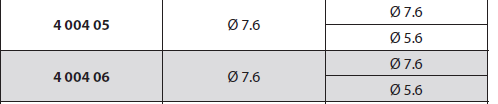
I need to fit a 3-phase distribution block, and the closest candidate has two types of inputs—input (two) and output (six). The input is 7.6mm2, and the output is 5.6mm2, and one of the inputs can be used as an output. I only use rigid conductors of 1.5-6mm2 in the house - the lights are 1.5, the majority is 2.5, power-hungry is 4mm2, and one fat transit is 6mm2. Depending on the breaker's possible load, I use 4 or 6mm2 inside the wiring closet to pass between the power-hungry groups. I don't use

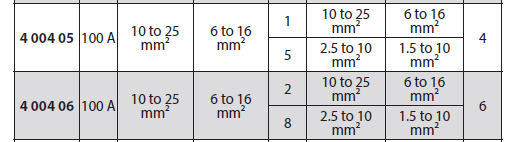
Within this paradigm, I would like to use 6mm2 as an input and possibly 4mm2 as an output for the distribution block. But, following Legrand's user manual, the 7.6mm2 should accommodate 10 to 25 mm, and I am falling one step short of matching 6mm2. IMHO, I can use aluminum pressed ferrule to increase the solid wire size - the connection surface must be enough to avoid any dangerous situations. What is your take on it?

Regards

  • You should not put a ferrule on a solid wire.

  • Ah and all is revealed.

    you mean hole diameters when you talk about the 7.6mm and the output is 5.6mm- thats' the circle and line symbol.


    so the large holes take 10- to 25 square mm, and the small holes take 1.5sqmm to 10sqmm


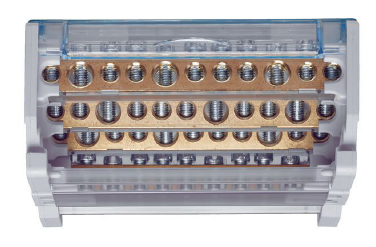
    So in your shoes, looking at the picture, I'd either just use the small holes for everything, or if I had to then double over the end of the 6mm into the larger hole, so that the screw has something to bite down onto. The risk to avoid is that the wire goes beside, and not under, the screw, and is damaged by the threads but not well gripped.
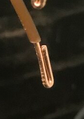
    What I  mean by 'double back'

    Personally, for those terminals I'd only ferrule for stranded (hairy) wires. However to an extent it is a personal house style thing, and I'd give it about 10 mins before someone else says the opposite.

    note that in the UK 6mm2 would normally be 7 strands, not solid core. I'd still fold if the  hole was too big,  so the terminal was better filled.
    Mike

  • It is an EU (NL) market - the leaflet is at the following link: https://www.elektramat.nl/amfile/file/download/file/4911/product/1261088/ . So, the solution seems good then, right?

    Regards

  • Do you have a link to the data sheet for the device or a picture of the terminals ?
     7.6mm2 is a very odd cable size, is it intended for the American market perhaps ? Generally ferrules (or crimp pins)are a recognized way to fit cable to the 'wrong' terminal, as is doubling back a wire that is too thin. However, which is the 'right' method rather depends on the design of the terminals, and also which set of regs apply - is this a UK installation ?

    Mike.