I have a 15 way dual RCD board on my home installation. I have lots of electronic equipment plus a full range of kitchen and laundary appliances, an outside workshop with machinary and a amatuer radio station. I have a standing earth leakage of 11mA acroos the 2 RCDs. Never had a nuisance trip other than the senior management pooring water over her steam iron, this got replaced with an early wedding present (she was lost for words and no dinner for me that night).
JP
I have a 15 way dual RCD board on my home installation. I have lots of electronic equipment plus a full range of kitchen and laundary appliances, an outside workshop with machinary and a amatuer radio station. I have a standing earth leakage of 11mA acroos the 2 RCDs. Never had a nuisance trip other than the senior management pooring water over her steam iron, this got replaced with an early wedding present (she was lost for words and no dinner for me that night).
JP
Are the RCD type AC? The type AC could mask/blind the nuisance trip
That's an interesting point ... if, with the loads connected, the RCD is still able to operate within parameters from a Type AC RCD test (simulating a supplemental fault over the standing conditions), is that OK?
(I'm fully aware that what I'm proposing here is very "loose", but certainly a discussion point.)
However, we also need to consider that, in the "blinding" situations, currents, such as smooth DC, changing/pulsating DC, and/or high frequency AC, need to appear as a residual current ... and not all protective conductor currents, nor all 'leakage' currents are 'residual currents' in the live conductors.
And ... not all Type AC RCDs are 'blinded' in the same way, to the same thresholds.
The actual blinding from some electronic equipment might only occur during a fault downstream of some electronics - as shown in Fig A53.1.
And ... not all Type AC RCDs are 'blinded' in the same way, to the same thresholds.
Agreed
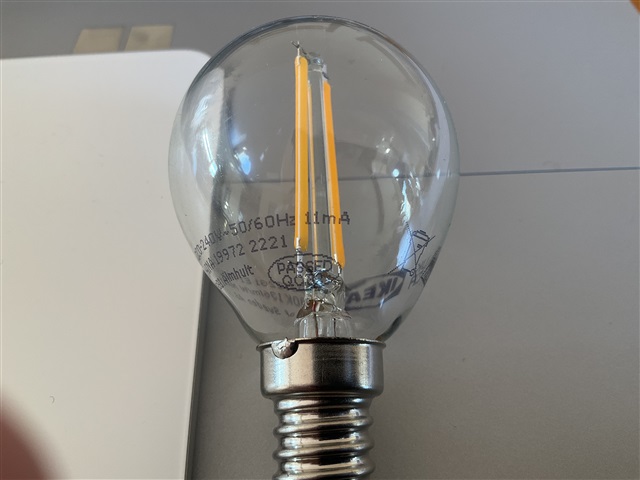
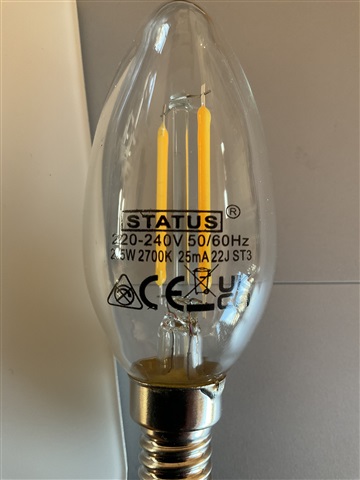
But we do know they (Type AC RCD) get blinded or may become blinded to a greater or less degree. Now consider the domestic dwelling for the scenario a light bulb fails (lamp to engineers) Home owner/occupier replaces it. Firstly the original lamp could of been filament or halogen or florescent/compact florescent the replacement surely by now will be LED thus the resistive load now becomes an electronic load with or without a certain amount of DC leakage.
Firstly the original lamp could of been filament or halogen or florescent/compact florescent the replacement surely by now will be LED thus the resistive load now becomes an electronic load with or without a certain amount of DC leakage.
How can you have any leakage from anything with a 2-wire connection, like a BC or ES lampholder? (and no other connection to terra firma).
- Andy.
Firstly the original lamp could of been filament or halogen or florescent/compact florescent the replacement surely by now will be LED thus the resistive load now becomes an electronic load with or without a certain amount of DC leakage
Isn't that a matter for the product standards, and relevant legislation such as the Electrical Equipment (Safety) Regulations and the Electromagnetic Compatibility Regulations? A product manufacturer ought not to assume an electrical installation conforms to the current version of the national wiring code? They can, however, provide information and guidance for users and installers that highlight certain issues, I guess - but in the case of a general product with a standard plug, or a GLS replacement lamp, would the user even understand the information?
This debate about compatibility could go on and on in other directions. We do know that older RCDs (BS 4293 and BS 7288 prior to 2016) weren't necessarily tested for Electromagnetic Compatibility to the current levels - this could also be the case for RCDs to earlier versions of BS EN 61008 and BS EN 61009 than the current versions (although I haven't checked as of posting this) ... so are they safe for continued use if modern electronic devices are used in the premises?
How can you have any leakage from anything with a 2-wire connection, like a BC or ES lampholder? (and no other connection to terra firma).
Capacitive is possible in the cabling to the ceiling rose ... but that would rule out DC, and would be generally low-level 'leakage'.
However, if the lamp is damaged, and the user is being protected against accidental contact with live parts, say after the rectifier, would the type AC RCD operate is perhaps another question?
The RCD almost certainly will not trip, as the current drawn by the lamp will probably be less than what is required to trip a 30 mA RCD.
We're about to take you to the IET registration website. Don't worry though, you'll be sent straight back to the community after completing the registration.
Continue to the IET registration site