


"Ed Throws Trade Bodies Into Chaos Over DIY Solar!" (efixx) :-) lol
Cue another early amendment and Section in BS7671 and another 'membership' level in the brilliant CPSs for the trade to do DIY Solar installs.
:-)
"Ed Throws Trade Bodies Into Chaos Over DIY Solar!" (efixx) :-) lol
Cue another early amendment and Section in BS7671 and another 'membership' level in the brilliant CPSs for the trade to do DIY Solar installs.
:-)
I am not sure why we need to back feed into a 13 amp socket? There are a load of grid tie inverter/battery units which can connect to solar panels, so any item plugged into the unit is using solar and battery backed, without any back feed into a 13 amp socket. And they can't give away solar power without payment.
Clearly a battery feeding back into the grid without payment would be a bad move. And not much better with just solar.
My first thought was designed to allow tenants to have solar, owner occupiers already have the option. But to get paid for export, one needs a second MPAN number, so the solar would need to be less than the base load, and smart meter only show every half hour, so one has no idea of the base load, unless one already has solar.
A iboost+ can use any export over 100 watt, which is OK with a 6 kW array, but with 800 watt maximum it seems a bit pointless. Unless everyone is going to get a second MPAN number.
The phrase "balcony solar" or "plug in solar" or "grid tie solar" can equally apply to a battery/inverter with outlet sockets on the battery, which puts nothing back into the grid, to a device which does feed back into the grid. I note already a British plumbing outlet is offering solar which feeds into the grid, but there is a 99 day waiting list, but as someone who already has solar, I know solar really needs a battery as well, and also if I got balcony solar which feeds into the grid, who will know if the energy is from the G98 registered solar, or the plug in solar? I already have the MPAN number, so this would be a cheap upgrade for me.
But today's news, says we have too much solar, so to buy more solar when the export rate has already dropped from 15p to 12p seems a bit of a chance.

I am not sure why we need to back feed into a 13 amp socket?
Presumably to allow the generated electricity to simply be used elsewhere in the existing installation - without having to re-wire everything or run hazardous extension leads all over the place?
And they can't give away solar power without payment.
Partly the payments were to recompense for the high installation costs of conventional solar (access (scaffolding), labour, etc) - a DIY plug-in system should be a lot cheaper per kWhp, so the system might still might be attractive even without export payments. 800W should be enough to cover base load for much of a day, which alone might provide sufficient financial benefit (from reduced imports) - any exports could be just regarded as "pro bono".
Battery additions to PV can be useful in maximising self-consumption - but it makes the system more complicated - e.g. needing a CT on the incoming meter tails to judge how much the battery system should output to keep the overall installation just not-exporting. If exports would be relatively modest, it's much harder to justify the costs & inconvenience.
the export rate has already dropped from 15p to 12p
Mine's still 15p/kWh ... maybe find yourself a better supplier?
- Andy.

I do see there is a trade-off, danger due to overload, and danger due to trip hazard, but as it stands we don't know what will be on offer, the ring final was never perfect it can be overloaded if the load it too close to the origin.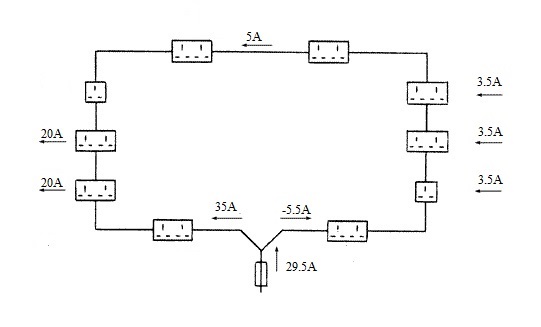 But add solar and the result can cause a massive over load, the idea is plug and play so nothing stopping putting three solar arrays at one side of the house.
I will admit in my own house the ring final is not pushed anywhere near the limit, and who ever wired it, considered the safety aspect of running cables up/downstairs should one circuit fail, so it is split side to side, which also means more even load.
But plug and play is exactly that, someone who is in rented accommodation and simply unplug it and take it with them to their next home, it is aimed at the rental sector, owner occupiers can fit proper solar.
As to tariff, already made a mistake trying to use a company which offered more, ended up 20 months with BG and not a penny for export, within 2 weeks with Octopus I was getting paid for export, and although the export went down 15p to 12p, the off-peak also went down from 8.5p to 6.5p so it's down to whole package, not just one bit of it.
The point is, I can with 55 plus years in the trade, make an informed decision as to if plug in solar will pay for its self and is safe, at the price advertised one to two years to pay for its self, and safe enough on my shed roof where the supply is from a 16 amp bidirectional type A RCBO, but if I moved back to my old house, with an old Wylex fuse box, with MCBs instead of fuses, supplied from an old 4 module wide RCD made before they wrote on them type AC or A, and a single ring final covering the whole house, then it is very different.

I am not sure why we need to back feed into a 13 amp socket?
Because back feeding into the cold water tap would be a lot less safe  .
.
More seriously, the whole point of these systems is that they are plug and play. No need to call out an electrician to hardwire them.
I realise that would be a terrible prospect for many on this forum.
But add solar and the result can cause a massive over load, the idea is plug and play so nothing stopping putting three solar arrays at one side of the house.
If they are like the German systems, they will be limited to 800W unless wired through a special plug.
If 3 1/2A is enough to overload a ring, there's something seriously wrong already. In some cases, it could even reduce an overload.
But add solar and the result can cause a massive over load, the idea is plug and play so nothing stopping putting three solar arrays at one side of the house.
If they are like the German systems, they will be limited to 800W unless wired through a special plug.
If 3 1/2A is enough to overload a ring, there's something seriously wrong already. In some cases, it could even reduce an overload.
We're about to take you to the IET registration website. Don't worry though, you'll be sent straight back to the community after completing the registration.
Continue to the IET registration site