Arc Fault Detection Devices (AFDDs) & BS EN 61534 Powertrack Systems

Following the recommendation that AFDDs are “…recommended for single-phase AC final circuits…” and that, for “…Powertrack systems to BS EN 61534, the AFDD may be placed at a location other than the origin of the circuit…”, I am interested to understand how the industry is practically incorporating Arc Fault Detection Devices (AFDDs) within BS EN 61534 Powertrack installations.

From my perspective, the most logical arrangement would appear to be incorporation of the AFDD within the protection module downstream of the tap-off, whether serving a floor box assembly or desk-mounted socket module. However, when this has been raised with several of the larger manufacturers, the response has often been either uncertainty regarding the application, or confirmation that only RCBO- or RCD-protected modules are currently offered.

Given that AFDD provisions, and the associated wording within Amendment 1, are no longer particularly new, I am somewhat perplexed as to why manufacturers do not appear to be facilitating a compliant or standardised solution for this application.

I would be interested to hear how others within the industry are approaching this, and whether there are manufacturers or system designs currently addressing the requirement in a more integrated manner.
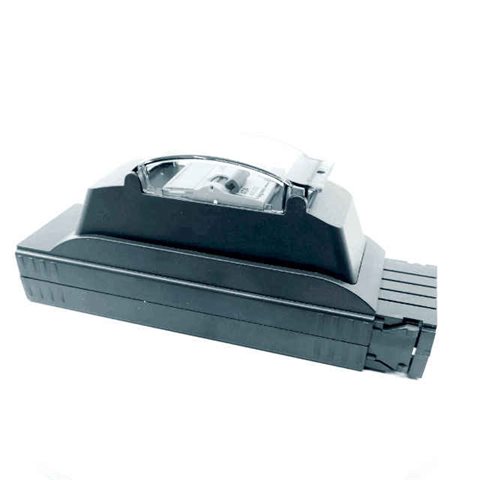
  • Hagar make a single module afdd without rcd, this could be placed at the origin and rcd track tap offs in the usual place

  • Not for 10 kA assemblies though — and again, I am trying to avoid locating the AFDD at the origin of the circuit where the Regulations specifically permit alternative positioning for BS EN 61534 systems, presumably to reduce the likelihood of nuisance tripping across extensive downstream flexible connections and tap-offs.

    I would also be somewhat cautious regarding warranty and compliance implications associated with an Electrical Contractor opening a manufacturer’s protective module assembly and retrofitting an AFDD device that was not originally intended as part of the tested arrangement.

  • I think the the key word there is "recommended" - i.e. it's not an actual requirement and (most) installations can therefore comply with BS 7671 without them.

    AFDDs certainly had a reputation for unreliability and "nuisance" tripping, not to mention being relatively costly (on both counts perhaps not unlike RCDs when they first arrived on the scene) - so I suspect the usual attitude is to leave them out  where ever possible - which tends to include situations where powertrack systems are common. From the manufacturer's point of view, if hardly anyone is asking for them, then there's little incentive to do any work to make them available.

       - Andy.

  • presumably to reduce the likelihood of nuisance tripping

    I would suspect the thinking is more to do with selectivity than nuisance tripping as auch- even if the AFDD trips only when it should, it wouldn't be good for it to take out the entire powertrack system, when the fault is actually on a single desk/lead/appliance - better to take out just the tap-off point that supplies the fault.

    The Yanks of course prefer both RCD and AFDD protection to be built into individual outlets - which provides even better selectivity (if at the cost on not protecting the supply side cables).

        - Andy.

  • Rather than blindly following a recommendation, I think it would be better to fully consider the consequences of omitting AFDDs in the individual circumstances. It would seem to me that the key purpose of AFDDs being "required" is to mitigate the risk of ignition from arcing where there is a particular risk from fire. From the list in 421.1.7, it looks like the concern is focused on circumstances where there is abnormal difficulty in evacuation or where an alarm may not be responded to in a timely way. 

    It is noteworthy that whilst 7671 adopts a mandatory attitude to such circumstances, the Irish Regs merely proffers a recommendation for all final circuits (no current limit and not just socket outlets) where external influences BE2, CA2 and CB2 apply and where irreplaceable goods might be endangered.

    So whilst the two jurisdictions might be all over the place with respect to the requirements on AFDDs, I think we should have a well-thought through, common sense, approach in making a determination on a recommendation, rather than being a slave to it.