Redundant protective equipotential bonding - how to deal with it?

A couple of weeks ago, we received a letter saying that the gas main in our road and the service pipes will be replaced by new plastic ones.

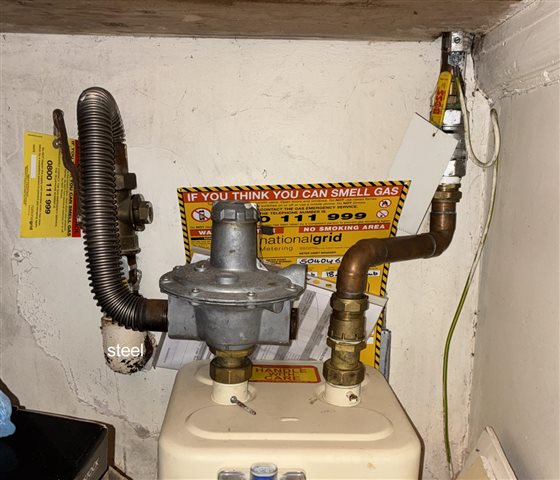
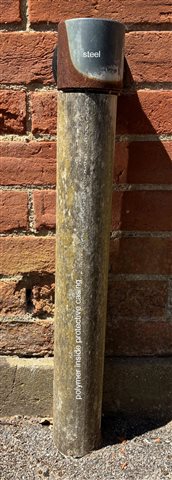
This morning, an engineer called, and after seeing our supply, he told me that the pipes are already plastic. The pipe is steel where it enters beside the meter, but I am told that it is metal only for the horizontal length which passes through the brickwork.

The water supply is very obviously plastic.

Despite the supplies being plastic, they are both bonded and there is extensive supplementary bonding.

The electrical installation appears to date from the early 1980s. Originally, there was RCD protection only on sockets which were likely to supply equipment outdoors. All RCBO DBs have been fitted and I have recently been moving some remaining circuits to the new boards.

That leaves the question as to what to do with the main protective equipotential bonding, which appears to be redundant because the supply pipes are not extraneous-conductive-parts. That aside, the RCBOs appear to make the supplementary bonding superfluous.

So, what do I do with it? I see no point in reconnecting it, but attempting to remove all of it would requireconsiderable effort.
  • I'd be tempted to leave it be - if the pipework is still connected to the earthing system elsewhere (e.g. boiler or hob c.p.c.s) then there;s no safety gain from removing it - so I'd direct any available effort to something more productive (even if that's sitting in the garden with a beer).

       - Andy.

  • Andy, thank you.

    There is a resistance of 20 mΩ or so between the c.p.c. of an adjacent socket and the boiler's flue. The cooker has no electrical bits.

    I suppose that my question is whether removing part of the bonding would present a risk. I certainly don't want to spend many hours removing all of it.

    I cannot quite leave it as it is because the building earthing and bonding bar will have to be re-sited and the bonding conductors re-routed. Until now, I did not think that I had a choice because I believed that the gas supply was metallic.

    My inclination is just to remove the bits that are in the way. Any other thoughts, folks?

  • This morning, an engineer called, and after seeing our supply, he told me that the pipes are already plastic.

    Another engineer called on Friday and said, "not necessarily", so they are going to have a look inside the pipe with a camera.