Hi all,
I would appreciate some views on an installation arrangement where BS 7671 doesn't seem to provide a directly applicable reference method.
I need to provide a 630 A LV supply from a feeder pillar mounted on a transformer to a panel in the adjacent room. The total cable route is only around 10 m routed through a trench in the room and includes passing through a fire-sealed wall approximately 200–300 mm thick.
I have modelled the circuit in Amtech using 2 parallel runs of 120 mm² single-core Cu XLPE AWA cables. 120 mm² is about the largest size I can practically terminate within the existing feeder pillar due to the available space, height above the trench and cable bending radius.
The cables run through an approximately 800 mm wide trench, currently covered with solid wooden covers. If I model this as an enclosed trench, Amtech gives a derated current-carrying capacity below the required 630 A.
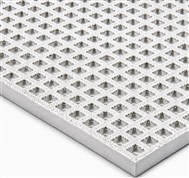
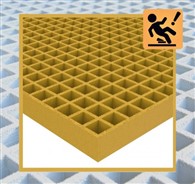
My proposed solution is to replace the solid wooden covers with open GRP mesh grating, allowing free movement of air between the trench and the room.
My thinking is that thermally this proposed arrangement should behave considerably closer to an open trough (reference method 117) than an enclosed trench. Using method 117, Amtech is actually satisfactory with 2 × 95 mm², although I intend to retain the 2 × 120 mm² cables because the arrangement is obviously not identical to a completely open trough.
Would you consider this a reasonable engineering judgement?
I appreciate that the strict answer may be that the installation does not exactly correspond to any BS 7671 reference method and therefore requires a specific assessment. However, I am questioning whether detailed thermal modelling/IEC heat-transfer calculations would really be proportionate for this arrangement, particularly considering the short cable run and the ventilation provided by the GRP mesh.
A few additional points:
- The two parallel runs will be separated by at least 2 cable diameters. The trench is around 800 mm wide, so there is sufficient room to maintain the spacing.
- The cables will be XLPE insulated (90 degree C). But I have modelled them as 90degree C Cable run to 70degree (4D3) as the terminations are only rated for 70/75degree.
- The trench is relatively very lightly populated with other cables.
- The AWA will be bonded at one end only, with a separate CPC provided, so I have not included additional armour losses due to circulating currents.
- I have ignored the approximately 200–300 mm fire-sealed wall penetration when determining the overall cable rating. My assumption is that, given the very short restricted section, longitudinal heat conduction along the cable and cooling on either side should prevent this from materially affecting the conductor temperature.
- This supply is one of the two supplies to the load. So, in normal condition, the cables will only carry a maximum of 315A. However, the assessment is done for contingency/failure condition based on breaker rating of 630A.
I'm particularly interested in people's views on whether treating an open GRP mesh-covered trench as reasonably approaching the thermal performance of an open trough, is a sensible and defensible approach.
Any thoughts or experience with similar installations would be appreciated.