


This academic year has been one of rebuilding, growth, and hands-on engineering for ShockSoc, the Leeds Electronics and Electrical Engineering Society. From the beginning of the year, our aim was to make the society more active, accessible, and practically useful for students across the School of Electronic and Electrical Engineering. We wanted ShockSoc to become more than just a society name, we wanted it to be a place where students could learn new skills, meet others with similar interests, and apply engineering concepts outside the lecture theatre.
At the start of the year, a major focus was re-establishing the society’s presence and encouraging new students to get involved. Through Freshers Fair, social media, course group chats, and direct engagement with students, we worked to make ShockSoc feel welcoming to both new and returning members. The society grew significantly, with strong interest from students who wanted to take part in technical projects, socials, and practical workshops. As a committee, we aimed to create an environment where students could participate regardless of their prior experience, whether they were confident with electronics already or completely new to hands-on engineering.
A key part of this effort was running practical workshops throughout the year. These sessions were designed to support students in developing skills such as soldering, embedded programming, electronics assembly, and mechanical design. Rather than only discussing engineering theory, we wanted members to physically build, test, and troubleshoot systems. This approach helped students gain confidence with tools, components, and real engineering problem-solving. It also encouraged teamwork, as students often worked in groups of 5, shared ideas, and helped each other debug problems.
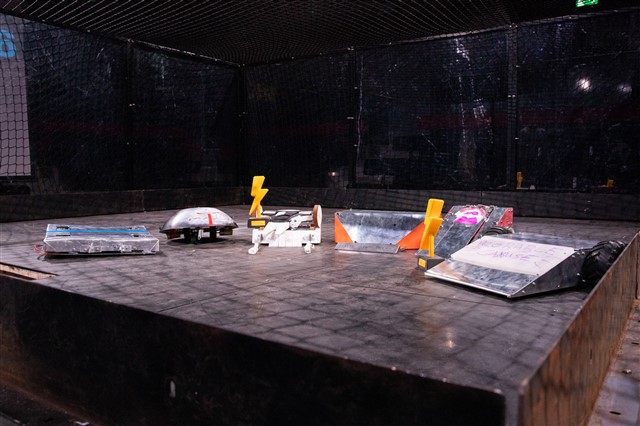
The largest project of the year was the revival of the Robot Fighting League. After around two years without a full competition, bringing the event back became one of ShockSoc’s main goals. The event required months of preparation, including planning the competition format, coordinating teams, organizing workshops, promoting the event, and most importantly, ensuring that the competition could run safely. Interest was extremely high, with over 250 students initially signing up and around 25 teams expressing interest. The final event brought together 7 competing teams, around 35 competitors, and over 150 attendees.
Reviving the Robot Fighting League was not simply a case of booking a venue and inviting teams. One of the biggest challenges was safety. The original arena had suffered damage in previous years, particularly the roof panels, meaning the event could not return in the same format without careful review. As a committee, we had to rethink how the competition could be delivered responsibly. This involved working within the university and union safety expectations, restricting high-risk robot designs, and banning spinning weapons for this year’s competition. Although this limited some of the more destructive elements of robot combat, it allowed us to bring the event back in a controlled and sustainable way.
To support the competition, we also organized technical preparation sessions for teams. These included soldering workshops and sessions based around ESP32 control boards, helping students develop the electronic and embedded systems needed for their robots. For many participants, this was their first time building a full working system involving mechanical design, electronics, firmware, power systems, and real-time control. The competition gave students a chance to experience the kind of integration challenges that engineers face in industry, designing something that is not only theoretically correct, but robust enough to survive testing, failure, and unexpected behaviour.
The final Robot Fighting League event was one of the highlights of the year. Seeing teams bring their robots into the arena after months of preparation was incredibly rewarding. The event created a strong atmosphere of excitement, competition, and support, with students cheering for teams, discussing designs, and learning from each other’s approaches. It was also a reminder of why student-led engineering societies matter. They give students the opportunity to take ownership of projects, make mistakes, solve problems, and build confidence in a way that complements academic learning.
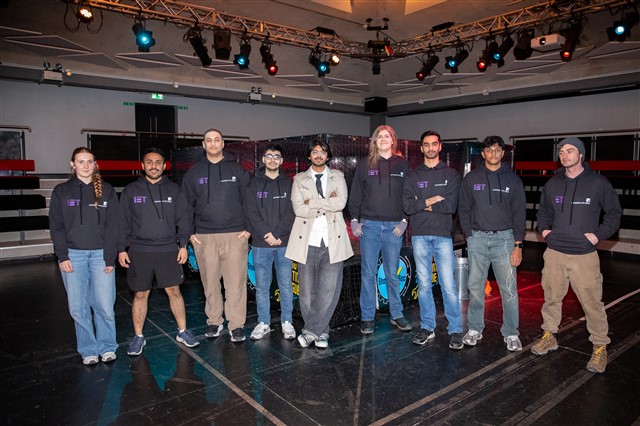
Behind the scenes, the year also involved a lot of committee coordination and stakeholder communication. ShockSoc was led by a committee of nine, with members contributing to different areas including logistics, finance, welfare, socials, publicity, technical preparation, and the Robot Fighting League. We also maintained communication with external and university stakeholders, including the IET and university staff, while managing funding, resources, and event planning. The society secured over £1,500 in funding from the IET, which helped support our activities and allowed us to make events more accessible to students. Also receiving spare components from the university.
One of the most important lessons from this year was that successful engineering activities depend on more than technical knowledge alone. They require communication, planning, safety awareness, adaptability, and teamwork. Throughout the year, ShockSoc had to respond to practical challenges, from event logistics and equipment limitations to safety constraints and team coordination. These challenges helped us grow as a committee and made the final outcomes even more meaningful.
Looking back, this year has been a major step forward for ShockSoc. We rebuilt momentum, increased engagement, delivered practical learning opportunities, and successfully brought back one of the society’s most ambitious events. More importantly, we created opportunities for students to connect with each other through engineering. Whether someone attended a workshop, joined a robot team, helped organise an event, or simply came along to watch the competition, they became part of a wider community built around curiosity, creativity, and practical problem-solving.
As ShockSoc moves forward, we hope this year becomes a foundation for future committees to build on. The revival of the Robot Fighting League showed what is possible when students work together with ambition and resilience. With continued support, future years can expand the competition further, develop more technical workshops, and continue making ShockSoc a space where students can turn engineering ideas into real working systems.
For us, this year was not just about running events. It was about rebuilding a society, creating a stronger engineering community, and showing that hands-on learning can be one of the most powerful parts of the student experience.
This years progress was made possible by Mfaz Bin Waheed, Mortadha Rupani, Eleanor Barker, Jack Plachinski, Lyra Pearson, Aaron George, Hasham Ahmed.
Article written by Mfaz Bin Waheed
-

Emily Hadlum
-
Cancel
-
Vote Up
0
Vote Down
-
-
Sign in to reply
-
More
-
Cancel
Comment-

Emily Hadlum
-
Cancel
-
Vote Up
0
Vote Down
-
-
Sign in to reply
-
More
-
Cancel
Children