


We’re pleased to share that our Disability in Engineering and Technology Report and one-page summary have now been published. This important piece of research explores the lived experiences of disabled engineers and technologists, highlighting the organisational and cultural factors that continue to shape, and often restrict, their ability to enter and succeed in our sector.
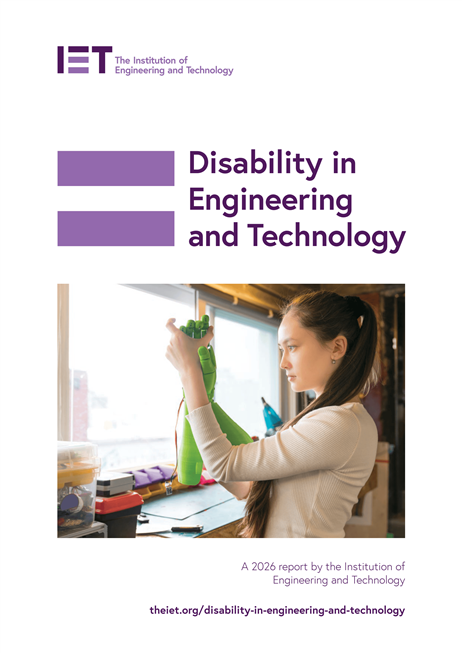
Building on our previous neurodiversity research, this report focuses on physical disabilities and long-term conditions, bringing forward candid insights from disabled engineers and technologists, as well as those who work with them. These findings in combination with the ongoing STEM skills shortage present a clear call to action for employers and the wider engineering and technology community: now is the time for disability inclusion to be embedded from the start, not as an afterthought.
Why this matters
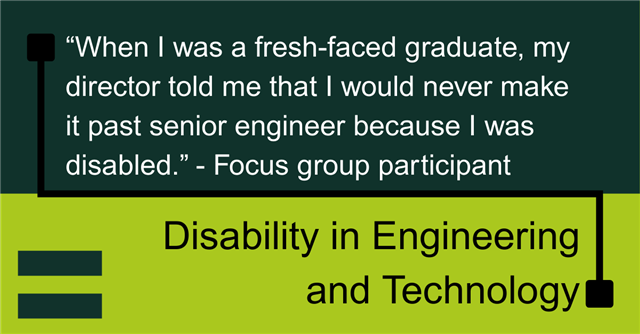
Disabled people represent 24% of the UK working‑age population, yet only 14% of engineers and 6% of technologists. Closing this gap could contribute £17bn annually to the UK economy. Despite this, the employment rate for disabled people (53%) remains significantly lower than for non‑disabled people (82%).
Key findings from the report
The research highlights several urgent themes:
- Manager variability
One of the strongest influences on disabled people’s workplace experience is their line manager. Support often depends on individual confidence, empathy, and awareness rather than consistent organisational practice. - Lack of accountability
Many organisations know what needs to be done, yet fail to implement it. Individuals also often won’t be an active advocate unless personally affected by disability. - Human rights overshadowed by profit
Several participants reported that disability inclusion is deprioritised because it is “not a number that can be quantified.” - The “disability tax”
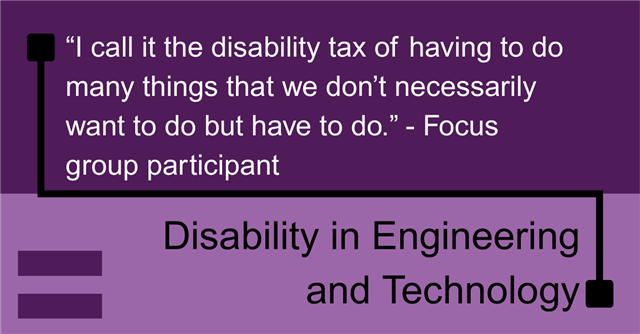
Disabled engineers frequently face additional emotional, physical and time burdens caused by inaccessible systems, processes, and environments.
Beyond these challenges, the report also identifies clear enablers: empathetic and proactive leaders, psychologically safe cultures that encourage disclosure, flexible working arrangements, accessible technology, and strong peer networks.
Voices from our project team
Katy Deacon, a disabled engineer, Chair of our EDI Board and IET Fellow, reflected on the impact of the findings:
“This report finally gives a collective voice to these experiences, proving that they are not isolated incidents but systemic issues our colleagues face every day.”
Dr Laura Norton, Head of Equity, Diversity and Inclusion, emphasised the opportunity for meaningful change:
“Small, human‑centred changes, particularly in how organisations view and support disabled people, can have a huge transformational impact. Inclusion isn’t optional; it is fundamental to creating a thriving, innovative and equitable engineering sector.”
What happens next
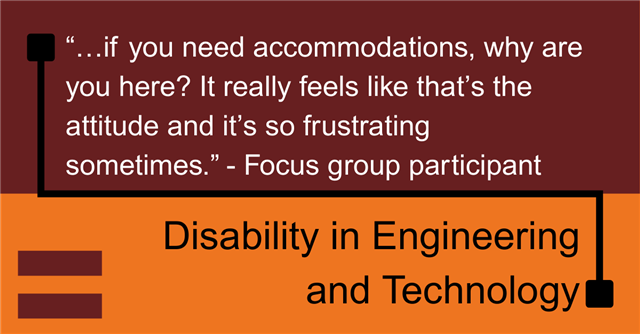
The report outlines practical recommendations for employers, HR teams, line managers and disabled colleagues to support more accessible‑by‑default organisations. It provides actionable insight to help us build environments where disabled engineers and technologists can contribute fully and progress confidently.
Click here to read the report.
How you can help
As part of our own commitments made within the report, work has already begun on building a toolkit designed to empower disabled people within the sector and help build the confidence of those who work around them in acting and thinking inclusively. Including topics such as:
- Knowing your rights (as a disabled employee and as an employer)
- Learning what support works for you
- Accessing/providing reasonable adjustments
- Navigating Engineering and Technology working environments
- Assistive technology that makes a difference
- Recognising and calling out disability discrimination
- Case studies of organisations that are leading the way on disability inclusion
Share a case study
Does your organisation make disability inclusion a priority? Have you received great support from a line manager or employer for your disability? From individual success stories to platforming the voices of disabled colleagues, to organisational-wide, disability-positive actions, share your case study with us to help us highlight the road to meaningful change with the wider sector.
If you have a best practice story to tell or want to learn more about how to get involved, email Daisy at inclusion@theiet.org.