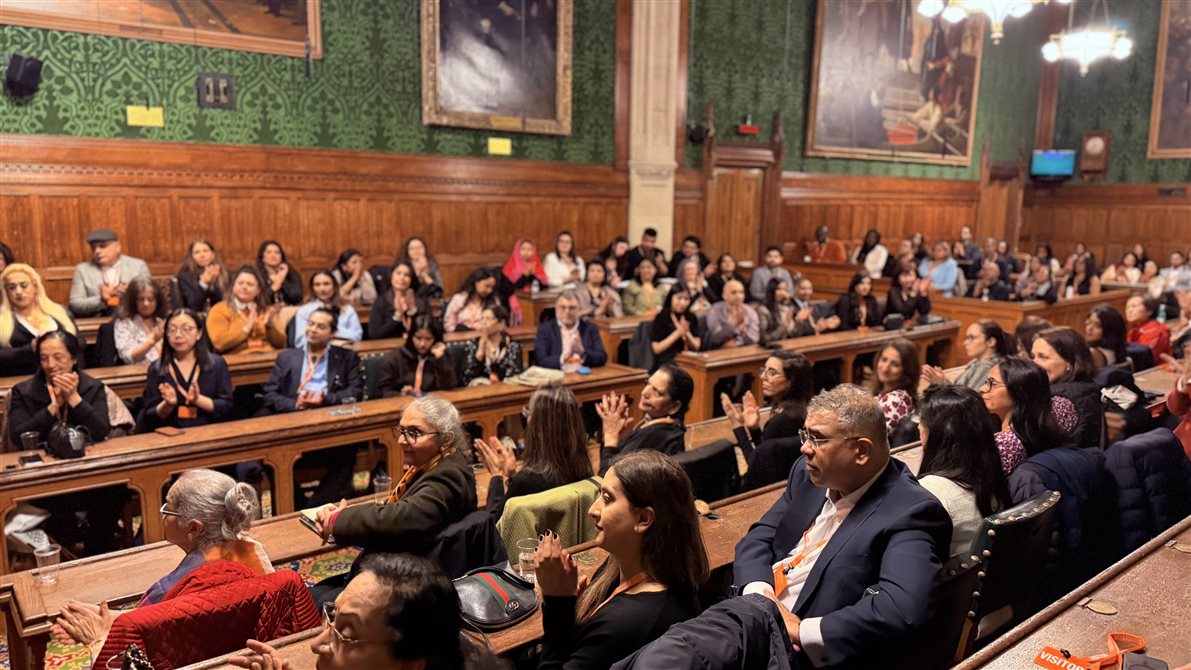
International Women’s Day often centres on important conversations around representation, opportunity, and inclusion. Earlier in March, I had the opportunity to help organise and contribute to a discussion at the UK Parliament, bringing together leaders from across sectors to reflect on these themes.
What stood out was not simply the diversity of perspectives in the room, but a recurring pattern in how challenges were described. Many of the barriers discussed, whether related to progression, visibility, or access, were framed as cultural or behavioural issues. While these are undoubtedly important, they are also, fundamentally, systemic.
From an engineering perspective, systems tend to produce the outcomes they are designed for. If an outcome is persistent and widespread, it is often a signal that the underlying system, including its structures, feedback loops, and incentives, is reinforcing it.
This lens is particularly useful when considering representation. Efforts often focus on local interventions such as individual development programmes, mentoring, or awareness initiatives. These can be valuable, but they frequently operate within existing system constraints. Without changes to the broader architecture, including how decisions are made, how information flows, and how performance is measured, the overall outcome may remain largely unchanged.
Engineering thinking encourages a different approach. It involves:
- Defining the desired system-level outcome clearly
- Examining the structures and constraints that shape behaviour
- Identifying feedback loops that reinforce existing patterns
- Designing interventions that operate at the level of the system, not just the individual
In organisational contexts, this may include how hiring pipelines are structured, how progression criteria are defined, and how data is used to inform decision-making. At a societal level, it extends to how institutions, policies, and networks interact over time.
The discussion at Parliament reinforced that progress in representation is not solely a matter of intent. It is a matter of design. Well-intentioned systems can still produce suboptimal outcomes if they are not engineered with those outcomes explicitly in mind.
For engineers, this presents an important opportunity. The discipline is not limited to physical infrastructure or traditional technical domains. It offers a way of thinking that can be applied to complex human systems, where outcomes emerge from the interaction of many interconnected components.
As conversations around inclusion continue, there is value in complementing cultural and behavioural perspectives with a systems-based approach. In many cases, the most effective interventions will be those that address the underlying design of the system itself.
Ultimately, the challenge is not only to advocate for better outcomes, but to engineer systems that are capable of producing them consistently over time.