


In the world of electric vehicles (EVs), few stories are as compelling as that of John Samuel, a man whose journey from motor racing to pioneering electric mobility spans decades of innovation, persistence, and vision. In the next of our ‘My Engineering Career’ blog series, John shares the fascinating origins of his work in EVs, offering a rare glimpse into the early days of a now-booming industry.
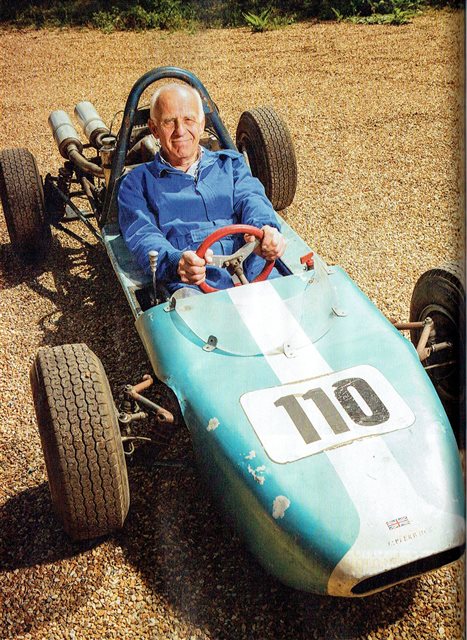 A Racing Start
John’s foray into electric vehicles began not in a lab or a boardroom, but on the racetrack. “It all started really from my motor racing days,” he recalled. “I was racing grand touring cars and actually building them… lightweight, low drag and had all the features that you need for an electric car.”
This background in performance engineering laid the foundation for what would become a lifelong mission: to create efficient, sustainable vehicles that could rival their petrol-powered counterparts.
The Enfield 8000: A Vision Ahead of Its Time
The turning point came in the late 1960s when he was approached by a Greek shipping magnate, John Goulandris, who foresaw a future without oil. “He said, ‘I run 50 supertankers and one day we’re going to run out of oil…. Would you bring me your team and see if you can develop an electric city car?’”
The result was the Enfield 8000, a compact electric vehicle developed under contract with the UK’s Electricity Council. “We spent two to three years developing a car from the ground up,” John said. “It had all the right features to achieve success in the electric city car field, despite being hampered by heavy Lead Acid batteries”
Though only about 100 units were produced, the Enfield 8000 left a lasting legacy. As he proudly quoted from a 2013 BBC article by David Prest: “Many of today’s electric cars, including those being manufactured by Renault, Nissan and BMW, owe a considerable debt to the Enfield 8000, which showed the world that a small urban car powered by rechargeable batteries was a real possibility.”
Crossing the Atlantic: The Detroit Hybrid
John’s next major project took him to the United States, where he joined the Electric Auto Corporation in Detroit. There, he helped develop one of the earliest hybrid vehicles—a Buick Century station wagon retrofitted with a lead-acid battery pack and a small rotary engine.
“We were already fast charging at 120 kilowatts, which was quite something in those days,” he noted. “And that was the very first hybrid… a parallel hybrid where the engine and the electric motor drive the wheels.”
Despite producing only a few prototypes, the project demonstrated the feasibility of plug-in hybrid technology long before it became mainstream. “It rode like a dream… like a Rolls Royce and could travel 80 miles on battery alone,” John said, though he admitted the vehicle’s weight, with around a half ton of batteries at each end of the vehicle, posed handling challenges.
The Whisper and the LA 301: Global Experiments
John’s journey continued in Denmark with the Whisper, a stylish city EV developed with private capital from Thure Barsoe-Carnfeldt and government incentives supporting potential buyers. “It was a lovely little car… styled in Berlin,” he said. “But it was too early for the market.”
Then came the LA 301, a hybrid vehicle developed in response to a $20 million competition sponsored by the City of Los Angeles. “They wanted a 200-mile range, air conditioning, 80 miles an hour… I said, ‘It can’t be done as a battery car. It’s going to have to be a hybrid.’”
The LA 301 won the competition, beating out entries from Volvo, GM, and Ford. “We were able to achieve 200-mile plus range. We took it to the Tokyo Show in ’91 and were surrounded by Toyota engineers… they launched the Prius shortly after that.”
Innovation Against the Odds
Throughout his career, John faced numerous obstacles, chief among them, the limitations of battery technology. “We still hadn’t got a decent battery,” he said. “So I went to work on a new type of battery altogether… a vanadium Redox flow battery.”
This work eventually led to the founding of Invinity Energy Systems (IES), a company focused on long-duration energy storage for grid applications. Though not directly related to EVs, the technology is now being used in charging stations to manage renewable energy intermittency.
A Legacy of Persistence
What stands out most in John’s story is his unwavering belief in the potential of electric vehicles, even when the world wasn’t ready. “People thought we were totally nuts back in 1970,” he said. “But we’ve just got to have clean fuels… and this book gives a really broad view of where the industry is going.”
His advice to young engineers? “If you come up with ideas, don’t be afraid to pursue them. People will say you’re crazy. They always do.”
Want to share your own Career journey with the EngX Community? Contact the Editorial team via community-online@ietengx.org and we'll be in touch!