


For practising engineers, few tools are as quietly influential as the Gantt chart. It appears in project reviews, capital programmes, system integrations and infrastructure upgrades across almost every engineering discipline. Yet its origins trace back to a single engineer born on 20 May 1861: Henry Laurence Gantt.
On this day, it is worth revisiting not just the chart that bears his name, but the wider engineering problem Gantt was trying to solve, how to design work itself so that complex systems could be delivered reliably, humanely and at scale.
The engineering context of Gantt’s era
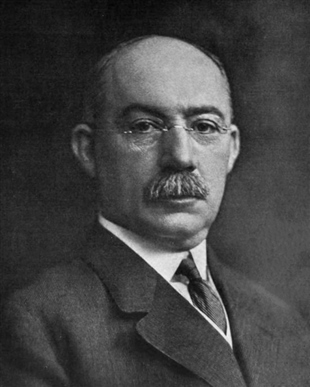 Gantt came of age during the late 19th and early 20th centuries, when engineering was being transformed by industrialisation, electrification and mass production. Factories, shipyards and railways were becoming systems of unprecedented complexity. Mechanical engineering challenges were no longer limited to materials, tolerances and power transmission; they increasingly involved coordination, sequencing and human performance.
At the time, industrial efficiency was dominated by scientific management, particularly the work of Frederick Winslow Taylor. Gantt worked closely with Taylor and shared the goal of improving productivity through measurement and analysis. However, Gantt diverged in a crucial way: he believed that engineering systems failed as often because of poor planning and incentives as because of poor design.
This perspective would shape his most enduring contribution.
The birth of the Gantt chart
During the 1910s, Henry Gantt developed a visual method to represent work planned against time. Unlike simple schedules or ledgers, his charts showed:
- Tasks arranged along a time axis
- Planned duration versus actual progress
- Dependencies between activities
This was a deceptively simple innovation. For the first time, engineers and managers could see, at a glance, whether a system was behaving as designed. Delays were no longer abstract, they were visible, measurable and attributable.
Gantt charts were soon adopted on large engineering programmes, including shipbuilding during the First World War, and later on major infrastructure projects such as dams, highways and power stations. The method allowed engineering leaders to move from reactive problem-solving to predictive control, a concept that resonates strongly with modern systems engineering.
Henry Gantt himself described the chart not as a management tool, but as an engineering instrument, a way to diagnose and improve the performance of a complex process.
Engineering impact: from factories to megaprojects
The real impact of Gantt’s work lies in how it changed engineering practice.
Before Gantt, delays were often discovered too late to correct. After Gantt, time became a design variable. Engineers could ask:
- What happens if this task overruns?
- Where is float genuinely available?
- Which activities are system‑critical?
These questions are now foundational to project engineering, construction management, software delivery and systems integration. Modern tools—critical path analysis, earned value management and digital twins of project schedules, are all direct descendants of Gantt’s original insight.
Importantly, Gantt also linked scheduling to human factors. He introduced the “task and bonus” system, rewarding workers for completing tasks efficiently without penalising them for systemic delays. This was an early recognition that engineering systems are socio‑technical, a concept that remains central to safety‑critical industries today.
A legacy embedded in modern engineering
More than a century later, the Gantt chart remains ubiquitous. Whether implemented in specialist software or sketched on a whiteboard, the underlying logic is unchanged: make work visible, measurable and improvable.
For contemporary engineers, Gantt’s legacy shows up in several ways:
- Systems thinking: Recognising that outputs depend on interactions, not isolated tasks
- Design for delivery: Treating execution as an engineering problem in its own right
- Ethical efficiency: Balancing productivity with responsibility to people and society
It is no coincidence that Gantt later became an advocate for the social responsibility of engineers and businesses. He believed that engineering success should be measured not only by output, but by its contribution to societal wellbeing—an idea that aligns closely with today’s discussions around sustainability, safety and public value.
Why 20 May still matters to engineers
On this day, engineers are reminded that some of the most powerful innovations are not new machines or materials, but new ways of thinking about work. Gantt did not invent a faster engine or a stronger structure. He engineered clarity, and in doing so, enabled generations of engineers to deliver ever more complex systems.
In an era of digital transformation, AI‑assisted planning and increasingly interconnected projects, the core challenge remains the same as it was in Gantt’s time: aligning time, technology and people.
Join the discussion
Henry Gantt helped engineers make work visible so it could be improved. More than a century on, scheduling, dependencies and delivery are still central to engineering success.
- How do you use (or adapt) Gantt charts in your engineering work today?
- Where do traditional planning tools fall short for modern, complex systems?
- What have you learned, sometimes the hard way, about designing for delivery, not just design?
On This Day in Engineering History is a curated blog series that highlights key milestones in engineering, aligned with specific calendar dates. Each post explores the technical achievements, design challenges, and long-term impact of historical engineering events, from landmark infrastructure projects to pivotal moments in aerospace, computing, and materials science.
This series is designed to connect today’s engineering practice with the legacy of innovation that underpins it. Whether you're involved in structural design, systems integration, or project delivery, these stories offer a chance to reflect on how engineering decisions of the past continue to influence our built environment and technological progress.
Stay tuned for more historical insights, and feel free to share your own reflections or related experiences with the community.
#OnThisDay
