


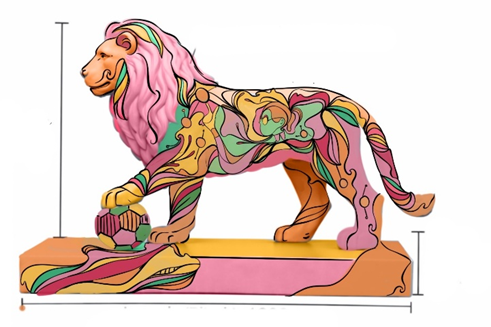
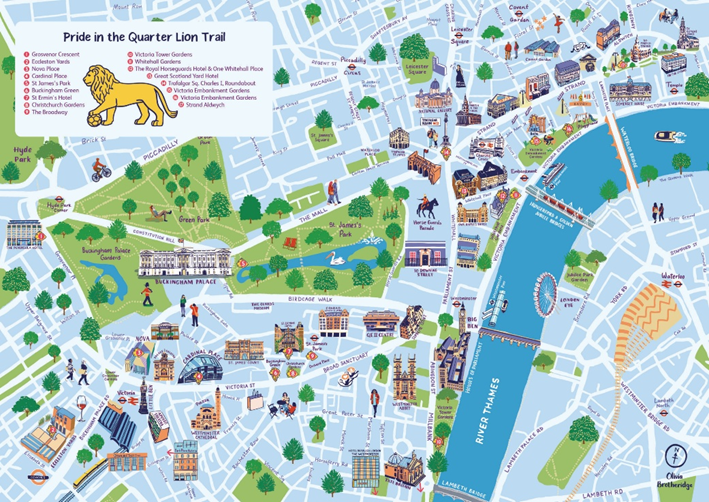
The ‘Pride in the Quarter’ project is a public art trail across central London, featuring 17 large lion and lioness sculptures, running from June–August 2026. Each of the lions are individually designed by London-based artists and tell a unique story inspired by the city’s culture, communities and creativity. Visit the London Heritage Quarter website for more information.
IET London: Savoy Place have sponsored a lion, which is situated in Embankment gardens right outside of the venue. Our lion highlights the story of Sara Josephine Baker, a formidable physician who saved the lives of thousands of children through her pioneering public health work. Today, she is also recognised as an important LGBTQ+ figure, born into a time when living authentically as a part of the community was not accepted and could even be dangerous.
A map of the full trail can be found below - if you’re heading to London, don’t miss your chance to drop by and visit it, and share any pictures of the lions you spot in the comments.
More about Sara Josephine Baker
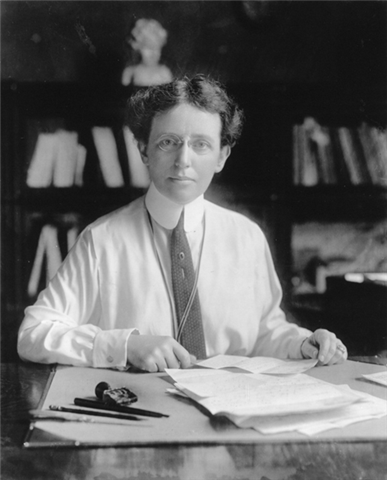
Sara Josephine Baker was an American physician who made major contributions to medicine and public health in the early twentieth century. Working in New York City, her focus was set on improving health conditions for children, especially in poor and overcrowded communities. At that time, many babies were dying from preventable causes such as poor hygiene and contaminated food. Baker believed in preventive medicine, meaning stopping people from becoming ill in the first place, which was a new and important idea in STEM at the time.
One of her greatest achievements was reducing infant mortality. She introduced programmes where nurses visited families, taught mothers about hygiene, and provided advice on caring for babies. These efforts had a huge impact, for example, in one area of New York, infant deaths dropped by around 1,200 in just one summer. Over her career, her work is estimated to have saved tens of thousands of children’s lives.
Baker also helped create the first government organisation focused on children’s health, the New York City Bureau of Child Hygiene. This was a groundbreaking step in public health, as it used science and data to monitor and improve children’s wellbeing. She developed practical solutions such as providing clean milk through “baby health stations,” training midwives, and ensuring newborns received medical care to prevent infections.
In addition, she introduced creative education programmes like the “Little Mothers’ Leagues,” which taught young girls how to safely care for babies. She also worked on controlling infectious diseases, including helping track down “Typhoid Mary,” a carrier of typhoid fever. Through all of this, Baker showed how scientific knowledge could be applied to real-world problems to improve people’s lives.