


When Richard Baker looks back on his decades-long career, one theme stands out: adaptability. From designing fire detection systems in the 1970s to pioneering battery-powered trains in the 21st century, Richard’s journey reflects the rapid evolution of technology, and the mindset needed to thrive in it.
Early Days: From Programming to Fire Safety
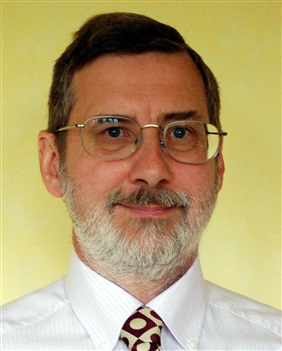 Richard began his professional life with a brief foray into computer programming. “With hindsight, maybe I should have stuck with it,” he laughs. But his path soon shifted toward design engineering, joining a company that specialised in fire detection and gas extinguishing systems.
This was a pivotal era. Microprocessors were starting to replace relays and transistors, and Richard found himself at the heart of this transformation. “It was a fascinating time,” he recalls. “We were moving from mechanical systems to electronic control, and that opened up incredible possibilities.”
His role expanded quickly. As product manager, Richard oversaw the development of fire detection products and control systems, a responsibility that required both technical expertise and strategic vision. “I was responsible for all the development,” he says. “It was exciting because everything was changing.”
From Fire Alarms to Rail Innovation
Richard’s deep knowledge of safety systems led him into unexpected territory: the rail industry. “I got dragged into it because of my experience with security systems and CCTV,” he explains. What began as a niche project evolved into a decade-long adventure in rail engineering.
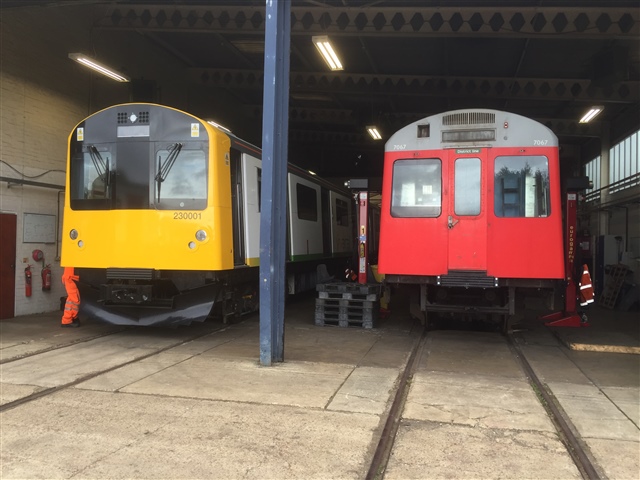
Those years were anything but routine. Richard worked on integrating safety systems into rail vehicles and eventually helped develop a fully battery-powered train equipped with a unique fast-charging system. “It’s subject to a pending patent,” he says with pride. “If it gets granted, I’ll have my name as a co-inventor.”
For Richard, this wasn’t just another project, it was a leap into the unknown. “We were dealing with systems that didn’t exist a few years earlier,” he says. “You had to dive in, learn fast, and apply it. That’s what made it so exciting.”
The Human Side of Technology
Richard’s anecdotes reveal not just technical milestones but cultural shifts. He remembers the era when companies like AFA Minerva, where he started, were household names. “If you were around in the late 1970s, you’d have seen lots of red bells with AFA on buildings,” he says. “That was a trademark.”
Over time, those companies were absorbed into giants like ADT and Tyco.
These stories highlight how industries consolidate and evolve, but also how engineers adapt. “You can’t stand still,” Richard says. “Technology moves on, and you have to move with it.”
Reflections on Change
Richard has witnessed profound shifts in public attitudes toward technology. “In the 1960s, technology felt extraordinary,” he says. “Microwave ovens were mysterious. People thought they were dangerous. Today, we’re almost blasé about new gadgets.”
He contrasts that with the present, where innovation often feels incremental. “We expect the next smartphone to be faster and smarter, it doesn’t surprise us anymore,” he observes. Yet, he warns against complacency. “We’re putting all our eggs in one basket with wireless technology. It’s brilliant, but vulnerable.”
His concerns aren’t abstract. “Radio waves are the easiest thing to jam,” he explains. “You don’t have to invade a country, just set up transmitters blasting white noise, and mobile phones stop working. We need to think carefully about unintended consequences.”
Personal Moments and Passions
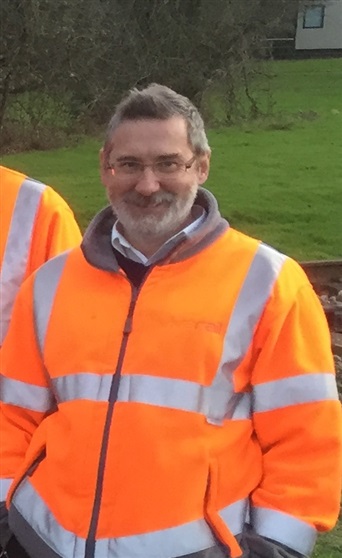 Despite his technical focus, Richard’s career is full of human moments. He recalls the thrill of seeing early automation in action and the pride of contributing to projects that made a tangible difference. He also shares lighter stories, like his fascination with science fiction.
“Star Trek made me want to be an engineer,” he admits. “I looked at those gadgets and thought, ‘I want to build that.’” Even today, he owns DVDs of Star Trek and Thunderbirds and marvels at how accurately some predictions came true. “Flat screens, automatic doors, mobile phones, they were all there.”
His sense of wonder extends to everyday tech. “I remember when my brother challenged Alexa,” Richard says. “He asked what time the local spa shop closed. Alexa replied instantly. That’s clever, not just finding the answer, but doing it in milliseconds.”
He laughs about how most people use smart speakers for mundane tasks. “We ask them to remind us to buy milk,” he says. “These devices have incredible capability, and we use them to turn on electric blankets.”
Advice for the Next Generation
Richard’s experiences have shaped his advice to young engineers: “Think the unthinkable. Imagine the unimaginable. Don’t accept boundaries.” He urges them to go beyond making things smaller or faster. “Ask yourself: Can I make a blind person see? Can I make a paralyzed man walk? Those are the challenges.”
He also champions curiosity. “Don’t just accept that your smartphone works the way it does,” he says. “Ask: Could I do it better? That’s the mindset that drives real innovation.”
A Career Defined by Possibility
From fire alarms to futuristic trains, Richard Baker’s career is a testament to what happens when imagination meets determination. He has navigated industries in flux, embraced technologies that didn’t exist when he started, and never stopped asking, “What’s next?”
His story reminds us that engineering isn’t just about solving problems; it’s about shaping the future. And for Richard, that future has always been worth imagining.
Want to share your own Career journey with the EngX Community? Contact the Editorial team via community-online@ietengx.org and we'll be in touch!