


In Conversation with... Eur Ing Brian Goodwin MSc. CEng. FIMechE. MIET. FCILT
From apprentice to Chartered Engineer and international business leader, Brian’s career shows just how far engineering can take you. After a lifetime of roles spanning manufacturing, project delivery and senior leadership across the UK and overseas, retirement brought a new question — how to give something back to the profession that shaped his life. 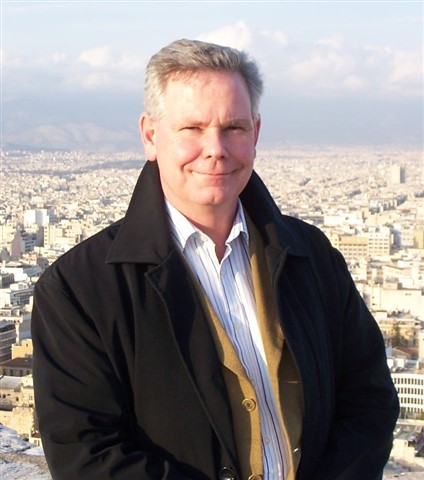
In this spotlight, Brian shares his journey and explains why volunteering, mentoring and supporting future engineers has become such a rewarding next chapter.
“Retirement made me realise how much I missed being part of an engineering community.”
I’m relatively new to volunteering. After a long and varied career crossing engineering, operations management and functional leadership roles, I finally retired — and quickly realised how much I missed the social camaraderie of working within teams. It had been a long time since I’d been close to engineering itself, and it felt like the right time to give something back to the world that had taken me on as a young apprentice and shaped so much of my life.
“My career began with an apprenticeship that shaped the future of my working life in ways I could not have imagined.”
When I left school in 1973 at the age of 16, jobs were becoming tougher to secure. I’d always been interested in electrical things and electronics, so I applied widely for trainee roles — electricity generators, communications companies, research groups — anyone who might listen.
In the end, I accepted an electrical apprenticeship with Kodak, the film manufacturing company. Four years later I qualified as an electrician at Kodak’s Harrow plant in north-west London, with a City & Guilds Full Tech Certificate under my belt. I was working on control cubicles for film finishing machinery when another opportunity came along — helping to set up a new Kodak factory in north Nottinghamshire as an electronics technician.
That move opened further doors. I completed a BSc in Engineering at what was then Nottingham Polytechnic, followed by a MSc in Advanced Manufacturing Systems at Brunel University. Promotion into engineering leadership followed, and in 1988 I was offered a two-year assignment in the United States, working in similar manufacturing environments.
“Engineering opened doors I never expected — including opportunities overseas.”
After returning to the UK, I moved into manufacturing management at the Nottinghamshire Kodak facility, stepping away from hands-on engineering for a while. In 1993, Kodak decided to build a film finishing factory in India, and I became deeply involved — eventually as Project Manager, spending almost two years in India. Alongside that, I contributed the initial groundwork to other projects including a paper finishing factory in Nepal.
In 1995, I was asked to return to Harrow to run the central engineering operations group — the very unit I’d joined as an apprentice some 20 years earlier. The original apprenticeship scheme had long since closed, so I set about starting a new modern apprenticeship programme. I also became involved in a mentored professional development scheme, training as a mentor and supporting young engineers myself. By this point, I was a Chartered Engineer and a member of both the IET and IMechE.
Engineering leading far beyond engineering
In 2007, I was invited to join a new company being spun off from Kodak — its medical imaging and information technology division, later known as Carestream Health. Interestingly, this role wasn’t in engineering at all. Instead, I was asked to build a Supply Chain and Logistics organisation across Europe, Africa, India and the Middle East.
I had some relevant experience as a programme manager from earlier logistics transformation projects and also as Supply Chain Director for Kodaks 35mm European film business based in Switzerland, and so I took on the role of Carestream Health’s Director of Supply Chain and Logistics for the EMEA region. It was a fantastic opportunity, and a great example of how an engineering background can lead into many different parts of industry. Six years later, I made my final career shift, moving into the role of Director of HR for the EMEA region — focusing on enabling and supporting talented teams rather than being the technical expert myself.
“It’s extremely satisfying to talk to such motivated and excited individuals.”
Looking back, it was my time at Harrow as Central Engineering Manager, combined with my own apprenticeship experience, that naturally led me into volunteering. In 2022, I contacted the IET to offer my support and soon became a Professional Development Scheme Accreditation Assessor with the Professional Development Operations Committee (PDOC) group.
After a few observation visits, I started chairing assessment days and supporting assessment teams. When I learned that apprentice scheme assessments needed extra help, I volunteered in that area too — something that felt especially meaningful given where I’d started. I now also serve on the PDOC committee.
Initially, I worried that time away from front-line engineering might be a disadvantage. I soon found that actually my experiences both within engineering and outside of engineering in other business roles seemed to build into a useful voice on the assessment panels. Now I get the luxury of meeting some incredible young people across all areas of engineering who are themselves recruited onto a company’s development scheme. It’s extremely satisfying and rewarding to get to talk to such motivated and excited individuals. At the same time, I get to visit some incredible industries and witness such talent and innovation right here in the UK which I had not realised existed.
Flexible, rewarding volunteering
The volunteering roles I’m involved in are as flexible as you want them to be. For me, that’s typically a handful of graduate and apprentice assessments each year, plus two PDOC committee meetings. Each assessment involves some preparation, a full day of discussion and interviews, and a small amount of follow-up administration. Some take place online, but I much prefer face-to-face assessments — meeting people in person really brings the experience to life.
Outside volunteering, I try to keep active and enjoy playing golf and cricket as well as some indoor bowls. I enjoy wood turning as well, working with wood can be a very therapeutic activity – who’d have thought! I think the wood turning reminds me of my apprenticeship years sometimes in that its very hands on and machinery based.
“Engineering prepares you for life — not just for a job.”
I wouldn’t change much if I were starting again. Engineering prepares you for almost every aspect of working life. It teaches you how to think, ask questions, organise yourself, lead when needed, and contribute effectively as part of a team.
My advice is simple: keep an eye out for opportunities, work hard, and keep learning. If something comes along that moves your career forward — even if it’s outside engineering — consider it properly. If it feels right, commit to it fully and make it happen however you can.
Brian’s journey shows that an engineering career can have a lasting impact long after retirement. Through volunteering, he remains closely connected to the profession he values — while supporting the next generation to find their own paths.
Discover how you can get involved by exploring the volunteering opportunities available and finding where your skills and experience can make a real difference.
#VolunteerSpotlight
