This discussion has been locked.
You can no longer post new replies to this discussion. If you have a question you can start a new discussion

Would the engineering community support a second referendum?

I would......
  • I too have been surprised how quiet the IET has been on Brexit. The EEF has certainly not been and has made its views known and published some useful information.

    I support a second referendum and will be marching for that on the 20th October https://www.peoples-vote.uk/march

    Like Andy my concern is product standards. Even now we still don't really know what the situation will be. The government say it will be the same apart from replacing the CE mark with  some sort of British mark.  However Rhys Mogg and friends want to do away with regulation entirely. I know from experience that there are companies out there who will be happy to abandon the "health and safety nonsense".  This would put IET engineers working for those companies in conflic with the IET Code of Conduct.

    I'm also concerned for EU27 citizens in the UK. The partner of one of my fellow employees has lived, studied and worked in the UK for 12 years. When starting university she enquired whether she had to pay anything etc., being Italian. She was told "No, you are exactly the same as a British student".  Now she has applied for British citizenship and been turned down because she didn't take out private medical insurance when she was a student. This despite the fact she was entitled to use the NHS under reciprocal arrangements / EHIC and, in fact, did not use the health service at all while a student!


    John.

  • Roy Bowdler:
    Without empirical evidence to support it, I would expect a majority of IET members to favour remain... 


    Personally I wouldn't be at all surprised if it was the other way around, but we'll never know, and as you sort of go on to say it doesn't really matter now.


    ...but even if they do, what right do we have to “take a side” against the minority who won the public vote, it just isn’t our function.


    For these forums, and for the IET as a body I agree, all we can do is help manage it. Outside those environments I do completely disagree with the view "you lost the vote so shut up" or (as I heard Jacob Rees-Mogg put it) "it is unpatriotic to go against the will of the people" (or very similar words). My view here is nothing to do with Brexit per se, it would apply equally to say, capital punishment or launching an invasion of somewhere - if somebody genuinely believes that a popular decision is against the best interests of the "country" (whatever that means, which is complicated again) then I think they should be praised for having the courage to speak out. They may be right or wrong, but they have the right to be listened to. (There is of course a huge difference between this and just whinging because the decision doesn't suit that person, or just being miffed at having lost.)


    As we come up to the centenary of the end of the first world war it's a really interesting example to see the change in the "majority" attitude to the war (as far as can be judged) between 1914 and, say, 1930. Those who would once have been nearly lynched as being unpatriotic came to be almost celebrated for speaking out for the plight of the common soldier. This is going to sound odd, but stick with me, I've just been reading - as a bit of nostalgia - "Biggles learns to fly" written in 1935 (but set in 1916). It has some surprisingly - and absolutely explicit - anti-war sentiments which I would lay a fair bet W. E. Johns wouldn't have written in (say) 1915 - and if he had, they wouldn't have been published.


    Personally I'd say everyone should have the right to take a side on an issue, against a majority view, provided they are doing it for the right reasons. But it can be very tough. And, as Roy says, only history can judge which side in the end made the least worst decision.


    Closer to our day job world: Some here will know of the plane crash, famous in psychology and safety management circles, where the pilot and flight engineer thought everything was fine and overruled the co-pilot. A confident majority is not necessarily making the right decision. Or the wrong decision. I think there's a very important general principle here for engineers to be prepared to be unpopular and to speak out (assertively but not aggressively) if they think they have evidence that a decision will result in potential hazards which do not appear to have been considered. The VW emissions issue might be a good example, we may well find such issues emerging from the Grenfell fire enquiry as well.


    Last thought, there are two common and interlinked bits advice for business leaders relating to strategic decisions: "it is usually better to make a decision and manage it than to do nothing" and "if 51% of your decisions are right then you're ahead". These can feel alien to engineers, although they start to come more easily with practice - however the key thing is to remember that any decision you make may be one of the 49% of wrong decisions, which is ok as long as you keep reviewing and managing it - and possibly even changing it. Which includes listening (more than you might admit) to dissenting voices. Good and successful business leaders accept that these are the rules and work with them. As do good politicians - it's interesting to listen to past politicians being interviewed, who will sometimes admit that they knew they were making it up and adapting as they went along, however confident and bombastic their speeches at the time were. Which is a hopeful thought.


    Again as a bit of light relief from all the above: Near us, at Cotehele House, is the "earliest turret clock in the United Kingdom still working in an unaltered state and in its original position. It was probably installed between 1493 and 1521." When I'm down there I can watch it for ages...no hands, it just rings a bell. I'll bet nothing I've engineered will be around in 600 years time!
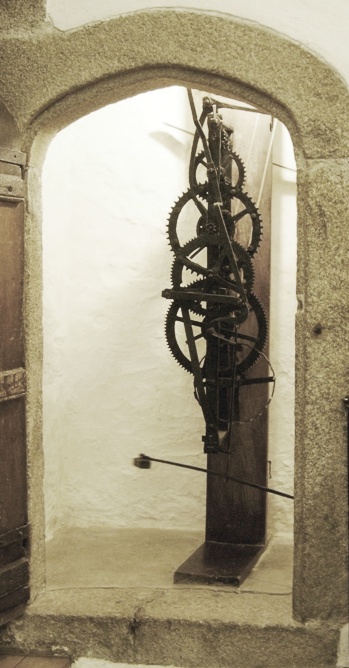
    Cotehele_Clock_01.jpg


  • John Mann:

    The government say it will be the same apart from replacing the CE mark with  some sort of British mark. 


    Which for companies that want to export to the EU now means two different certifications. (Yes I am of course aware that this is already the case  for companies that export to both the EU and the US, but I'm not sure that making a problem even worse is a good thing!)


    What I suspect will happen practically is that for many years we will simply carrying on following EU standards adopted into UK legislation as a: this supports companies that want to supply both territories and b: we frankly don't have the resource to draft new standards very quickly. Anyone who's sat on standards committees knows it is (necessarily to get it right) a sloooooow process. So we'll be following the same standards, we just won't have any say in them any more - even so this is probably the best scenario.


    As I said on another thread somewhere, from my absolutely personal point of view producing a load of UK specific standards is a cracking idea, it should see me nicely into retirement! But I think there are rather more important things the engineering community really needs to be doing.


    Excellent points,


    Many thanks,


    Andy

  • There's a mountain of unanswered questions surrounding the EU Referendum that will probably never be answered, including:


    1. Was it mass immigration that resulted not only in the Leave vote but in the referendum itself? Some argue that back in the late 1990s and early 2000s that other EU issues didn't sufficiently resonate with the public to have any large affect on the political system but mass immigration was the straw that broke the camel's back.


    2. If eastern European countries had not joined the EU but we still had the referendum then would it have resulted in a decisive Remain victory?


    3. If eastern European countries had not joined the EU would we even have had the referendum to start with?


    4. Was the referendum actually a war between London; affluent parts of the south; and trendy cities full of young graduates and well-off intellectual types with a liberal disposition like Oxford, Cambridge, Brighton, Bristol, and Manchester, versus the rest of England? A Metropolitan Elite versus the common folk from the provinces. A concrete display of the way that London and other affluent or trendy areas are out of sync and out of tune with the majority of the rest of England.


    5. Was the referendum an old fashioned class war more than anything else? The true Remain and Leave split in England determined by whether one has or doesn't have much money, or feels that they financially benefit or does not benefit from the EU. There was an article in the Guardian about this. If there is much truth to this then the campaign would have been immaterial to deciding which way one votes because their bank account has decided it for them.


    6. Did house prices and the housing market have much of a bearing on the way that people voted?


    7. Was the late James Goldsmith with his Referendum Party ultimately responsible for the EU Referendum? He was the man responsible for shining the limelight onto the issue of EU membership, and the political scene after 1997 was never the same as it was before 1997 because EU membership was now an issue that the establishment politicians had to face.


    8. Will Brexit ultimately break up the Union? The majority of Scotland voted Remain (although Scottish Leave voters do exist and they haven't IMO received sufficient attention) but Northern Ireland is the complicated province especially as there is a strong Protestant / Unionist and Catholic / Republican split to the vote.

  • I think you could find statistic to support any of those viewpoints, and probably to refute them as well.


    The problem I find with the immigration argument is that, the immigration itself is something that has been happening to a greater or lesser degree over the millennia to the British isles.  That's something of historical and archeological fact.  It's an even more laughable argument when applied to the United States.

    As an aside; one of my friends did one of those genetic tests that reported that they were 10% Viking.  Putting aside that the accuracy of such tests is highly questionable, but where exactly do they think the Viking genetic material came from?


    I believe that globalisation instead is actually one of the main drivers behind people vote for Britexit, but I would argue that leaving the EU isn't actually the solution.  Yes, one fix would be to race to the bottom where UK based people become cheaper and thus there is an inflow.  But I don't feel that would be actually beneficial to UK society as a whole.

  • Mark Tickner:


    The problem I find with the immigration argument is that, the immigration itself is something that has been happening to a greater or lesser degree over the millennia to the British isles.  That's something of historical and archeological fact. 


    It's a bit more sophisticated than this. Although immigration on a significant scale to the British Isles has happened several times over the millennia there is the big question whether or not the latest wave of immigrants was welcome by whoever was settled at the time. Between the Norman Conquest and 1945 immigration into the British Isles was a trickle so much so that it could be argued that many of the Sussex folk who fought WW2 were the descendents of those who fought the Battle of Hastings.


    Even New Commonwealth immigrants and their British born descendents are aggrieved by mass immigration from eastern Europe for several different reasons ranging from taking their jobs, to unfairness in immigration policy between EU and non-EU people, to the way that eastern Europeans don't integrate therefore potentially fracturing already strained community cohesion.


    I believe that globalisation instead is actually one of the main drivers behind people vote for Britexit, but I would argue that leaving the EU isn't actually the solution.  Yes, one fix would be to race to the bottom where UK based people become cheaper and thus there is an inflow.  But I don't feel that would be actually beneficial to UK society as a whole.


    The nationalist software engineer Mitchell Risbrook has mentioned globalisation as a driving force behind voting Leave. Most of the (former) heavy industrial areas that have not done well economically since 1973 strongly voted Leave whereas those which managed to re-invent themselves by successfully transitioning to the service sector tended to vote Remain. London is a city that has benefited from globalisation whereas many of the provincial towns and cities in England and Wales have not as they have lost the core of their economy which has not really been replaced with anything else.


  • Integration is a two way street - and it's not just eastern europeans for which the situation exists - but also peoples from other areas of the world.  Those who look similar to us and have a similar culture integrate easier.  But, as a "southener" who lived in the north for a while, I can assure you that it takes a lot of effort to try integrate yourself (and the fact I came back south shows I didn't succeed).


    But yes, there are problems here (barriers to integration, raised by both sides).  In fact they are similar problems in a way that cause the general lack of the fairer sex and minorities in engineering.  I don't have solutions.


    The problem is that the service sector isn't immune either.  Much of my employers systems, software, electrical design and mechanical design is being slowly hived off to "lower cost" countries.   Those are roles that generally need a high level of education (we are mostly all graduates) and experience.  Yes, there are leave supporters amongst this group.
  • There are the traditional economic arguments, sovereignty arguments, and also technical arguments - such as European technical standards as Andy Millar has mentioned - behind the decision whether to remain in the EU or leave the EU. More recently a humanitarian angle has emerged around the free movement of people which made the EU Referendum a different beast from the previous one in the 1970s or one in 1997 if the Referendum Party had won the general election.


    It's difficult to deny that mass immigration was a strong factor behind both the Leave and Remain votes. Questions now arise as to how many voters are in favour of Britain remaining in the EU with the facility to opt out of free movement of people, and how many voters are happy with Britain leaving the EU but will fight to the end for free movement of people?


    The Green Party falls into the latter camp. Since the EU referendum they have made the free movement of people between Britain and the EU a non-negotiable core policy regardless of environmental impact. They are also calling for a second referendum.


    Should the second referendum therefore be centred around the question of free movement of people between Britain and the EU?