132/11kV transformer REF Protection frequent tripping

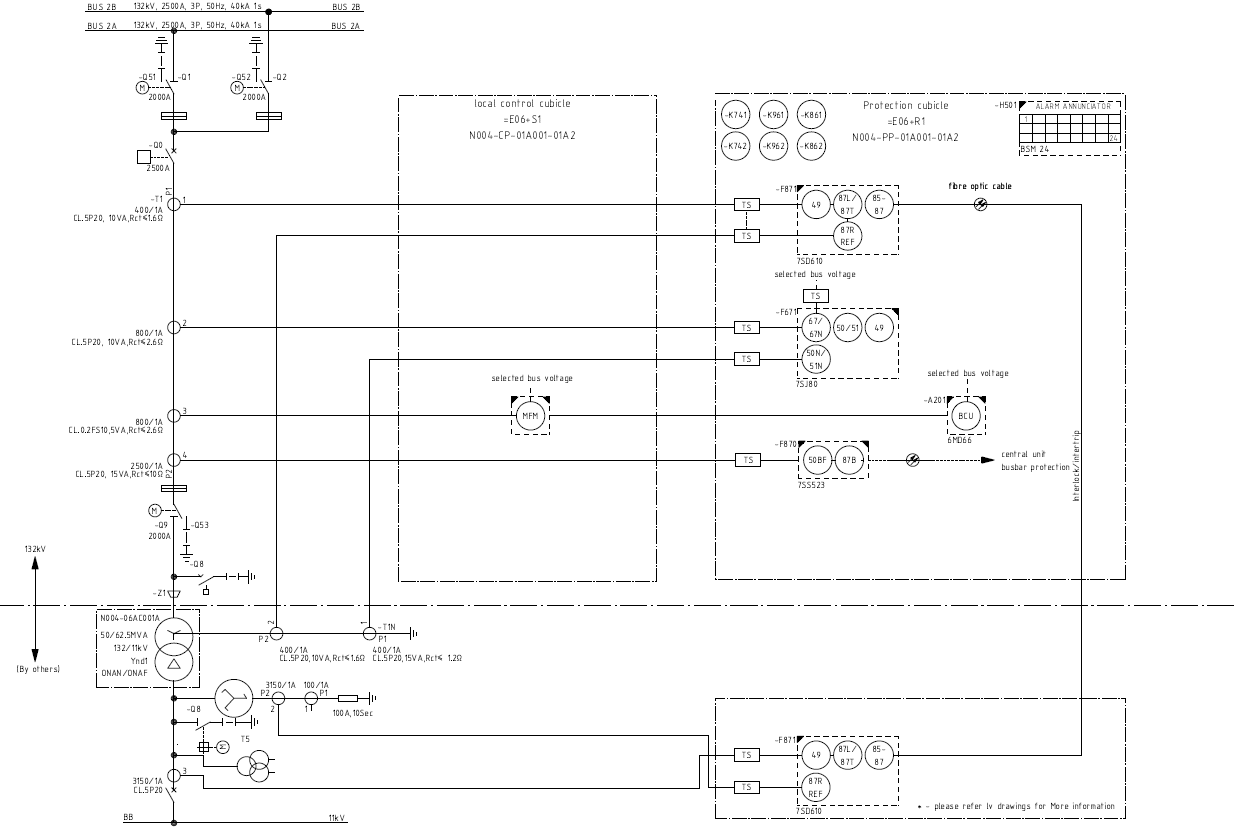
 This is an issue I've noticed all across Iraq, but I'll give you an example that I'm currently working on. We have a 132/11 kV YNd1 transformer, the primary is fed from a GIS, and secondary has a Zigzag NET with NER and a CT on the neutral point. this CT is used for REF protection.

 when we operated this transformer frequent tripping happens due to REF protection, some people say that this is due to grid instability and frequent voltage variation, others say that it's related to the current entering the neutral point due to instability. I'm not convinced by those claims and I think there's a deeper issue or reason.

 Please note that this is common around Iraq, so it might be related to the grid (in some places REF is disabled), but what I want to know is the reason behind this phenomenon.
Parents
  • Subject: Guidance on Frequent REF Protection Tripping – 132/11 kV Transformer

    Dear Mustafa,

    Thank you for sharing the details of the frequent REF protection tripping on your 132/11 kV YNd1 transformer with Zigzag NET and NER. Based on the symptoms and the wider experience across Iraq, I believe the issue is not simply “grid instability” but relates to the REF scheme design and settings.

    To help stabilize the protection, I recommend the following structured checks:

    1. CTs (Current Transformers)

    • Verify that all CTs (phase and neutral) are class PX or equivalent, with adequate knee point voltage and resistance.

    • Ensure all CTs are the same type and correctly tapped — mismatched CTs often cause false spill currents.

    • Perform excitation tests to confirm CTs will not saturate under maximum through‑fault conditions.

    2. Relay & Stabilizing Resistor

    • Audit relay pick‑up current and stabilizing resistor values against CT parameters.

    • Enable harmonic restraint/inrush blocking if supported by the relay.

    • Add a short intentional delay to improve stability during switching events.

    3. Earthing & Zigzag NET

    • Measure and document substation earth grid resistance; poor earthing in dry soil can allow primary surges to drive neutral current.

    • If multiple transformers feed the same 11 kV bus, implement busbar blocking logic to prevent neutral current loops.

    4. Wiring & Polarity

    • Confirm CT polarity and wiring are correct.

    • Carry out primary injection tests to prove balance during external faults and correct operation for simulated internal faults.

    5. Event Correlation

    • Review trip logs to see if nuisance trips coincide with transformer energization, GIS switching, or feeder reclosures.

    • If so, adjust relay blocking or delay settings accordingly.


    Next Steps:
    I suggest preparing a commissioning checklist covering CT verification, relay settings, wiring/polarity tests, earthing measurements, and event correlation. This will allow your team to systematically eliminate causes and stabilize the REF scheme without disabling protection.

    Please let me know if you’d like me to provide a detailed test template for your site engineers to use during these checks.

    Best Regards 

    Gary R Jones 

Reply
  • Subject: Guidance on Frequent REF Protection Tripping – 132/11 kV Transformer

    Dear Mustafa,

    Thank you for sharing the details of the frequent REF protection tripping on your 132/11 kV YNd1 transformer with Zigzag NET and NER. Based on the symptoms and the wider experience across Iraq, I believe the issue is not simply “grid instability” but relates to the REF scheme design and settings.

    To help stabilize the protection, I recommend the following structured checks:

    1. CTs (Current Transformers)

    • Verify that all CTs (phase and neutral) are class PX or equivalent, with adequate knee point voltage and resistance.

    • Ensure all CTs are the same type and correctly tapped — mismatched CTs often cause false spill currents.

    • Perform excitation tests to confirm CTs will not saturate under maximum through‑fault conditions.

    2. Relay & Stabilizing Resistor

    • Audit relay pick‑up current and stabilizing resistor values against CT parameters.

    • Enable harmonic restraint/inrush blocking if supported by the relay.

    • Add a short intentional delay to improve stability during switching events.

    3. Earthing & Zigzag NET

    • Measure and document substation earth grid resistance; poor earthing in dry soil can allow primary surges to drive neutral current.

    • If multiple transformers feed the same 11 kV bus, implement busbar blocking logic to prevent neutral current loops.

    4. Wiring & Polarity

    • Confirm CT polarity and wiring are correct.

    • Carry out primary injection tests to prove balance during external faults and correct operation for simulated internal faults.

    5. Event Correlation

    • Review trip logs to see if nuisance trips coincide with transformer energization, GIS switching, or feeder reclosures.

    • If so, adjust relay blocking or delay settings accordingly.


    Next Steps:
    I suggest preparing a commissioning checklist covering CT verification, relay settings, wiring/polarity tests, earthing measurements, and event correlation. This will allow your team to systematically eliminate causes and stabilize the REF scheme without disabling protection.

    Please let me know if you’d like me to provide a detailed test template for your site engineers to use during these checks.

    Best Regards 

    Gary R Jones 

Children
No Data