Structural thermal storage

I have been in the building services industry for 40 years and 10 years ago turned my 1930s’s house into a laboratory see  https://engx.theiet.org/f/discussions/29622/my-new-ethos-for-heating-cooling-a-dwelling-and-how-i-have-incorporated-it-into-a-1930-s-house . I have been asked how I came up with structural thermal storage. I saw the following formular mentioned in the magazine; Temperature of the air in a room + The temperature of the walls / 2 = The temperature experienced in the room which shows that if the walls are warm less heating is required. So I feel that structural thermal storage should be installed to all solid, cavity wall or concrete buildings if possible. The structural thermal storage I had installed involved tiling lathes screwed at 1m intervals to the exterior over the pebble dash, to negate unevenness, and then screwed high efficiency insulation board over the lathes and then a propriety method was used to apply a self-colour silicon render to the boards to seal the property. This had the effect of placing the building in a thermos flask and making the building structure and contents a thermal store, hot in the winter and cold in the summer, saving a large amount of energy. I think that all heating involving radiators is inefficient, and that air-to-air heat pumps, as used in the rest of the world, are the way. Air to air heat pumps can provide heat, cold and/or dry air at the turn of a switch and can be installed in any property, they dry the air and are far more efficient and controllable than any heating that has radiators. They must be installed by Fgas registered engineers. They have an outside unit floor standing or fixed to an external wall and small fan units high on the wall in each main room, they are very quiet and cost a little over £1000 per room. The pipework can be installed within the structural thermal storage insulation, so the installation can involve little disruption. I think air to air heat pumps are better than radiator systems because:- 
  1. The equipment and installation are considerably cheaper; 2 or more rooms can be installed in one day by one operative.
  2. They use less energy; they run at a lower system temperature; each room can be individually timed and have a stricter control of the rooms air temperature. 
  3. They have no water whose volume requires heating, pumping and more heat exchangers which all require energy and it can freeze.
  4. They do not need any floor space in the building.
As the building is being sealed the installation heat recovery fans (https://www.screwfix.com/p/vent-axia-443312-100mm-centrifugal-bathroom-heat-recovery-unit-white-220-240v/486j) or a MVHR unit for bathrooms, toilets and kitchens must be installed. Water heating needs to be carried out using an immersion heater in a cylinder and if possible, with solar input, off peak electricity could be used. Where not possible end of use water heaters or electric boilers can be used. I hope this is of some interest.
John Greengrass
Parents
  • I saw the following formular mentioned in the magazine; Temperature of the air in a room + The temperature of the walls / 2 = The temperature experienced in the room which shows that if the walls are warm less heating is required.

    This is similar to the urban heat island perceptions (separate from the actual measured effect). If you stand (esp at night) between two high rise tenements (rows of 4 story flats) you will feel warmer than if the flats weren't there. This is because the body radiant radiant heat balance to the sky is greater in the open space than when between the two high wall of the flats, which radiate back at you. The clear night sky being very cold. Cloudy skies are 'warm' (warmer than the cold of outer space), but have a similar feel.

    Radiant heat calculations can become confused because of the different radiation curves at different temperatures, and the differing attenuation absorption curves with atmosphere type and distance (a glowing 3 bar fire has more short wave radiation than softly warm underfloor heating). A high overhead ceiling (those open plan 'barns') may mean that significant radiation is absorbed (within the absorption bands) before it reaches the ceiling, negating much of the marketing pitch for some systems.

    The 'warm wall' effect must also be balanced against the 'heating cycle' style.

    If the heat style is burst (timed) high temperature (hot water radiators) heating, then you will need the wall to hold the heat through the gaps in the heating (your structural thermal storage).

    If the heating is of the low slow steady continuous (heat pumps, or maybe just turned down that flow temperature and extended the boiler heat times), then better insulation (when it's an either/or choice) at the wall will be more effective (it will 'pick up' that extra temperature). But don't have cold 'breather' gaps in the insulation as they'll encourage condensation, dampness, moisture and rot in the half insulated gaps.

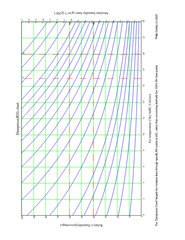
    Also, for interest, I put together a Dampness Chart which was designed to help me understand the easily available electronic relative humidity (RH) meters (which also show temperature), to see if my efforts in reducing the dampness in my house were actually working. The humidity meters, for most, work on the idea that folks get comfort harm having a number, but rarely have any idea how to understand it (see PSA scores for men). The chart is simply a reformulation of the more 'complex psychrometric charts used by HVAC engineers, focussed on domestic householders.

    The Dampness Chart (pdf) shows the lines of constant absolute moisture content across the RH and temperature spectrum. So (the chart shows) cold damp air leaking in via air bricks is actually comfortably dry once warmed to ambient. Meanwhile the hot but moist bathroom air will condense on the structure, and is far better ejected with a humidity sensing extractor, and the same in the kitchen.

    PDF

    I hope it is of interest and complements you work.

    Philip

Reply
  • I saw the following formular mentioned in the magazine; Temperature of the air in a room + The temperature of the walls / 2 = The temperature experienced in the room which shows that if the walls are warm less heating is required.

    This is similar to the urban heat island perceptions (separate from the actual measured effect). If you stand (esp at night) between two high rise tenements (rows of 4 story flats) you will feel warmer than if the flats weren't there. This is because the body radiant radiant heat balance to the sky is greater in the open space than when between the two high wall of the flats, which radiate back at you. The clear night sky being very cold. Cloudy skies are 'warm' (warmer than the cold of outer space), but have a similar feel.

    Radiant heat calculations can become confused because of the different radiation curves at different temperatures, and the differing attenuation absorption curves with atmosphere type and distance (a glowing 3 bar fire has more short wave radiation than softly warm underfloor heating). A high overhead ceiling (those open plan 'barns') may mean that significant radiation is absorbed (within the absorption bands) before it reaches the ceiling, negating much of the marketing pitch for some systems.

    The 'warm wall' effect must also be balanced against the 'heating cycle' style.

    If the heat style is burst (timed) high temperature (hot water radiators) heating, then you will need the wall to hold the heat through the gaps in the heating (your structural thermal storage).

    If the heating is of the low slow steady continuous (heat pumps, or maybe just turned down that flow temperature and extended the boiler heat times), then better insulation (when it's an either/or choice) at the wall will be more effective (it will 'pick up' that extra temperature). But don't have cold 'breather' gaps in the insulation as they'll encourage condensation, dampness, moisture and rot in the half insulated gaps.

    Also, for interest, I put together a Dampness Chart which was designed to help me understand the easily available electronic relative humidity (RH) meters (which also show temperature), to see if my efforts in reducing the dampness in my house were actually working. The humidity meters, for most, work on the idea that folks get comfort harm having a number, but rarely have any idea how to understand it (see PSA scores for men). The chart is simply a reformulation of the more 'complex psychrometric charts used by HVAC engineers, focussed on domestic householders.

    The Dampness Chart (pdf) shows the lines of constant absolute moisture content across the RH and temperature spectrum. So (the chart shows) cold damp air leaking in via air bricks is actually comfortably dry once warmed to ambient. Meanwhile the hot but moist bathroom air will condense on the structure, and is far better ejected with a humidity sensing extractor, and the same in the kitchen.

    PDF

    I hope it is of interest and complements you work.

    Philip

Children
No Data