PV Inverters - Some questions of understanding

Good afternoon

For the first time I was called to do a PV design for a hotel we are designing so excuse my 'beginner level' questions I am going to ask.

We have established (through the energy efficiency report) that we need 35kWp of PV panels on the roof.

The inverter I am thinking to use has max DC power 37.5kW to cover for the 35kWp we need.

The inverter say in the specs 3 MPPTs , 2 strings per MPPT.

Some initial questions

1. When the inverter say max DC power 37.5kW should I assume that this is the total sum across all 6 strings that can be connected?

2. Should I assume that the 2 strings per MPPT are connected internally within the inverter in parallel? Or i dont know what I am talking about? Because if the two strings of each MPPT are internally connected in parallel then I have to balance the voltages of the 2 strings to be quite equal. If they are connected internally in series then the voltages add and I may exceed the max voltage allowed. Or maybe they are not connected at all inside the inverter and they stay independent. Sorry if the question is a bit stupid. I am trying to understand what does the 2 strings per MPPT mean 

This is the terminals picture if it helps
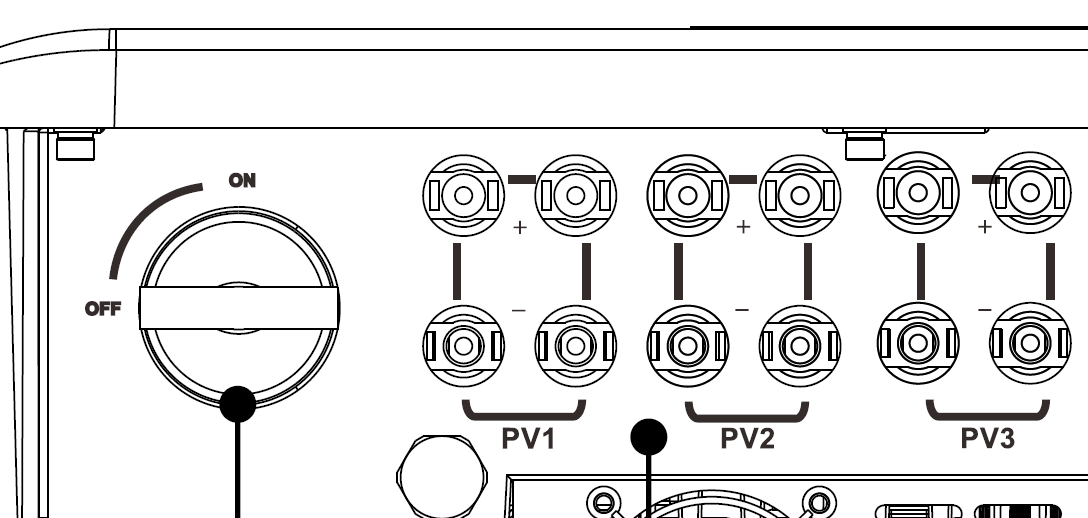
3. The AC power of the inverter is going to be balanced (current per phase) or it somehow depends on how I connect the strings on the DC side?


Any help will be much appreciated

Parents
  • Welcome to PV design! Here’s a concise clarification:

    1- The inverter’s maximum DC power (37.5 kW) is indeed the total across all six strings (3 MPPT × 2 strings each). It defines the upper limit of DC power the inverter can safely process.

    2- Two strings per MPPT are managed together by the same MPPT input. In most inverters, these strings are effectively paralleled internally, so their voltages should be similar and their currents additive. They are not connected in series internally unless explicitly stated by the manufacturer. Matching string voltages is important for efficiency and to avoid exceeding the inverter’s DC input limits.

    3- AC output is generally balanced automatically on a three-phase inverter. The DC side configuration does not directly affect phase balancing, provided the inverter operates within its specifications.

    In short: sum your string powers carefully, ensure strings per MPPT have matched voltages, and rely on the inverter for phase balancing. Always check the specific inverter datasheet for connection rules.

Reply
  • Welcome to PV design! Here’s a concise clarification:

    1- The inverter’s maximum DC power (37.5 kW) is indeed the total across all six strings (3 MPPT × 2 strings each). It defines the upper limit of DC power the inverter can safely process.

    2- Two strings per MPPT are managed together by the same MPPT input. In most inverters, these strings are effectively paralleled internally, so their voltages should be similar and their currents additive. They are not connected in series internally unless explicitly stated by the manufacturer. Matching string voltages is important for efficiency and to avoid exceeding the inverter’s DC input limits.

    3- AC output is generally balanced automatically on a three-phase inverter. The DC side configuration does not directly affect phase balancing, provided the inverter operates within its specifications.

    In short: sum your string powers carefully, ensure strings per MPPT have matched voltages, and rely on the inverter for phase balancing. Always check the specific inverter datasheet for connection rules.

Children
No Data