In my personal opinion of engineering judgement a fully loaded RCBO is better than split load RCD
I agree, but I think that one must also accept that other opinions/judgements are valid. I find it difficult to see how a dual-RCD board could be the better one, but in most circumstances, it is just as good as an all-RCBO and accordingly, may be better value.
Getting away from Christmas turkeys, one might say that a Mercedes is a better car than a Kia, but they both get you from A to B in the same time (given speed limits and congestion) and they both comply with safety standards. However, it could also be argued that the Kia is better value, and on that ground, a better choice.
Mercedes
Would you class the SMART car as a Mercedes-Benz? The name "smart" itself comes from "Swatch Mercedes ART," reflecting its origins as a collaboration between Swatch and Mercedes-Benz
No. No more than I would classify a Mini as a BMW.
However, if the lamp is damaged, and the user is being protected against accidental contact with live parts, say after the rectifier, would the type AC RCD operate is perhaps another question?
The RCD almost certainly will not trip, as the current drawn by the lamp will probably be less than what is required to trip a 30 mA RCD.

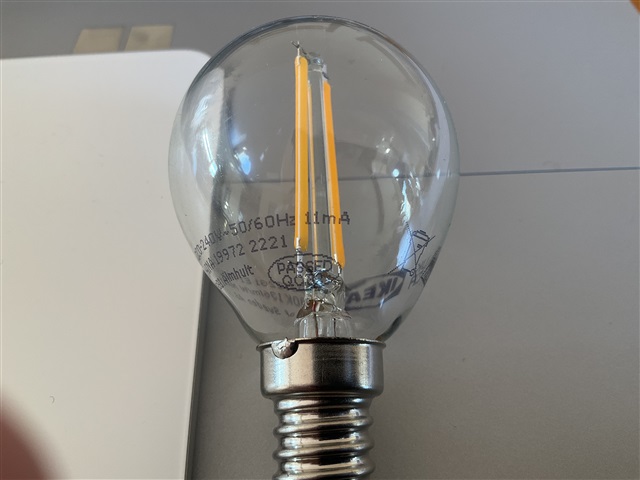
This 16 watt equivalent LED bulb draws 11 mA so it should not trip a 30 mA RCD.

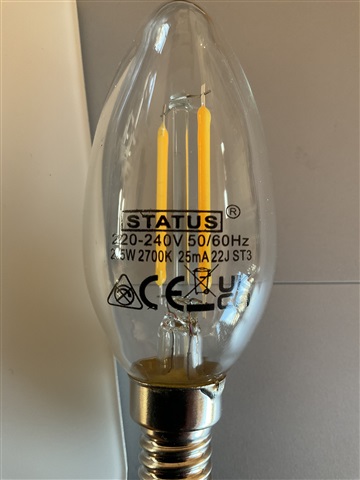
This 40 watt equivalent LED bulb draws 25 mA so it will trip many 30 mA RCDs, but not all of them.

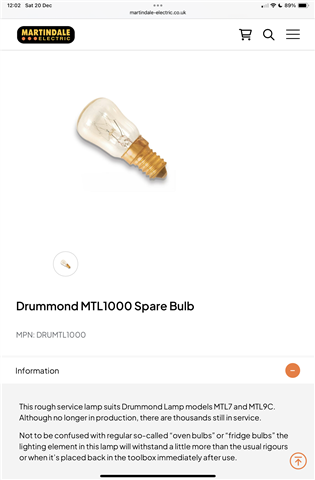
You have to remember, it’s not that long ago that electricians Voltage Testers had a replaceable light bulb in them, though not many are still in use.
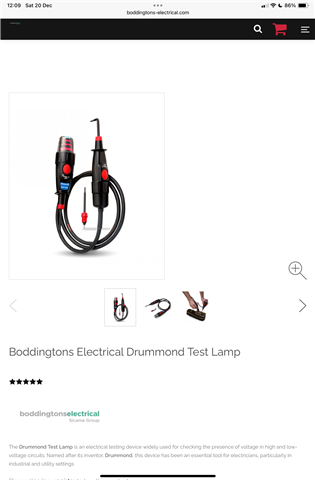
When I started work many electricians had a small light bulb in a bulb holder wired to a couple of test leads for simple testing, but of course there was not any RCDs.

The equivalent modern LED Voltage Indicator draws <3.5mA, with switches depressed 28mA @ 240VAC, 60mA @ 500VAC
So should not trip an 30 mA RCD and unless the buttons are pressed to lower the impedance, but even then the 28 mA current may not be enough, that is the trip current for many 30 mA RCDs.
The RCD almost certainly will not trip, as the current drawn by the lamp will probably be less than what is required to trip a 30 mA RCD.
All depends on which bit of the broken lamp you happen to touch. You'd only benefit from the current limiting effect of the lamp if you were is series with it - e.g. connection to N broken and you touched the lamp side of that break - touch anything on the L side and it's just down to body resistance (and the resistance of whatever connects you to Earth).
- Andy.
It could be a game of Russian Roulette removing a broken bulb from a bulb holder in a lamp, if you don’t isolate the circuit, particularly with multiway switching or remote switches.
If you were working on a circuit with a borrowed neutral, disconnected and touched the neutral conductor with your fingers with the 16 watt bulb in circuit the circuit protection would not work, neither the MCB/RCD or RCBO.
Indeed, the 16 watt could be miswired L/E and it would work without operating the circuit protection, neither would a dead short N/E downstream of the bulb, as the current is only 11 milliamperes not enough to trip a 30 mA RCD/RCBO.
Threshold of death is generally considered to be 50 milliamperes at 50 Volts for 50 milliseconds, so hopefully you would walk away, but even if you don’t die from electrocution, falling off your steps and down the stairs might kill you.
We're about to take you to the IET registration website. Don't worry though, you'll be sent straight back to the community after completing the registration.
Continue to the IET registration site