Plug-in Solar supposedly going to be 'easier'?

Hi all, new to the forum.

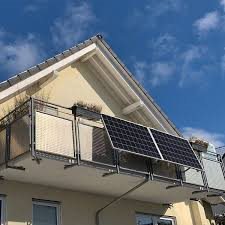
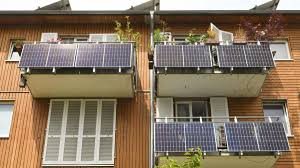
I've been reading (various media outlets are running with the story) that the government is planning to make it easier (no mention of safety) for consumers to connect solar PV panel inverter directly to the mains using a 3 pin plug and socket arrangement.

Considering all of the current guidance regarding the connection of a solar PV inverter to the mains (dedicated circuit, own RCD, no 3 pin plug), how is this all of a sudden going to be 'safe'?

The argument that 'Balcony Solar' is all the rage on the continent surely doesn't negate the potential risks all of a sudden. Surely the IET is in discussions with government and arguing that the dangers cannot simply be swept under the carpet?

Parents
  • connect solar PV panel inverter directly to the mains using a 3 pin plug and socket arrangement

    Welcome to the forum.

    The obvious difficulty with this idea is the plug and socket. Would you want a BS 1363 plug with 230 V between the pins?

  • a BS 1363 plug with 230 V between the pins
    When its plugged in of course, that's normal and fine from a touch perspective, but if it adds significantly to the available current on the load side of a 32A MCB, now you have all your other loads plugged in to what is effectively a higher rated circuit than originally, but more importantly quite likely with a longer disconnection time 

    I'm assuming like the hard wired units, the inverter has to curl up and stop if it detects a total loss of mains, but this may not be as fast as the supply RCD tripping on its own would have been.


    I can see the attraction, and as a plug in gadget, its strictly  outside the reach of BS7671, but I agree there is scope for a few unpleasant unintended consequences.
    DIY plug-in kits are  already on sale so I am not too sure what the govt is planning to change or why it thinks it has any levers to control this, as I see it, what folk hang out of a window and plug in is pretty much unenforceable.

    And in the UK very few buildings have balconies, unless perhaps its a tower block, which is the very sort of place it would not be a good idea to have too much of it as all the problems of reversal of street main voltage drop and voltage rise still apply, 

    Anyway, technical wisdom aside, the govt, position seems to be 'Action 2' on this long list.

    https://www.gov.uk/government/publications/solar-roadmap/solar-roadmap-united-kingdom-powered-by-solar-accessible-webpage#part-2-actions-to-address-key-challenges

    Plug-in solar [footnote 28] can provide opportunities for households to adopt solar more cheaply, particularly for those in rented accommodation or flats. Currently, UK regulations do not allow plug-in solar to be used in the UK, but the government is working to explore its potential.

    Action 2: Government will conduct a safety study this year with the aim of unlocking opportunities for plug-in solar over the next few years.

    Alongside lower electricity bills, there are many extra benefits for householders that invest in rooftop solar. These include improved Energy Performance Certificate (EPC) scores and property valuation. [footnote 29] But barriers remain."

    Personally I think it would be far more to the point to increase (deregulate) the scope of who is allowed to do a properly wired installation and perhaps see if the various processes can be streamlined a bit. This should try to encourage better engineered solutions and discourage this sort of thing by making the savings of the DIY one insignificant rather than by creating new and unenforceable rules.

    Mike

    PS my German colleagues tell me that the usual Balkonkraftwerk is limited to 800W per socket plugged in, but putting more than one in the same house spread across the 3 phases is "not unknown" ;-) 

    Edit.

    There are historical reasons we don't usually build houses like this, and I fear planning permission would be an issue.

    This sort of thing might be possible on ex-council blocks.

Reply
  • a BS 1363 plug with 230 V between the pins
    When its plugged in of course, that's normal and fine from a touch perspective, but if it adds significantly to the available current on the load side of a 32A MCB, now you have all your other loads plugged in to what is effectively a higher rated circuit than originally, but more importantly quite likely with a longer disconnection time 

    I'm assuming like the hard wired units, the inverter has to curl up and stop if it detects a total loss of mains, but this may not be as fast as the supply RCD tripping on its own would have been.


    I can see the attraction, and as a plug in gadget, its strictly  outside the reach of BS7671, but I agree there is scope for a few unpleasant unintended consequences.
    DIY plug-in kits are  already on sale so I am not too sure what the govt is planning to change or why it thinks it has any levers to control this, as I see it, what folk hang out of a window and plug in is pretty much unenforceable.

    And in the UK very few buildings have balconies, unless perhaps its a tower block, which is the very sort of place it would not be a good idea to have too much of it as all the problems of reversal of street main voltage drop and voltage rise still apply, 

    Anyway, technical wisdom aside, the govt, position seems to be 'Action 2' on this long list.

    https://www.gov.uk/government/publications/solar-roadmap/solar-roadmap-united-kingdom-powered-by-solar-accessible-webpage#part-2-actions-to-address-key-challenges

    Plug-in solar [footnote 28] can provide opportunities for households to adopt solar more cheaply, particularly for those in rented accommodation or flats. Currently, UK regulations do not allow plug-in solar to be used in the UK, but the government is working to explore its potential.

    Action 2: Government will conduct a safety study this year with the aim of unlocking opportunities for plug-in solar over the next few years.

    Alongside lower electricity bills, there are many extra benefits for householders that invest in rooftop solar. These include improved Energy Performance Certificate (EPC) scores and property valuation. [footnote 29] But barriers remain."

    Personally I think it would be far more to the point to increase (deregulate) the scope of who is allowed to do a properly wired installation and perhaps see if the various processes can be streamlined a bit. This should try to encourage better engineered solutions and discourage this sort of thing by making the savings of the DIY one insignificant rather than by creating new and unenforceable rules.

    Mike

    PS my German colleagues tell me that the usual Balkonkraftwerk is limited to 800W per socket plugged in, but putting more than one in the same house spread across the 3 phases is "not unknown" ;-) 

    Edit.

    There are historical reasons we don't usually build houses like this, and I fear planning permission would be an issue.

    This sort of thing might be possible on ex-council blocks.

Children
No Data