Plug-in Solar supposedly going to be 'easier'?

Hi all, new to the forum.

I've been reading (various media outlets are running with the story) that the government is planning to make it easier (no mention of safety) for consumers to connect solar PV panel inverter directly to the mains using a 3 pin plug and socket arrangement.

Considering all of the current guidance regarding the connection of a solar PV inverter to the mains (dedicated circuit, own RCD, no 3 pin plug), how is this all of a sudden going to be 'safe'?

The argument that 'Balcony Solar' is all the rage on the continent surely doesn't negate the potential risks all of a sudden. Surely the IET is in discussions with government and arguing that the dangers cannot simply be swept under the carpet?

Parents
  • UK regulations do not allow plug-in solar to be used in the UK

    Random thought - what happened to the CE/UKCA marking system? - presumably they shouldn't have been let onto any part of the EU market  unless they complied with the requirements of CE marking ... and presuming they did - wouldn't that (legally) make them acceptable for the UK market? (Yes, I did hear about so called Brexit, but I thought all the technical standards remain the same and the same principle holds, if by a national bit of legislation).

       - Andy.

  • A CE mark means that the manufacturer declares it meets the required parts of the relevant product standards, generally for electrical kit, usually the low voltage directive, and one or more EMC standards, and for things that qualify, also the  machinery directive, no ensure it is not going to maim someone,  or going to burst into flames or leach dangerous chemicals...

    That may include the plug and socket regs, for things intended to plug into a 13A socket domestically, but does not include for example any extra requirements imposed by the BS7671, or the ECSQR.

    It may or may not mean the manufacturer has actually done any testing, the responsible ones do, but they may have just created the declaration.

    At the moment in terms of product standards, the VDE have one, but its not Europe wide. 

    https://www.vde-verlag.de/normen/0100923/din-vde-v-0126-95-vde-v-0126-95-2025-12.html

    The maximum permissible feed-in power of the inverter was set at 800 VA, in line with the amendment to application rule

    E VDE-AR-N 4105:2024-10 "Generation systems on the low-voltage grid."

    The maximum permissible total module power has been set at 800 Wp + 20% (i.e., 960 Wp) if the plug-in solar device is equipped with a 'household plug' (that is a Schucko plug in Germany).

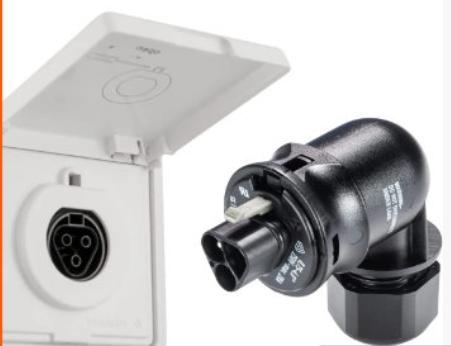
    The maximum permissible total module power rises to 2000 Wp if the plug-in solar device is equipped with a 'special energy plug', ' in accordance with DIN VDE V 0628-1 (VDE V 0628-1::2018-02)  This sort of thing is in use now for higher power systems.


    In the UK to meet BS7671 that would at least need a fused spur, maybe a fused RCD spur., or better a dedicated radial.. It's not shuttered so suffers the same problem of not meeting UK regs as the  IEC 60309 ('blue plug") caravan hookups, though really its a lot harder to touch anything nasty.

    Regards Mike

Reply
  • A CE mark means that the manufacturer declares it meets the required parts of the relevant product standards, generally for electrical kit, usually the low voltage directive, and one or more EMC standards, and for things that qualify, also the  machinery directive, no ensure it is not going to maim someone,  or going to burst into flames or leach dangerous chemicals...

    That may include the plug and socket regs, for things intended to plug into a 13A socket domestically, but does not include for example any extra requirements imposed by the BS7671, or the ECSQR.

    It may or may not mean the manufacturer has actually done any testing, the responsible ones do, but they may have just created the declaration.

    At the moment in terms of product standards, the VDE have one, but its not Europe wide. 

    https://www.vde-verlag.de/normen/0100923/din-vde-v-0126-95-vde-v-0126-95-2025-12.html

    The maximum permissible feed-in power of the inverter was set at 800 VA, in line with the amendment to application rule

    E VDE-AR-N 4105:2024-10 "Generation systems on the low-voltage grid."

    The maximum permissible total module power has been set at 800 Wp + 20% (i.e., 960 Wp) if the plug-in solar device is equipped with a 'household plug' (that is a Schucko plug in Germany).

    The maximum permissible total module power rises to 2000 Wp if the plug-in solar device is equipped with a 'special energy plug', ' in accordance with DIN VDE V 0628-1 (VDE V 0628-1::2018-02)  This sort of thing is in use now for higher power systems.


    In the UK to meet BS7671 that would at least need a fused spur, maybe a fused RCD spur., or better a dedicated radial.. It's not shuttered so suffers the same problem of not meeting UK regs as the  IEC 60309 ('blue plug") caravan hookups, though really its a lot harder to touch anything nasty.

    Regards Mike

Children
No Data