Sprinkler System Pipework Main Protective Bonding

Good Evening

New to the forum and was hoping some of the knowledgeable people on here could assist with a query on main protective bonding of sprinkler system pipework.

We look after a number of schools as part of various FM contracts and have had fixed wire electrical testing & inspection undertaken at the sites when required over the last 10-15 years. On a few of the EICR's we have received recently it has been highlighted that their is no main protective bonding to sprinkler system pipework, in the sprinkler pump house or where it enters the main plant room within the main school buildings.

This has never been picked up before and as it seems to be the case that their is none present at sprinkler pipework within any of the schools, I was wondering if their could possibly be a reasonable explanation that at design stage, it was deemed there was no requirement for this pipework to be bonded.

Thanks in Advance

  • It may be that it's not an extraneous conductive part or it was thought it would not be. Some inspectors code it wrong without testing to see if it required

  • Overall, without knowledge of the site, perhaps relevant photographs etc, it's impossible to provide a firm opinion in a Forum like this.

    There may also be differing opinions as to whether the pipework is, or should be considered to be, an extraneous-conductive-part, or needs to be bonded for safety during maintenance (as is the case with some water utility/treatment sites).

    There may also be a different answer (or opinion) depending on:

    • Whether the pump house is a separate building
    • If the building (or one or more of the buildings) involved has a lightning protection system (BS 7671 now refers to extraneous-conductive-parts importing a 'dangerous potential' not simply 'earth potential').
    • etc

    The answer might also depend on whether there are one or more locations that require (or are specified to have) supplementary protective equipotential bonding in the premises.

    Some inspectors code it wrong without testing to see if it required

    There are also differing schools of thought on the testing approach ...

  • Thanks for the reply, I think they have just based their conclusion on that it is a steel pipe buried in the ground entering the building, and therefore are classing it as an extraneous conductive part. I don't think they have carried out any tests.

  • Thanks for the reply I have been to site and took some photos.

    I tend to think it should be classed as an extraneous conductive part the same as the water and gas pipework,and therefore bonded where it exits the pump house into the ground and where it enters the plant room in the main building from the ground.

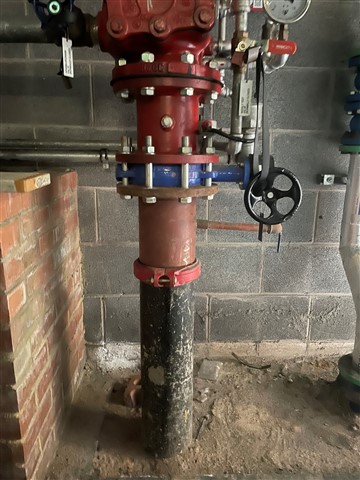
    Image 1 - Sprinkler Pipework Entering Plant Room (Main Building)


    Image 2 - Adjacent Water & Gas Supply Pipework With Main Protective Bonding

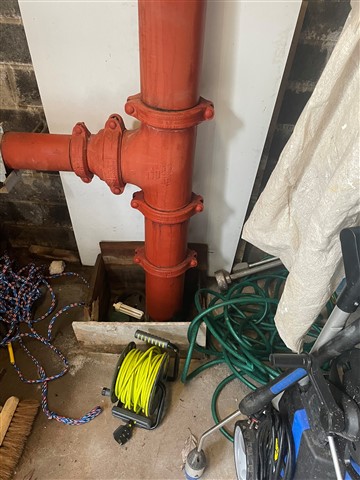
    Image 3 - Sprinkler Pipework Exiting Sprinkler Pump House

  • Unless it's just dipping through a slab into a 'services basement' type corridor, this is what I see from those pictures:

    Regardless of whether it's one building or two, it's definitely looking like an extraneous-conductive-part, as:

    • it's not part of the electrical installation,
    • it appears conductive (looks like steel pipes to me), and
    • it's introducing earth potential.

    Even if it's all in the same building, it goes into the ground (and is in contact with the ground, and back out again.

    If it's one building, depending in circumstances, there might be an argument for bonding it once only ... although because sections could be replaced with plastic, I'd err on the side of caution and bond it on each entry to the building.

    If it's two separate buildings, bonding needs to be applied separately in each building to meet the requirements of BS 7671 since 17th Edition BS 7671:2008.

  • Thanks again for taking time to reply Graham. I think we will look at getting this pipework bonded at each of the locations.

  • For me, this question highlights an area where the interpretation and application of wiring regulations can sometimes lead to different outcomes over time, or where a design decision might be based on specific context.

    The Core Requirement for Main Protective Bonding

    The requirement for main protective bonding (also known as equipotential bonding) is laid out in Regulation 411.3.1.2 of BS 7671. This regulation mandates that the following extraneous-conductive-parts must be connected to the main earthing terminal (MET) of the installation:


    • Water installation pipework.
    • Gas installation pipework.
    • Other service pipework and ducting.
    • Central heating and air conditioning systems.
    • Exposed metallic structural parts of the building.


    The key term here is "extraneous-conductive-part".

    Why Sprinkler Pipework Might Not Be Bonded

    The crucial distinction lies in whether the sprinkler pipework is truly an extraneous-conductive-part in the electrical sense, meaning it is liable to introduce an earth potential (a potential other than that of the installation's earth) into the building.


    Here are the most common and reasonable explanations for why a qualified designer might deem bonding unnecessary for sprinkler pipework:

    1. Isolation from True Earth Potential

    A sprinkler system often forms a closed circuit (or a semi-closed circuit) that may be entirely non-conductive to true earth within the building.


    • Pump House Isolation: In the pump house, the connection to the main water supply (if any) might pass through sections of plastic pipework or isolating rubber couplings designed to dampen vibration. If the metallic pipework within the building is physically isolated from the general mass of earth outside the building by these non-conductive breaks, it does not strictly meet the definition of an extraneous-conductive-part and would not require main bonding.
    • Contained System: The metallic pipework, especially within a modern school building with non-metallic structure or foundations, might only be connected to the installation's earth via local supplementary bonding, or not at all, provided it is electrically separated from the external earth.

    2. Design Intent (Not an Extraneous Part)

    If the designer confirmed, perhaps through testing or detailed design review, that the resistance between the sprinkler pipework and the main earth terminal (MET) exceeds the required threshold (often considered to be 22 kΩ for being "non-extraneous" in the context of touch voltages), then bonding is not required. Essentially, they deemed it an "unlikely conductor of fault current" or incapable of importing earth potential.

    3. Change in Interpretation and Standards

    You mentioned this is now being flagged after many years. There are two possibilities here:


    • Increased Scrutiny: Over the last 10-15 years, the level of detail and scrutiny required by the electrical safety industry has increased significantly. Newer inspectors are often applying the regulations with a stricter interpretation, or their risk assessment methodology may lead them to err on the side of caution and bond any significant metallic service.
    • Physical Changes: Has any work been done on the system? Perhaps an original non-metallic section was replaced with metal, or a new metallic connection has been added that inadvertently provides a path to earth, thus turning it into an extraneous-conductive-part.

    Conclusion and Recommendation

    While it is possible that the original design intention was sound based on the pipework being electrically isolated (Scenario 1 or 2), the fact that it is now being flagged as a C2 (Potentially Dangerous) or C3 (Improvement Recommended) on an EICR requires action or justification.


    My recommendation would be the following:


    1. Review the Original Design/Installation: Check the pump house for any deliberate non-conductive sections (e.g., plastic or rubber couplings) between the public water supply and the internal sprinkler pipework.
    2. Conduct Resistance Testing: A competent electrical person should test the resistance between the metallic sprinkler pipework and the installation's MET. If the resistance is low (e.g., less than 22 kΩ, but a definitive low resistance path to earth), it must be bonded to comply with the protective measures against electric shock.
    3. Default to Bonding : Given the safety critical nature of a school environment, and the cost-effectiveness of fitting a protective bond compared to the liability of leaving a C2 non-compliance, the most straightforward and pragmatic approach is often to install the main protective bonding conductor (typically 10 mm² or 16 mm² depending on the installation size) to the pipework where it enters the building, or at the MET/pump house. This eliminates the uncertainty and clears the EICR defect.


    In short, the original designer could have been correct, but a modern inspector is now challenging the assumption of isolation. Protective bonding is a fundamental safety measure, and if there is any doubt about the pipework's extraneous status, bonding it is the safest and most compliant route forward. safest and most compliant route forward.

  • Thanks for the very informative reply David, certainly going to have to look into this a bit further before we action works to install main protective bonding conductors, as this affects quite a few of our sites.

  • This regulation mandates that the following extraneous-conductive-parts must be connected to the main earthing terminal (MET) of the installation:

    I think you (or your chosen AI engine)  might be perpetuating a bit of an urban myth there - if you read the reg it's clear that the list is merely examples of things that may be extraneous-conductive-parts.

    typically 10 mm² or 16 mm²

    Likely to need to be an awful lot larger than that for an installation of that size - presuming it's PME see BS 7671 table 54.8.

      - Andy.

  • the list is merely examples of things that may be extraneous-conductive-parts.

    For those that are doing EICR and other inspections, aren't we getting into the "Rigidly defined areas of doubt and uncertainty" HHGTTG problem that needs a DMZ between the codes?

    Or at least a clearer mechanism for recording, at the equipment, which side of the fence it stands (or is designed to stand) to provide a level of hysteresis that avoids flip-flopping between codes and inspectors?