Simultaenous Contact

Good afternoon all, 

I am seeking the collective views of the group regarding the issues we are currently encountering within the EV installation environment in relation to simultaneous contact.

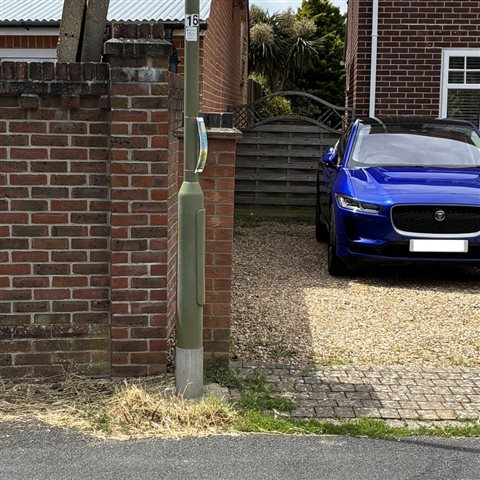
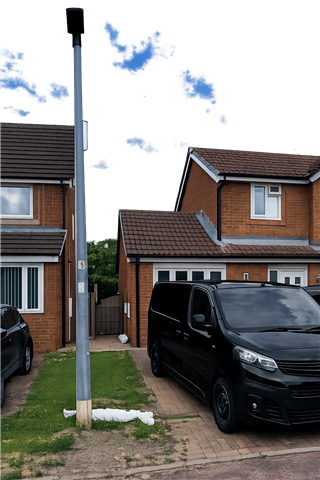
In simple terms, we are seeing a significant number of installations where customers have lamp posts located within their driveways. In many of these cases, it is not possible to achieve the recommended 2.5‑metre separation distance.

My position is that, where physical separation cannot be achieved, the application of layered protection at the EV charge point and associated switchgear would leave the customer in no worse position than prior to the installation. It is accepted that the proposal only outlines protection on the vehicle, but there are no other solutions for industry, are we with the protection detailed taking enough measures to carry out an install and in affect leave the install without a subsantial increase in risk?

My proposed approach to managing simultaneous contact risk would follow a structured hierarchy as set out below:

  • Can the maximum separation distance be achieved?
  • Can barriers or enclosures be installed to prevent simultaneous contact?
  • If neither of the above options are achievable, can layered protection provide an acceptable level of risk mitigation?

With layered protection, the proposed measures would include:

  • Installation of a compliant open‑PEN (O‑PEN) protective device
  • Provision of a double‑pole 30 mA Type A RCBO
  • Use of a charge point - M3 21 mA protection

Based on the above, the assumption is that, if all protective measures are correctly installed and verified, the installation would incorporate:

  • Automatic disconnection within the required times
  • Residual current protection
  • Open‑PEN fault detection

This combination of protections would significantly reduce the likelihood of a fault condition persisting for any meaningful duration.

On this basis, the key question for consideration is:

Where physical separation and barriers are not achievable, would it be considered acceptable to proceed with installation relying on this layered protection approach?

Parents
  • This is the kind of issue we are seeing folks.

  • Hi Sergio - the barrier is a good idea and forms part of our process, however the practicalities of building structures for sim contact around lap posts in gardens is nor accepted well by clients

  • Totally understand.  Postal workers and delivery drivers also dislike them (Walls) as it makes them walk further

  • This is the kind of issue we are seeing folks.

    That situation looks remarkable familiar.

    Fortunately, I am separated from the street lamp, which is more or less on the boundary, by a 2 m high brick wall.

    By contrast, the neighbours will need to be careful where they put the EVCP for their recently-purchased Jaguar.

  • Yes Chris - however the argument would be, the car can be parked at the end of that drive. If there is a 7.5 metere lead as standard then there is a sim contact risk there. The reality is there is a risk there as soon as an installer walks away from that property. There is no legal agreement dictating or limitating where that car is parked. 

  • Mind you with a 7,5m lead for a lot of houses, even ones with some sort of driveway,  it is actually perfectly possible to park next door, or on the pavement, and maybe the roadside for that matter, and still uncoil enough lead to plug in an EV.

    Do we worry about adjacent houses charging EVs on the street ? There must be a similar concern if we do. 
    It is perhaps just as well that most modern garden electrical items like mowers, hedge trimmers and pressure washers are double insulated or this would be a problem we already had, and more so, as very few folk will grip firmly  onto a car for very long while its plugged in, unlike a power tool. 

    The govt seems happy to allow on street charging from cables to the house, so this is probably already happening.

    https://www.gov.uk/guidance/apply-for-the-electric-vehicle-ev-pavement-channels-grant


    https://www.gov.uk/government/publications/cross-pavement-solutions-for-charging-electric-vehicles/cross-pavement-solutions-for-charging-electric-vehicles

    Mike.

  • Just to be clear: are we saying that the EVCP box, the end of the charging lead, or the nearest part of the car must be more than 2.5 m away from the lamppost?

  • Just to be clear: are we saying that the EVCP box, the end of the charging lead, or the nearest part of the car must be more than 2.5 m away from the lamppost?

    I think the assumption is that the car is "class I" - so the whole thing is classed as an exposed-conductive-part - so last option. It would have all been so much simpler if they'd made them Class II....

       - Andy.

  • But is the car an exposed conductive part? To be such, it needs to fit the definition and so must be considered "equipment". As per 113.1, the regulations only apply to equipment that is selected for the installation. 

  • That's my point. The car cannot be part of the installation.

    If the charging lead plugs in to the EVCP, as opposed to being attached, that is not either.

    This brings me back to the balcony solar PV discussion and where the boundaries of BS 7671 lie.

  • That's my point. The car cannot be part of the installation.

    It doesn't have to be.

    Class I equipment relies on protection in the installation, so the installation needs a means to ensure that exposed-conductive-parts of Class I equipment are so connected.

    The equipment to be considered doesn't need to be part of the electrical installation.

    But is the car an exposed conductive part? To be such, it needs to fit the definition and so must be considered "equipment". As per 113.1, the regulations only apply to equipment that is selected for the installation. 

    No, but the car can have exposed-conductive-parts.

    See the definition of 'Class I equipment' in BS 7671.

    More importantly, according to BS EN 61140, which applies to electrical equipment and installations, a Class I appliance or item of electrical equipment connected to an installation, and the installation, the system providing ADS is treated as one system, and the earthing and bonding of the installation, and the protective bonding system in the appliance, are required to be treated as one protective bonding system.

Reply
  • That's my point. The car cannot be part of the installation.

    It doesn't have to be.

    Class I equipment relies on protection in the installation, so the installation needs a means to ensure that exposed-conductive-parts of Class I equipment are so connected.

    The equipment to be considered doesn't need to be part of the electrical installation.

    But is the car an exposed conductive part? To be such, it needs to fit the definition and so must be considered "equipment". As per 113.1, the regulations only apply to equipment that is selected for the installation. 

    No, but the car can have exposed-conductive-parts.

    See the definition of 'Class I equipment' in BS 7671.

    More importantly, according to BS EN 61140, which applies to electrical equipment and installations, a Class I appliance or item of electrical equipment connected to an installation, and the installation, the system providing ADS is treated as one system, and the earthing and bonding of the installation, and the protective bonding system in the appliance, are required to be treated as one protective bonding system.

Children
No Data