Simultaenous Contact

Good afternoon all, 

I am seeking the collective views of the group regarding the issues we are currently encountering within the EV installation environment in relation to simultaneous contact.

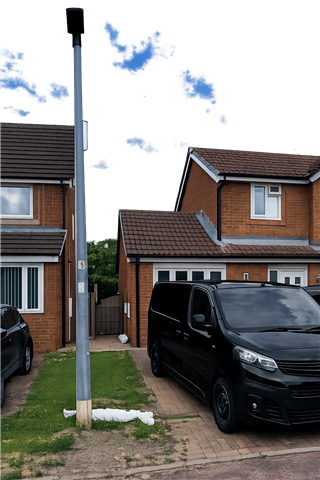
In simple terms, we are seeing a significant number of installations where customers have lamp posts located within their driveways. In many of these cases, it is not possible to achieve the recommended 2.5‑metre separation distance.

My position is that, where physical separation cannot be achieved, the application of layered protection at the EV charge point and associated switchgear would leave the customer in no worse position than prior to the installation. It is accepted that the proposal only outlines protection on the vehicle, but there are no other solutions for industry, are we with the protection detailed taking enough measures to carry out an install and in affect leave the install without a subsantial increase in risk?

My proposed approach to managing simultaneous contact risk would follow a structured hierarchy as set out below:

  • Can the maximum separation distance be achieved?
  • Can barriers or enclosures be installed to prevent simultaneous contact?
  • If neither of the above options are achievable, can layered protection provide an acceptable level of risk mitigation?

With layered protection, the proposed measures would include:

  • Installation of a compliant open‑PEN (O‑PEN) protective device
  • Provision of a double‑pole 30 mA Type A RCBO
  • Use of a charge point - M3 21 mA protection

Based on the above, the assumption is that, if all protective measures are correctly installed and verified, the installation would incorporate:

  • Automatic disconnection within the required times
  • Residual current protection
  • Open‑PEN fault detection

This combination of protections would significantly reduce the likelihood of a fault condition persisting for any meaningful duration.

On this basis, the key question for consideration is:

Where physical separation and barriers are not achievable, would it be considered acceptable to proceed with installation relying on this layered protection approach?

Parents Reply Children
  • Dom,

    You might get even more responses if you moved this thread to the BS7671 - Wiring Regulations discussion forum.

    Cheers GTB

  • Thank you so much - appreciate that. Would love to have more people involved in the chat GTB.  apologies, I am hopeless witht htis stuff, is it possible to move this chat? Thank you very much all. 

  • Moved over for you   Slight smile

  • Is it possible that

    L1 property on the left

    L2 property on the right

    L3 Street light

    Extra question... is the street light protected by 30mA RCD?  Are both properties protected by RCD?

    There could be several scenarios here

    All working as intended

    Single on L1, L2 or L3 site

    Multiple faults.

    Personally I think it is prudent for all street lighting and street furniture be 30mA protected but there is a school of thought that thinks that true street lighting such as on motorways should not have RCD protection due to the fact that a fault will leave everything in darkness.  I assume the same applies when darkness is more dangerous than light, like maybe a railway platform.

  • Entirely possible that they're fed from different phases - in fact it's quite normal for houses down a street to be fed from different phases in turn - it helps to balance things and minimise N voltage drop. That's not normally a cause for concern though (if fact if you have multiple L-PE faults on different phases, the PE voltage tends to cancel out, making the situation if anything marginally safer!). Normally all three phases share the same PE(N).

    The main fault of concern if of course a broken PEN conductor ... for which RCDs provide no benefit.

       - Andy.

  • Thank you Lisa, you are a star :) 

  • At the moment - it is very hard to determine the phases for street furniture as legally we are not allowed to touch them. Thereis also the issue of isolation, etc. However the phasing issue is not as much a concern for me. The reality is the likelihood of a fault causing an issue compared to the actual volume of real life issues we see. The whole problem needs quantified. 

  • Yes agreed, in reality the street furniture has no O-pen protection and unlikely to have RCD protection as well, however the EV charge point does, as well as an RCD and M3 protection on the charge point. 

  • If the main fault issue is a PEN / Broken PEN then surely that is an issue for the DNO to implement a monitoring system not the humble Electrician or the humble home owner.  Probably a round table discussion for IET and ESQR team?

  • Another thought, what about a possible voltage offset between the CPCs of adjacent properties as I'm pretty sure not all the installers check the electrode resistances.  Maybe a simple answer could be to build a wall between the properties and maybe fork off around the street lamp.  This would then give you a physical fire proof barrier which COULD remove the Simultaenous Contact issue all together.  Not sure what the correct height for the wall would be but lets say for the sake of this discussion about let say 1m50cm