Simultaenous Contact

Good afternoon all, 

I am seeking the collective views of the group regarding the issues we are currently encountering within the EV installation environment in relation to simultaneous contact.

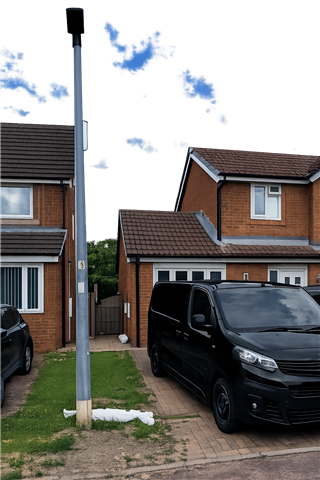
In simple terms, we are seeing a significant number of installations where customers have lamp posts located within their driveways. In many of these cases, it is not possible to achieve the recommended 2.5‑metre separation distance.

My position is that, where physical separation cannot be achieved, the application of layered protection at the EV charge point and associated switchgear would leave the customer in no worse position than prior to the installation. It is accepted that the proposal only outlines protection on the vehicle, but there are no other solutions for industry, are we with the protection detailed taking enough measures to carry out an install and in affect leave the install without a subsantial increase in risk?

My proposed approach to managing simultaneous contact risk would follow a structured hierarchy as set out below:

  • Can the maximum separation distance be achieved?
  • Can barriers or enclosures be installed to prevent simultaneous contact?
  • If neither of the above options are achievable, can layered protection provide an acceptable level of risk mitigation?

With layered protection, the proposed measures would include:

  • Installation of a compliant open‑PEN (O‑PEN) protective device
  • Provision of a double‑pole 30 mA Type A RCBO
  • Use of a charge point - M3 21 mA protection

Based on the above, the assumption is that, if all protective measures are correctly installed and verified, the installation would incorporate:

  • Automatic disconnection within the required times
  • Residual current protection
  • Open‑PEN fault detection

This combination of protections would significantly reduce the likelihood of a fault condition persisting for any meaningful duration.

On this basis, the key question for consideration is:

Where physical separation and barriers are not achievable, would it be considered acceptable to proceed with installation relying on this layered protection approach?

Parents
  • This is the kind of issue we are seeing folks.

    The recommended approach here is to contact the DNO/IDNO and ask them if the two properties and lighting column are connected to the same earthing system before deciding on anything. With cross-pavement charging, this is only going to be a more frequent issue.

    In this particular case, I'm guessing it may well not be permitted to erect a fence or barrier due to either planning constraints, or covenants or other terms in the deeds.

    As a last resort, A722.5 provides a solution, but it's not cheap, might have inrush issue, and might take a lot of space.

    At the end of the day, BS 7671 (and HD/IEC 60364 series) had the provision well before work was started on EV charging standards, so I'm up for saying this is not necessarily a BS 7671 issue, but the EV charging standards agreeing on Class I rather than Class II for the LV charging system ?

  • Our process is to contact the DNO to confirm the earthing system, however we are now in a posistion where the DNOs are saying this is the responsibilty of the installer rather than the DNO and they are unable to support. I am unsure if this is down to the fact there are to many asks on them at present.

  • Yes, they might be finding the demands difficult ... but the installer can't determine the answer any other way. 

    I do sympathise.

  • In terms of looking at the EV COP risk assessment - step 3. Where we have a tethered charge point of say 5 metres, would it be deemed safe to say that if we add the distance of charger lead, the EV car (max UK size) and then the 2.5 metre distance that this would be sufficient precaution? I appreciate that car type can change but by taking this into account have steps been taken to matigate that risk?

  • Can ESQCR 2002 help?

    R.15 obliges a DNO to keep a map of underground parts of the network and to make it available for inspection, etc.

    R. 28 obliges a DNO to state the type of earthing system.

    Both are available to somebody who has reasonable cause, which I feel sure must apply.

Reply
  • Can ESQCR 2002 help?

    R.15 obliges a DNO to keep a map of underground parts of the network and to make it available for inspection, etc.

    R. 28 obliges a DNO to state the type of earthing system.

    Both are available to somebody who has reasonable cause, which I feel sure must apply.

Children
No Data