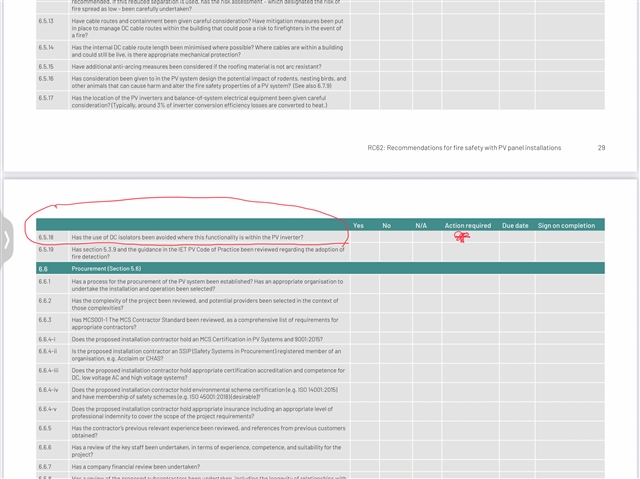
DC isolators and RC62

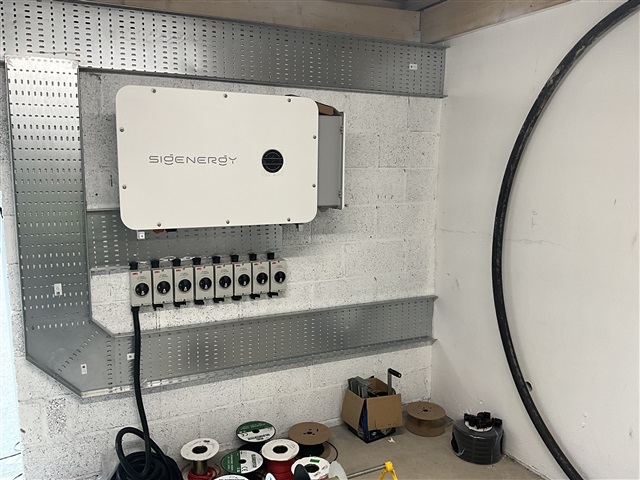
The RISC document RC62 asks installers to carefully consider the need for DC isolators. It is not unreasonable for insurers to insist that the additional risk associated with the devices is appropriately assessed. This is one of two 100Kw inverters. They are both housed in a purpose-built concrete block structure abutting a large door manufacturing plant so fire spread may be reasonably controlled. However, do we really need to have an isolator on each string. Likely done this way as it connects to the individual MPPT inputs?
  • I think this possibly a Contractual and Designer issue.

    If it is an issue at all. I'd be minded to do the same, keep all strings on their own isolator, it's clearly a medium sized install (rather than a 4kW domestic), so being able to isolate individual strings would be beneficial at times in the future. You could also have the problem of too much current for one/two/three  isolators, so string based isolation would be my choice. 

  • do we really need to have an isolator on each string

    I guess some means of isolation will be needed (to comply with the EaWR for instance as well as BS 7671) - if the inverter has a d.c. isolation built in (to break the current flow) then unplugging connectors to remove voltage from the inverter (e.g. if the inverter itself needed replacement) would be an option. Otherwise I don't see you can do any less than one isolator per MPPT.

      - Andy.

  • No experience with inverters this big. But the isolators do provide a way to reboot the inverter if it decides to stop working for any reason.

    Turn off all the AC and DC isolators. Wait a few minutes. Turn all the isolators back on again. Without the DC isolators, you'd have to leave it overnight.