DC isolators and RC62

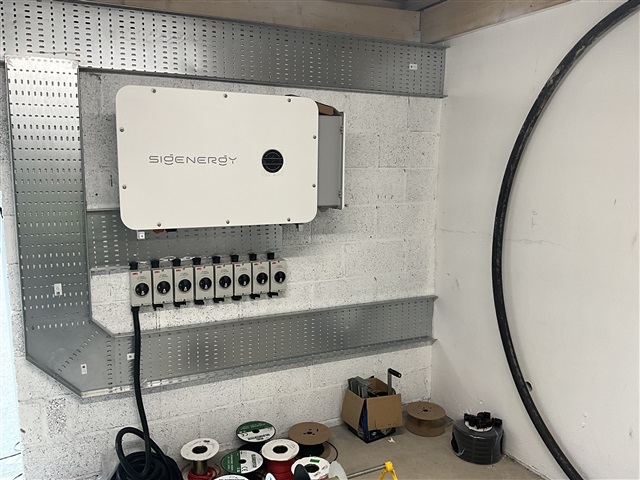
The RISC document RC62 asks installers to carefully consider the need for DC isolators. It is not unreasonable for insurers to insist that the additional risk associated with the devices is appropriately assessed. This is one of two 100Kw inverters. They are both housed in a purpose-built concrete block structure abutting a large door manufacturing plant so fire spread may be reasonably controlled. However, do we really need to have an isolator on each string. Likely done this way as it connects to the individual MPPT inputs?
Parents
  • I can't help wondering why isolators are such a fire risk (if they really are - the statistics given percentages of which component that started a fire presumably should be weighted against the probability of a fire starting at all). Moving contacts will always be a weak point so if there is a fire it is perhaps natural that it's more likely to occur at a weak point).

    But on the assumption that isolators are a problem - then why? Is it the moving contacts or is it a re-run of the consumer unit problem where we've gradually moved to terminals that are less than ideal (especially in situations where there's very significant daily thermal cycling), or is it just that it's just about the only point on the d.c. side where screw terminals are used (most other connectors are crimped) so there's a greater risk of human error during installation (and no loop tests that might catch poor terminations like we have on the a.c. side)?

      -  Andy.

Reply
  • I can't help wondering why isolators are such a fire risk (if they really are - the statistics given percentages of which component that started a fire presumably should be weighted against the probability of a fire starting at all). Moving contacts will always be a weak point so if there is a fire it is perhaps natural that it's more likely to occur at a weak point).

    But on the assumption that isolators are a problem - then why? Is it the moving contacts or is it a re-run of the consumer unit problem where we've gradually moved to terminals that are less than ideal (especially in situations where there's very significant daily thermal cycling), or is it just that it's just about the only point on the d.c. side where screw terminals are used (most other connectors are crimped) so there's a greater risk of human error during installation (and no loop tests that might catch poor terminations like we have on the a.c. side)?

      -  Andy.

Children
  • It's probably more an installer issue than a fundamental design of the isolator. A DC isolator can be set up to handle different ranges of voltage and current, but inserting or removing shorting links to increase creepage and clearance. Secondly, they often end up being installed outside we often see poor practice in maintaining IP ratings.

  • I suspect that in part it's also that we've lost the practical historical knowledge of DC isolation and it's problems (DC traction is essentially long gone; Blackpool as an exception?), plus the solar panel source is a new set of phenomena, and we now source parts from 'everywhere' with varying cost, quality and local knowledge standards.