


For over 30 years, investment has flowed into urban regeneration of the River Seine south bank (“rive gauche”) in eastern Paris. Most visible is the iconic Bibliothèque François Mitterrand (French national library) constructed in 1995 right on the riverside. Running just behind this building and parallel with the river is the railway approach to the Austerlitz main line train station. To create a neighbourhood better connected to the river, the architects and planners decided on a radical solution: construction of buildings directly over the top of the railway.
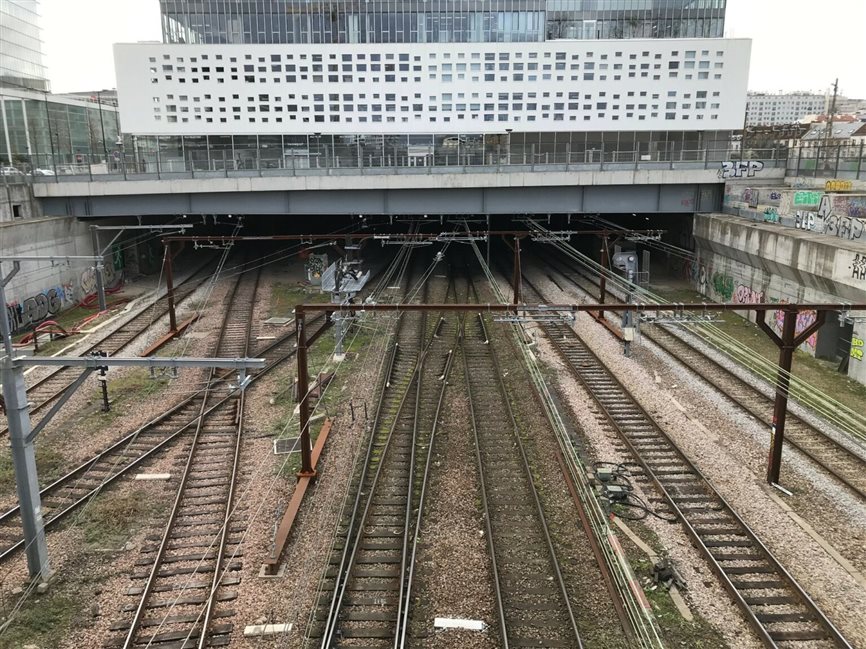
Picture: Approach to Paris Austerlitz station before construction started (mirr.eu)
On 28th November 2025, the ICE France Association organised a visit to one these construction projects (referred to as T6B) and invited members of the IET France Local Network. The visit included a presentation of the project and engineering details (held in the warm, comfortable on-site temporary office space) followed by a guided tour of the construction site (outdoors in the cold, rain and wind!) Our guide was Clotilde Girerd, Site Engineer and ICE member. She provided an excellent description of the project with interesting insights into the challenges of such a complex project.
The T6B project delivers 177 luxury apartments built on a 50-meter span over the railway. It is a superb location right opposite the Bibliothèque François Mitterrand with excellent access to public transport and a superb view over the River Seine and Paris skyline. The architectural style reflects the premium location and high price of the apartments. It features elegant open spaces on the first two floors that will host retail units and ten floors of apartments constructed in timber.
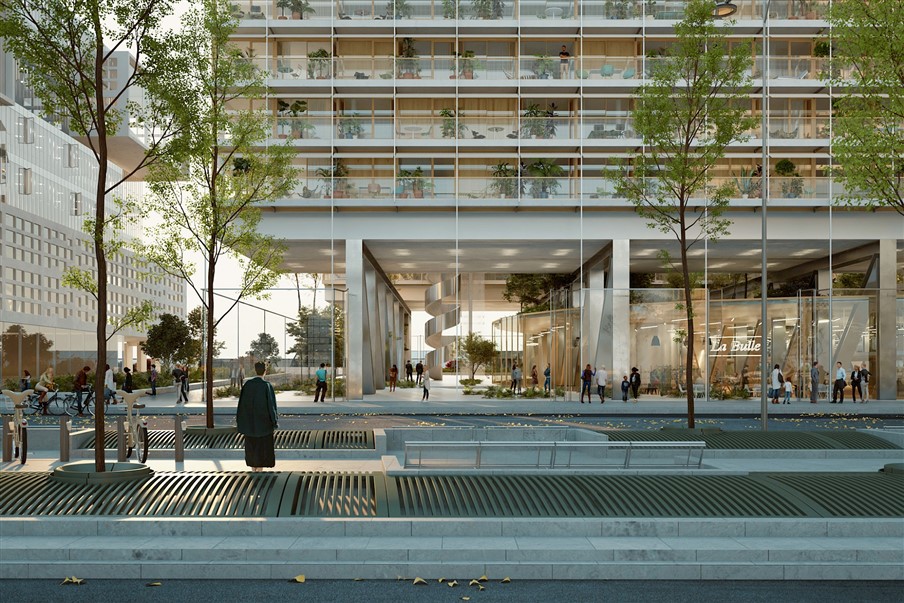
Picture: Projected view of the open retail space with wooden-based construction of apartment levels (mirr.eu)
The whole building sits on 50-meter steel beams over the train tracks creating a 50-meter “bridge”. The beams are installed on spring bearings to supress vibrations from the trains moving underneath. The first two levels are formed by a steel trellis frame mounted on the beams providing open space for shops. The 10 floors of apartments are built in timber on top of the trellis frames. This offers a unique selling point for the apartments and reduces weight. The lift and stair shafts are built in concrete.
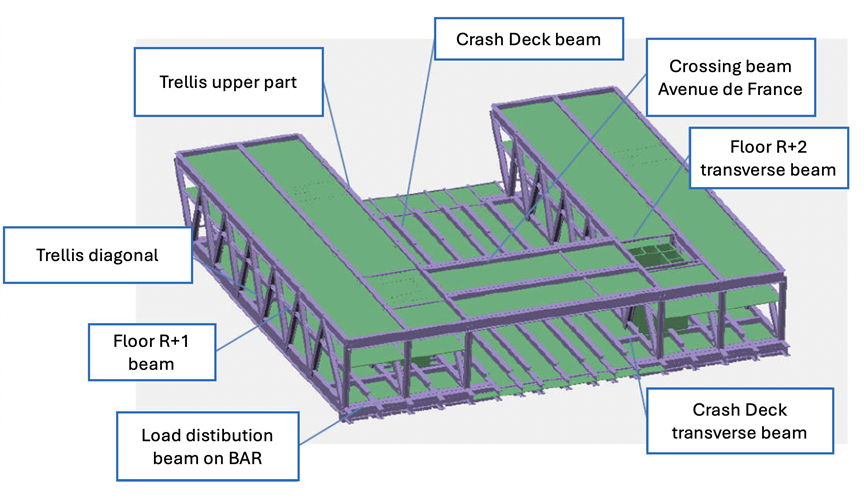
Diagram: Diagram showing the trellis structures mounted on the beams traversing the railway (mirr.eu)
At the time of the visit, the entire bridge section and steel trellis structure had been completed. Only concreting of the floors within the trellis structure remained to be done. Construction on the wooden apartment frames was already underway. This allowed us to see all the construction methods and discuss some of the many innovative and challenging aspects of the project. This included deploying concrete and steel combinations that approach the strength used on nuclear power stations. The architecture is designed to appear light and open while giving a high-class aesthetic finish. This is not always easy as the construction is effectively a set of bridges themselves build on a 50m bridge!
During the visit, we discussed the operational problems encountered in such an unusual project. A particular challenge was operating over a working railway. Beams could only be moved over the railway during a nightly 2-hour maintenance window between 1.45am and 3.45am. This meant that tasks were planned to the minute. Of course, any mistake that damaged the railway would lead to enormous disruption for travellers and large penalties for the project.
There were many constraints associated with working next to an operational railway such as regulations on the working distance to the edge of the railway. Deploying mobile cranes to install the beams over the railway required careful analysis of weight distribution and clearances. When we visited, we saw the main central tower crane that was installed right in the centre of the bridge directly on the beams traversing the railway. The bridge crossing the railway also had to withstand any load dropped from height to prevent any object falling to the railway below (the “crash deck”).
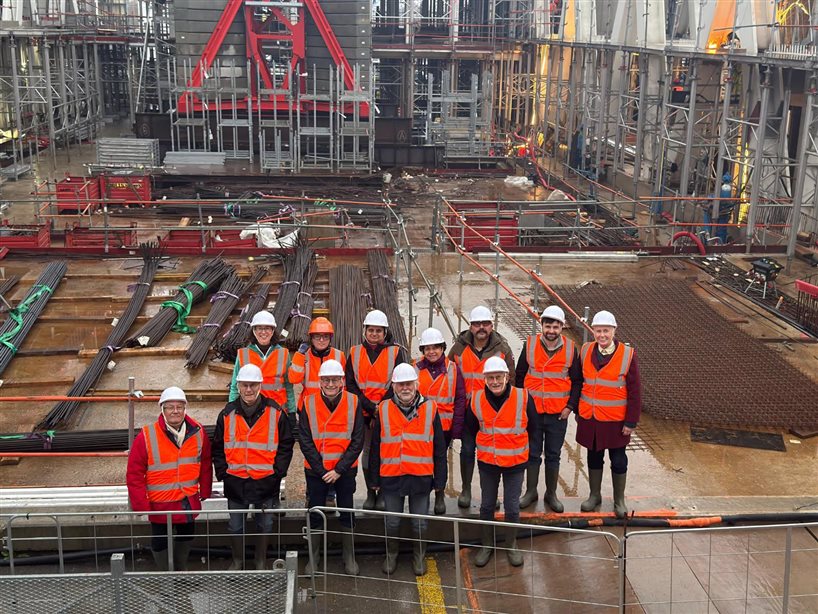
Picture: ICE and IET members at the T6B site
Overall, it was a fascinating visit to an important urban regeneration project. We thank Clotilde for her excellent explanations, answering our many detailed questions and providing interesting insights in the planning and execution of the project.
For more information, a good overview with many pictures are diagrams is available at http://www.tvk.fr/en/architecture/t6b.
-

Lisa Miles
-
Cancel
-
Vote Up
0
Vote Down
-
-
Sign in to reply
-
More
-
Cancel
Comment-

Lisa Miles
-
Cancel
-
Vote Up
0
Vote Down
-
-
Sign in to reply
-
More
-
Cancel
Children