


I'd recently been cajoled into changing ISP and having FTTP installed. The new ISP quickly sent out their router and I've had chance to test it for ultrasound emissions before having the telephone line replaced with a fibre cable. I did this knowing that I'd been in a house where my tinnitus was being stimulated and found that the broadband router positioned a few feet away, was emitting a sharp 21 kHz signal.
Here's what the ultrasound app I use revealed for the new ISP's router once it had completed its boot up sequence:
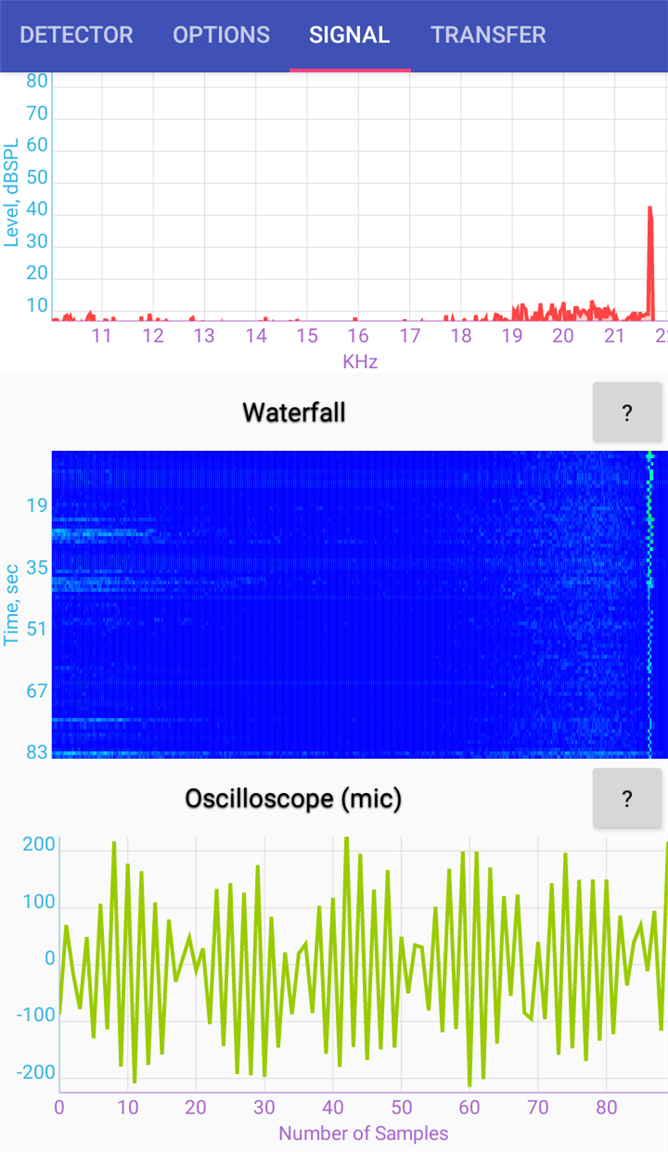
That's over 40 dB at 21.75 kHz, measured around 6 to 8 inches away. The ultrasound was being emitted by the router itself, not the power supply built into the mains plug a couple of feet away. When I'm exposed to ultrasound up to at least 30 kHz, it results in the perception of a high-pitched audible tone at approximately 14 kHz, my tinnitus tone, thanks to suffering from the "ultrasound hearing" phenomenon, as discovered previously. (See the discussion:Reasons why I suffered tinnitus, insomnia, chronic fatigue, and other health problems after having digital electricity meters installed ) (Also, I know the range as my dentist uses a 30 kHz dental descaler, painfully at times.)
Frequencies between 21 and 22 kHz are just over the top of the normal audible range for human hearing, particularly very young children, so for some people they may hear the exact tone. If these emissions are somehow accidental, then it may be possible that some routers emit sound just under 20 kHz. Cats and dogs have much more sensitive hearing than us and would have no problem hearing tones well over 20 kHz as normal sounds, probably very unpleasantly.
If you search online, you will be told that routers do not emit ultrasound, but this is clearly untrue. I've now found 2 out of the 4 I've tested doing so, subject to the microphone's limit of 22 kHz.
There's no purpose, at least not that I know about, for routers to emit ultrasound, so the simple question is; why?


