Calibration of Approved Voltage Indicators and Proving Units.

There was an old discussion on this 7 years ago but it is locked now. In any case there was no definitive answer provided at the time. In years gone by, I would have thought that AVIs and PUs either work or they dont.

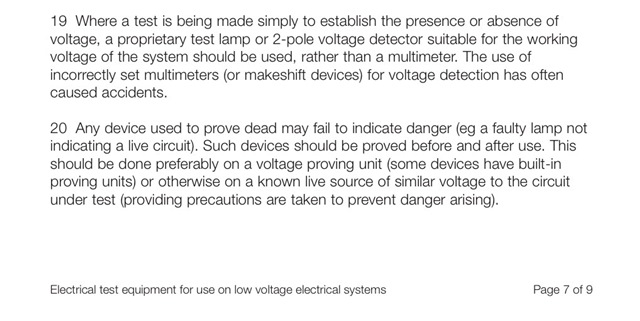
But searching online today, Martindale recommend that their AVI's and PU's do need calibrating. This has prompted me to rethink and I note that in GS38 point 30 talks about all test equipment being maintained by a competent person and one of the common errors being failing to verify correct function of illumination (eg indicator/lamp/neon).

If something were to go wrong, and it turns out the AVI and PU were not calibrated within the last 12 months, I can imagine this wording above being used to attribute blame to the person who was undertaking the proving dead.

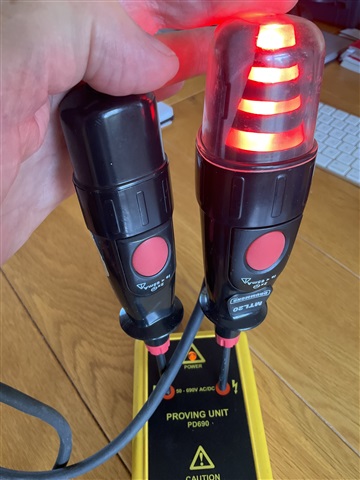
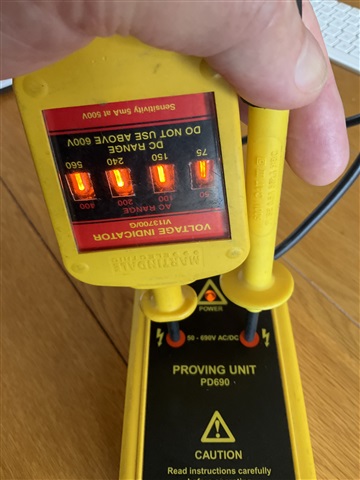
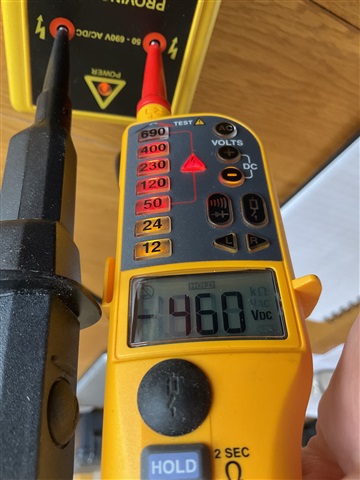
When we prove the AVI with the PU, we are putting voltage onto the AVI and simply seeing that the lamps light up, but the PU just puts out the max voltage it is capable of, it doesnt step up or down each voltage level individually, so we dont control the level it is proving at. 

What's other peoples thoughts? I am considering now that we do need to calibrate these items.


  • https://electrical.theiet.org/bs-7671-18th-edition-wiring-regulations/building-regulations/electrotechnical-assessment-specification/

    If you are an electrician registered as a Competent Person on a CPS, you are expected to be familiar with the requirements of the ELECTROTECHNICAL ASSESSMENT SPECIFICATION FOR USE BY CERTIFICATION AND REGISTRATION BODIES, which is available here on the IET website.

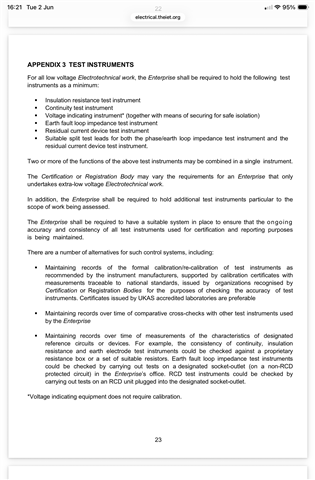
  • note the bit

    * Voltage indicating equipment does not require calibration.

    presumably as long as it does, broadly indicate, they are not saying it can be broken !
    mike.

  • Electrical test equipment for use on low voltage electrical systems.

    Guidance Note GS38 (Fourth edition).

    https://www.hse.gov.uk/pubns/priced/gs38.pdf

  • Having an annual calibration sticker on a voltage indicator could easily breed complacency, the user may assume it is fit for purpose and not actually carry out the user tests before and after the voltage indicator is used.

  • My voltage indicators get checked every time on my proving unit, and also weekly on the main 230V supply into my garage. Yes, over my 45 year career replaced many Voltage indicators and proving units due to wear/tear and on occasion my big size 9's standing on one of them.

    Why would I wish to pay for or go thru a "Calibration" procedure? Doesn't do much that others have said above.

    In fact would likely be more economical just to purchase a new GS38 compliant voltage indicator and proving unit each year, then get them calibrated.

    GTB

  • The terms "making dead" and "proving dead" possibly hail from the Electricity at Work Regulations (https://www.hse.gov.uk/pubns/priced/hsr25.pdf) - so it's convenient to use the same terms when trying to have the same meaning (otherwise you open the door much wider to lawyers to argue about interpretation).

    As others have touched on, for there to be a problem you need a situation where the indicator doesn't light up when a hazardous voltage is present - that would mean two simultaneous faults - both the indicator would need to have drifted sufficiently that it didn't light up until a significantly higher than intended and the proving unit produced a similarly inflated voltage so it looked like the inductor was working properly when it wasn't. If the two are used together fairly regularly not only would the faults need to be present at the same time, but would have to occur one pretty soon after the other (or at least in the right order) otherwise there's be a period when the proving would fail. All in all the odds seem pretty long (and probably a lot smaller than a lot of the other risks - e.g. from borrowed neutrals).

       - Andy.

  • In fact would likely be more economical just to purchase a new GS38 compliant voltage indicator and proving unit each year, then get them calibrated.

    You can have a similar conversation about calibrating torque screwdrivers, Wera say:

    For the purposes of the normative recommendations and especially in your own interest, a torque tool should be checked, calibrated and, if necessary, adjusted and/ or repaired at the latest after every 5,000 load changes or, if the number of load changes can not be determined, every 12 months.

    www.wera.de/.../EN-Torque-Tools.pdf

    Which sounds fine until you hear how much the calibration will cost, it’s better to buy a new tool with a manufacturers calibration certificate and sell the old one on an internet trading site, but they should be okay for around a hundred consumer units anyway.