This discussion has been locked.
You can no longer post new replies to this discussion. If you have a question you can start a new discussion

Launch of our new factfile on arc flash risk management

Former Community Member

We published a new factfile on Arc flash risk management.
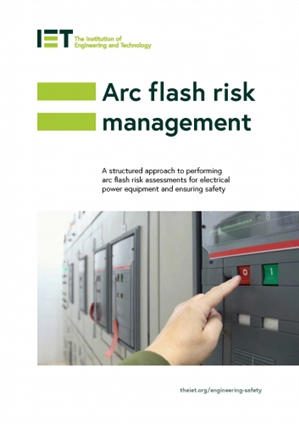
e44cfbb534ed373d69072e74a6988bf1-huge-arc-flash-risk-management-fact-file---front-cover_page_01.jpg

This factfile seeks to set out the key principles of arc flash risk management using a risk-based approach. It is aimed at persons with responsibility for the management of safety in the control and implementation of work on electrical power equipment. This factfile provides an assessment process and there is also a commentary on recognised standards and test methods for PPE in Appendix 2.

We are interested in your thoughts! Please read our factfile and ask any questions or share your thoughts below.


  • Interesting. 

    Below some first observations and possible refinements.

    An absolute  figure of the number when discussing workplace deaths would be worth adding, to allow the risk to be properly quantified in micromorts or similar. 

    Saying X% of  fatalities are electrical is quite interesting, but it makes a huge difference to the reader (and me personally) to know if that is 10 % of 10 deaths a year, or of 10,000 - in one case the risk to me may compare to crossing the road (DoT assume 1 micromort approx £1.60 for value of road improvements like adding a zebra crossing), or perhaps smoking a cigarette (also ~ 1uM), vs free climbing a building (1000uM) and juggling fireworks (no idea really, seems like it ought to be bad) on a daily basis. Only with such information can a balanced decision be reached. (sort of thing I mean)

    In terms of the risk of burns and how much PPE might be needed, some UK specific worked examples would be a good calibration, - how close for example does the unguarded flesh have to be to a worst-geometry  arc  downstream of a 13A fuse to suffer a given degree of calorific illumination, or better, to suffer a burn of known severity.  I suspect based on personal experience that ought to be in the range 10-20cm, but a calculated example would be good sanity check.

    And then a similar calculation for maximum let-through from a 100A house fuse and an 800A substation fuse - where I hope less of us have an experimental  practical feel, but the closest approach distance before PPE becomes strongly advised is then a more useful figure.

    References to 208V, and the use of none SI units - why calories and not joules  when we work in amps volts and seconds for the electrical stuff , does make me wonder if this is based on US-centric research, and then further to wonder how well it will  apply to likely UK fault levels.

    Mike.

  • mapj1: 
     

     and the use of none SI units - why calories and not joules  when we work in amps volts and seconds for the electrical stuff , does make me wonder if this is based on US-centric research, and then further to wonder how well it will  apply to likely UK fault levels.

    I can answer that one … arc flash PPE … to British and European Harmonized standards … is rated for energy densities measured in in calories per square centimetre. Joules are not used because the conversion between Joules and calories is not linear with temperature.

    Arc flash energy density is dependent on the arcing current, not the fault current … although there is (perhaps obviously) a relationship between the two. 

    There is no IEC, CENELEC or British standard for assessing arc flash energy density. We usually protect against it at LV AC with either “work dead” practices, or the form factor of switchgear and selection of appropriate protective devices (or, where necessary the use of backup protection).

    With DC systems, it's a different matter, and particularly in the process of installation, repair, maintenance and testing or large battery systems, arc flash can be a consideration.

  • gkenyon: 
    Joules are not used because the conversion between Joules and calories is not linear with temperature.

    Hm. The amount of energy required to warm a gram of water by 1 deg C depends upon the starting temperature, but how does that apply here?

  • the conversion between Joules and calories is not linear with temperature.


    No, it isn't, but the effect is frankly piddly, the various calories are named after the temperature of the test.

    The most common “15° calorie” (also called the gram-calorie, or small calorie) was defined back when the UK recognised such units as the amount of heat that will raise the temperature of 1 gram of water from 14.5° to 15.5°C—equal to 4.1855 joules. Other less common definitions in this series were the 20° calorie (4.18190 joules) from 19.5° to 20.5° C; and the “mean calorie” (4.19002 joules) defined as 1/100 of the heat necessary to raise the temperature of 1 gram of water from 0° to 100°C.

    For nearly all practical purposes, the heat capacity of water is constant, and the conversion factor is approx 4.2 joules per calorie. This applies at all common temperatures used to define the calorie.

    Then to confuse matters, dieticians use the word “calorie” for kilocalorie, and are therefore  1000 times higher.  (a Mars bar and a small stick of dynamite are both  about 1 megajoule, so something like 230 diet calories, and 230 000 real ones… by the way  it is really important to note that the rate of energy release during combustion differs by about 4 to 5 orders of magnitude  between the two.)

    For what it is worth, do you know which calorie is supposed to be used for the PPE spec?

    Mike


  • mapj1: 
    . . . does make me wonder if this is based on US-centric research . . . 

    It almost certainly will be, primarily because America is way ahead on this subject. The UK has been playing “catch up” for a while in my opinion. 

    Regards,

    Alan. 

  • Alan Capon: 
     

    mapj1: 
    . . . does make me wonder if this is based on US-centric research . . . 

    It almost certainly will be, primarily because America is way ahead on this subject. The UK has been playing “catch up” for a while in my opinion. 

    Regards,

    Alan. 

    As I said, there are no IEC, CENELEC or British standards on the subject.

  • mapj1: 
     

    the conversion between Joules and calories is not linear with temperature.


    No, it isn't, but the effect is frankly piddly, the various calories are named after the temperature of the test.

    The most common “15° calorie” (also called the gram-calorie, or small calorie) was defined back when the UK recognised such units as the amount of heat that will raise the temperature of 1 gram of water from 14.5° to 15.5°C—equal to 4.1855 joules. Other less common definitions in this series were the 20° calorie (4.18190 joules) from 19.5° to 20.5° C; and the “mean calorie” (4.19002 joules) defined as 1/100 of the heat necessary to raise the temperature of 1 gram of water from 0° to 100°C.

    We are looking at arc flash temperatures of between, perhaps sometimes exceeding, 2800 and 19000 deg C.

  • However even Ralph Lee's method from the 1982 paper (poor scan below) that is now considered dreadfully conservative for LV (inductive supply and resistive arc, and max at arc voltage 70% the supply voltage and I arc 70% of PSSC) is worth explaining and working through in something supposed to  be introductory, just to allow folk to understand how to put safe upper bounds on some of this stuff - and by the way he managed to use metric units, in the US, and  even back then.

    A more up to date view with a less cautious set of assumptions from a 230V country (ZA) is here

    Mike

    PS that older paper.

    The_other_Electrical_Hazard_Electric_Arc.pdf

  • arc flash temperatures of between, perhaps sometimes exceeding, 2800 and 19000 deg C.

    well yes, probably 20,000- 50,000 depending on electrode material and arc draw, but so what ? 

    The important energy density and temperature rise is at the victim, not the arc.

    The temperature of the skin after the flash event at the threshold of permanent damage should be well below 100C or skin will be burnt through.

    (5 joules per cm2 is normally taken as the metric boundary for permanent scarring, close to the 1.2 cals seen in US literature) 

    Even for clothing the final temperature will need to be kept below  some hundreds of  C, or the fabric will be suffering either spontaneous ignition or pyrolysis, causing further problems, hence a typical  energy density limit for PPE of perhaps 20 times that of the bare skin case.

    Mike

  • I still don't see the point of using units that are different to the clothing data you see on the market at the moment.

    However, in future I would like to see the standards (and IET guidance … and arc-protection PPE) to use joules per square metre. 

    Another issue with published arc flash calculation methodologies is that standardised symbols are not used (for example, V is used for voltage, not U, and sometimes W for energy rather than E).