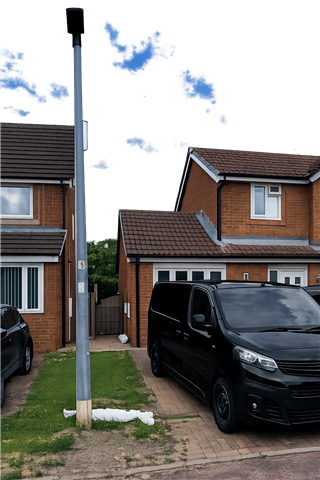
Good afternoon all,
I am seeking the collective views of the group regarding the issues we are currently encountering within the EV installation environment in relation to simultaneous contact.
In simple terms, we are seeing a significant number of installations where customers have lamp posts located within their driveways. In many of these cases, it is not possible to achieve the recommended 2.5‑metre separation distance.
My position is that, where physical separation cannot be achieved, the application of layered protection at the EV charge point and associated switchgear would leave the customer in no worse position than prior to the installation. It is accepted that the proposal only outlines protection on the vehicle, but there are no other solutions for industry, are we with the protection detailed taking enough measures to carry out an install and in affect leave the install without a subsantial increase in risk?
My proposed approach to managing simultaneous contact risk would follow a structured hierarchy as set out below:
- Can the maximum separation distance be achieved?
- Can barriers or enclosures be installed to prevent simultaneous contact?
- If neither of the above options are achievable, can layered protection provide an acceptable level of risk mitigation?
With layered protection, the proposed measures would include:
- Installation of a compliant open‑PEN (O‑PEN) protective device
- Provision of a double‑pole 30 mA Type A RCBO
- Use of a charge point - M3 21 mA protection
Based on the above, the assumption is that, if all protective measures are correctly installed and verified, the installation would incorporate:
- Automatic disconnection within the required times
- Residual current protection
- Open‑PEN fault detection
This combination of protections would significantly reduce the likelihood of a fault condition persisting for any meaningful duration.
On this basis, the key question for consideration is:
Where physical separation and barriers are not achievable, would it be considered acceptable to proceed with installation relying on this layered protection approach?